Key Numbers Box
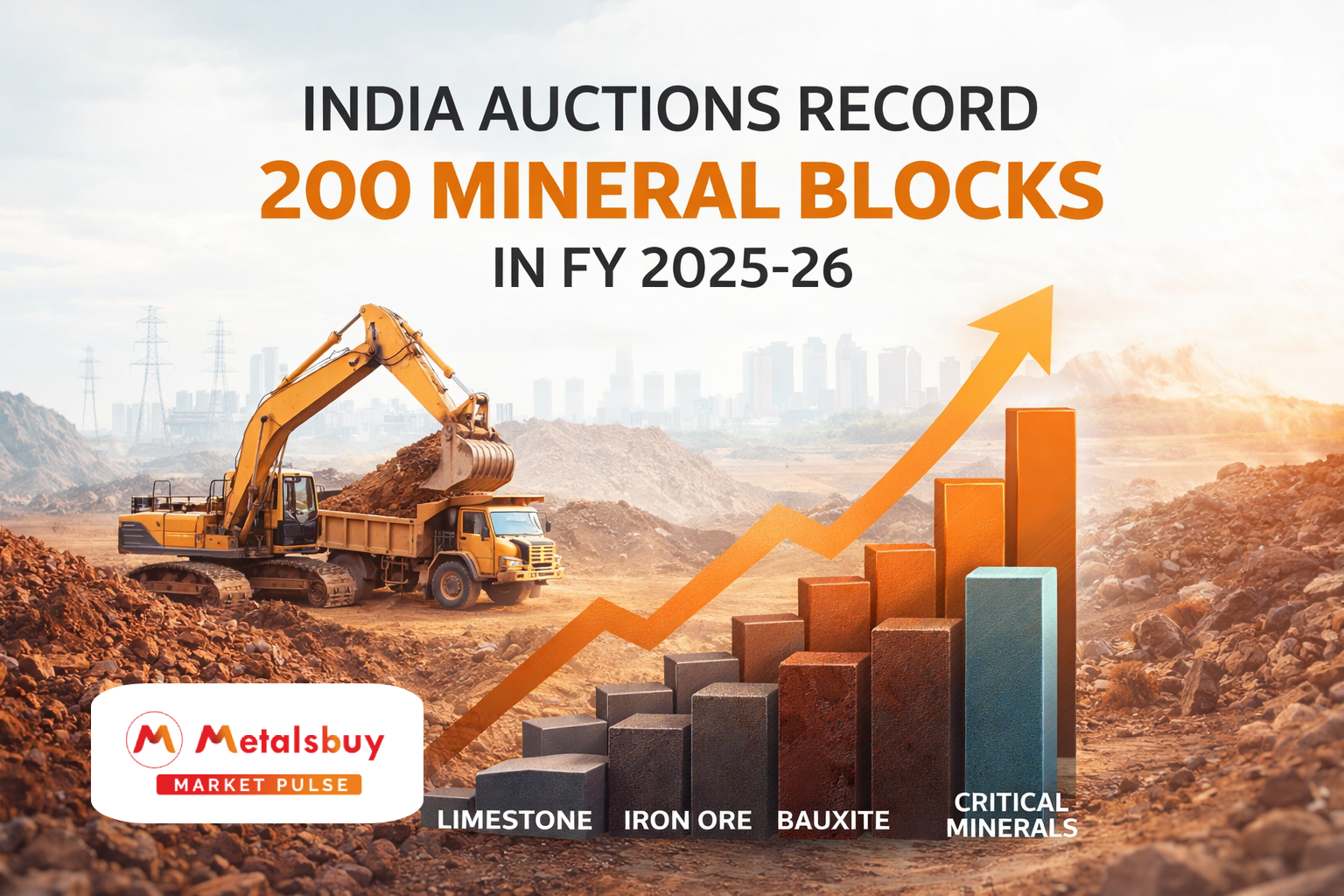
Total Blocks Auctioned: 200 (highest ever in a single year)
Break-up: 123 Mining Lease (ML), 77 Composite Licence (CL)
Key Minerals: Limestone (76), Iron Ore (40), Bauxite (30)
Critical Minerals: 22 blocks
Pipeline: ~70 additional blocks at NIT stage
Market Analysis
Record Auctions Mark Structural Shift in Mineral Allocation
India’s auction of 200 mineral blocks in FY 2025–26 represents a significant milestone in the evolution of its mining sector, marking the highest number of blocks auctioned in a single year. This development reflects a transition toward a more structured, transparent, and market-driven allocation system, replacing the earlier regime that was often characterised by delays and limited participation.
The scale of auctions indicates that both central and state governments are actively accelerating resource allocation to meet the growing demand from core industries. The increased pace also suggests improved institutional readiness, with states becoming more proactive in identifying, preparing, and auctioning mineral assets.
Diverse Mineral Mix Strengthens Industrial Supply Chain
The composition of auctioned blocks highlights a strong focus on minerals that are critical to India’s industrial growth. Limestone, iron ore, and bauxite together account for a significant portion of the total blocks, underscoring the importance of cement, steel, and aluminium sectors in driving resource demand.
The allocation of 40 iron ore blocks is particularly relevant for the steel industry, which is expected to expand capacity significantly over the coming years. Similarly, the availability of limestone blocks supports the cement sector, which is closely linked to infrastructure development.
This diversified mineral mix ensures that multiple sectors benefit from the increased availability of raw materials, strengthening the overall industrial supply chain.
Rising Focus on Critical Minerals
The auction of 22 critical mineral blocks signals a strategic shift toward securing resources essential for emerging sectors such as renewable energy, electric mobility, and advanced manufacturing. These minerals play a key role in technologies such as batteries, electronics, and clean energy systems.
By including critical minerals within the auction framework, India is taking a proactive approach to reducing import dependence and building domestic capabilities in strategic resource segments. This aligns with broader policy objectives aimed at enhancing resource security and supporting long-term industrial transformation.
Increased State Participation and Geographic Expansion
One of the defining features of this record auction cycle is the increased participation of states across the country. States such as Gujarat, Rajasthan, and Tamil Nadu have emerged as key contributors, reflecting a wider geographic spread of mining activity.
The inclusion of new states in the auction process indicates that the ecosystem is expanding beyond traditional mining regions. This not only improves resource utilisation but also supports regional economic development by attracting investment into previously underdeveloped areas.
The growing role of states also highlights the importance of policy alignment and administrative efficiency in driving the success of mineral auctions.
Pipeline Visibility Enhances Long-Term Supply Outlook
The presence of approximately 70 additional blocks in the pipeline at the Notice Inviting Tender (NIT) stage provides visibility into future supply additions. This continuous pipeline is critical for maintaining momentum in the mining sector and ensuring that resource availability keeps pace with industrial demand.
A steady flow of auctions reduces uncertainty for industry participants, enabling better planning for capacity expansion and long-term procurement strategies. It also reinforces the credibility of the auction mechanism as a reliable channel for resource allocation.
Industry Impact
The record number of mineral block auctions is expected to have far-reaching implications across the mining and metals ecosystem. For mining companies, it creates new opportunities for expansion and investment, while for end-use industries, it improves access to essential raw materials.
For the steel sector, increased availability of iron ore blocks supports long-term capacity growth and reduces supply-side constraints. Similarly, the cement and aluminium industries stand to benefit from improved access to limestone and bauxite resources.
The inclusion of critical minerals further strengthens India’s position in emerging industrial segments, providing a foundation for future growth in technology-driven sectors.
MetalsBuy Insight
India’s achievement of auctioning 200 mineral blocks in a single year reflects more than just a quantitative milestone. It signals a maturing mining ecosystem where policy, execution, and market participation are aligning to support long-term resource development.
The consistent expansion of the auction pipeline indicates that the focus is shifting from one-time allocation to a sustained and structured approach toward mineral resource management.
Bottom Line:
The record auction activity marks a decisive step toward strengthening India’s raw material base, ensuring that future industrial growth is supported by a more reliable and transparent resource supply framework.