KEY NUMBERS
29 Years : Duration of IMFA’s new captive renewable power agreement
65 MW : Hybrid renewable energy capacity secured by IMFA
81.4 MW : Solar generation capacity linked to the project
102.6 MW : Wind generation capacity included in the structure
25 MWh : Battery storage capacity supporting furnace stability
900% : Rise in South African industrial electricity tariffs since 2008 according to industry estimates
11 of 66 : South African ferrochrome smelters still operational according to industry participants
62 Cents per kWh : Emergency electricity tariff recently negotiated for South African producers
204.55 MW : Existing captive thermal generation operated by IMFA
50 MW : Renewable generation already operating within IMFA’s energy portfolio
⸻
MARKET ANALYSIS
The warning arrived slowly at first.
Then all at once.
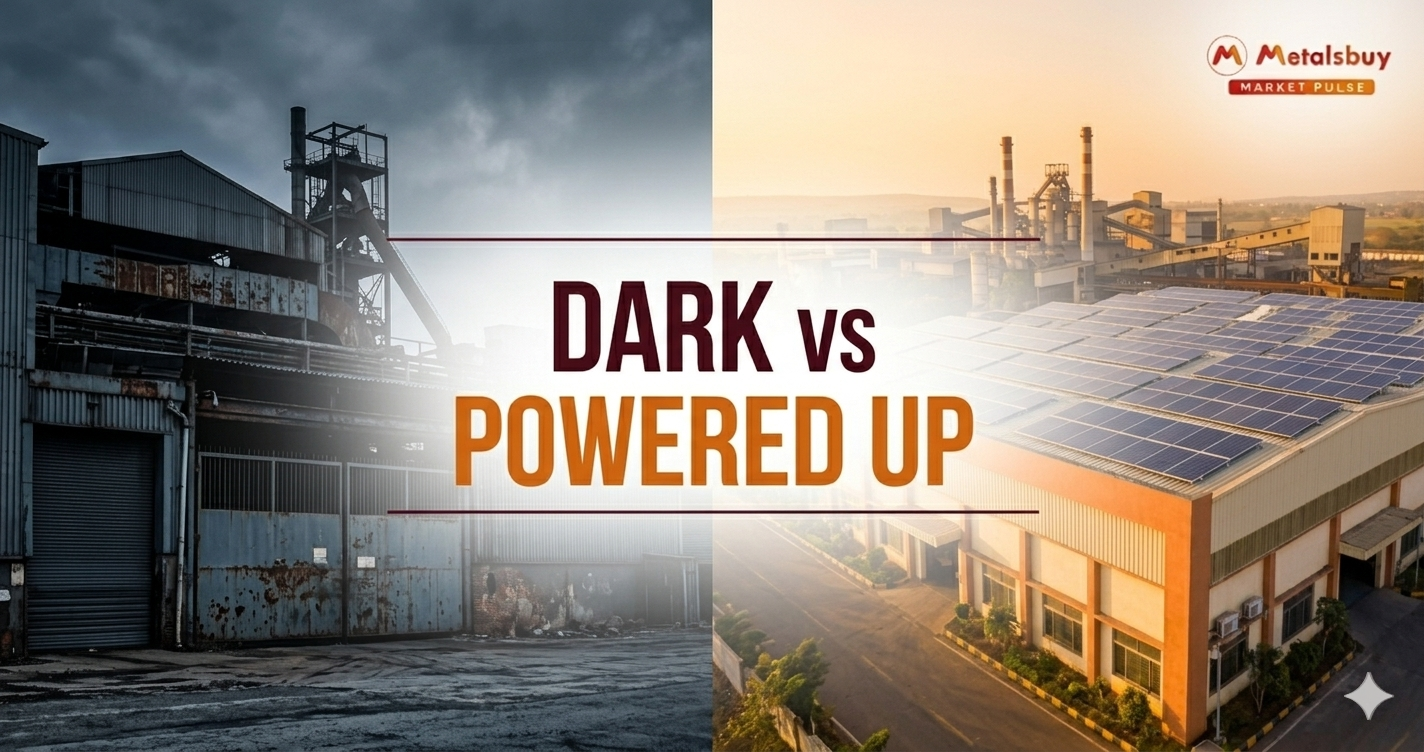
South Africa spent years watching electricity costs climb across its industrial economy while ferrochrome producers tried to absorb the pressure through efficiency gains, workforce cuts and operational adjustments. Eventually the math stopped working. Furnaces shut. Smelters went dark. Production migrated elsewhere.
India’s ferrochrome industry appears to be studying that collapse very carefully.
Indian Metals and Ferro Alloys Limited signed a 29 year captive renewable power agreement this week with EG Urja Strot covering hybrid renewable generation backed by solar, wind and battery storage. The immediate reaction across the market focused on sustainability and clean energy. That misses the deeper story completely.
This is about survival economics.
Ferrochrome is among the most electricity intensive industries anywhere inside the steel supply chain. Chrome ore itself is widely available globally. Stable cheap electricity is not. Once industrial power costs rise beyond a certain threshold, ferrochrome production economics deteriorate rapidly because electric arc furnaces consume enormous amounts of continuous energy every hour they operate.
South Africa became the clearest example of what happens next.
Industry participants estimate that only eleven of the country’s sixty six ferrochrome smelters remain operational after years of electricity inflation pushed producers into crisis conditions. Emergency tariff reductions negotiated recently may slow the damage, but they do not reverse what already happened: a large share of the world’s traditional ferrochrome processing base effectively lost competitiveness because power costs outran alloy economics.
Indian producers now face a choice.
Wait for the same pressure to build domestically and react later. Or lock in long duration energy visibility while conditions remain manageable.
IMFA appears to have chosen the second route.
The battery storage component inside the agreement is particularly revealing because it signals the company is not pursuing renewable energy for branding purposes alone. Continuous furnace operations require stable uninterrupted power. A ferrochrome furnace cannot pause every time solar generation weakens or wind conditions fluctuate. Industrial scale battery integration suggests alloy producers are beginning to treat renewable infrastructure as core metallurgical infrastructure rather than peripheral sustainability investment.
That shift matters far beyond one company.
⸻
INDUSTRY IMPACT
Electricity is quietly becoming the defining competitive variable across ferro alloys.
For years, ore access and freight economics dominated procurement discussions inside ferrochrome and silico manganese markets. Power was important, but largely treated as a background operating expense. The South African collapse changed that perception permanently.
Now producers are thinking differently.
Captive renewable generation offers several advantages simultaneously. It creates longer visibility over electricity costs. It reduces exposure to volatile fuel markets. It improves positioning with buyers increasingly sensitive to carbon intensity across steel supply chains. And perhaps most importantly, it reduces dependence on unstable industrial grids during periods of rising power demand.
The economics remain complicated.
Battery storage systems remain expensive. Renewable integration across heavy industrial operations still carries technical challenges. Large upfront capital requirements limit how quickly smaller alloy producers can adopt similar structures. Yet the alternative is visible across South Africa’s smelting sector where emergency tariff negotiations have effectively become necessary simply to keep parts of the industry alive.
Indian ferrochrome producers still operate from a stronger position.
Domestic stainless steel demand continues growing. Export competitiveness remains relatively intact. Odisha and Chhattisgarh still offer important structural advantages across alloy production and logistics. But the market increasingly understands that energy inflation can erode those advantages faster than expected if producers fail to secure long duration electricity economics early.
That reality is beginning to influence procurement conversations already.
⸻
WHAT TO WATCH NEXT
The next question is whether IMFA remains the exception or becomes the template.
Large integrated alloy producers with stronger balance sheets are best positioned to pursue hybrid renewable infrastructure aggressively because they can absorb long payback periods more comfortably than smaller independent smelters. If more producers follow this path, India’s ferro alloy industry could gradually split between energy secured operators and companies still exposed heavily to grid tariff volatility.
Watch Odisha carefully.
The state sits at the centre of India’s ferrochrome industry, and power economics there increasingly shape stainless steel raw material competitiveness across the country. Any acceleration in renewable captive adoption could begin influencing alloy pricing structures and procurement relationships over time.
South Africa also remains critical to monitor.
If emergency tariff relief fails to stabilise additional smelter capacity there, global ferrochrome supply concentration may tighten further. That would increase pressure on Indian producers to expand output while simultaneously maintaining cost competitiveness against Chinese processors.
Those two pressures now increasingly intersect through electricity economics.
⸻
MARKET OUTLOOK
IMFA’s renewable power agreement is not simply a clean energy announcement attached to a ferrochrome company.
It is an industrial warning signal.
South Africa demonstrated how quickly a globally dominant ferrochrome industry can weaken when electricity costs become structurally unmanageable. India still has time to avoid that outcome, but only if producers begin treating long duration energy security with the same seriousness they treat ore linkage and furnace efficiency.
The ferro alloy market is entering a period where power strategy may become inseparable from production strategy.
Companies that secure stable electricity economics early may gain advantages extending far beyond cost savings alone. They may ultimately determine which producers remain globally competitive when the next cycle of industrial energy inflation arrives.
IMFA’s Renewable Power Bet. India’s Ferrochrome Industry Is Trying To Avoid South Africa’s Fate Before It Is Too Late.