KEY NUMBERS
₹1.3 Billion : Net profit reported by IMFA during Q4 FY26
More Than 100% : Increase in quarterly net profit compared with previous year
₹7.6 Billion : Revenue reported during the quarter
35% : Growth in quarterly revenue
20.84% : EBITDA margin achieved during Q4 FY26
₹610 Crore : Acquisition value of Tata Steel’s Kalinganagar ferrochrome plant
99 MVA : Furnace capacity added through acquisition
65 MW : Renewable hybrid power secured through new agreement
29 Years : Duration of captive renewable power arrangement
₹110.18 Crore : Investment into EG Urja Strot renewable project
26% : Equity stake acquired in renewable infrastructure platform
⸻
MARKET ANALYSIS
Most alloy companies would treat one major announcement as enough for a quarter.
IMFA delivered three in a single week.
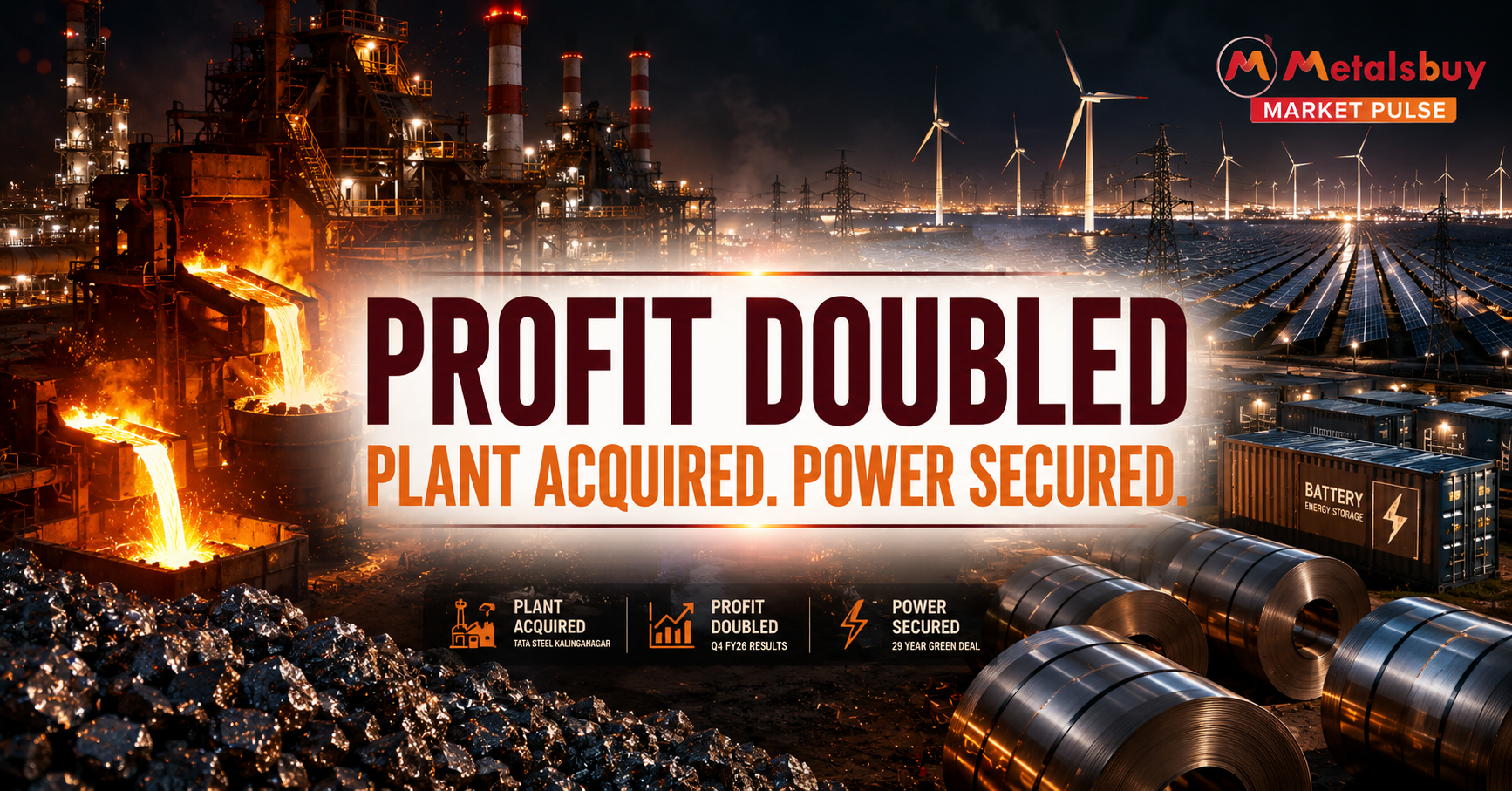
The company reported Q4 FY26 results showing net profit more than doubled to ₹1.3 billion while revenue rose 35% to ₹7.6 billion and EBITDA margins expanded to 20.84%. At the same time, the company completed its ₹610 crore acquisition of Tata Steel’s ferrochrome plant at Kalinganagar and signed a 29 year renewable power agreement backed by solar, wind and battery storage infrastructure.
The pattern matters more than the individual headlines alone.
Profits rising sharply during a period of strategic expansion usually signal something important inside commodity industries: management believes the cycle still has room to run. IMFA is not behaving like a company preparing cautiously for weaker conditions ahead. It is expanding furnace capacity, locking in long duration power economics and consolidating position inside Odisha’s ferrochrome corridor simultaneously.
That changes the scale conversation entirely.
The Kalinganagar acquisition adds 99 MVA of furnace capacity and pushes IMFA toward ferrochrome production capacity exceeding 500,000 tonnes by FY28, positioning the company among the world’s largest ferrochrome producers. In stainless steel supply chains, scale increasingly matters because large buyers prioritise procurement stability, continuous availability and integrated supplier relationships across volatile pricing cycles.
Electricity strategy matters just as much now.
Ferrochrome remains among the most power intensive businesses anywhere in the steel raw materials chain. South Africa’s smelter crisis demonstrated what happens when electricity economics move beyond alloy economics: furnaces shut regardless of ore availability. IMFA’s renewable agreement suggests Indian producers are increasingly trying to secure long duration energy visibility before similar structural pressure emerges domestically.
Battery storage is the revealing detail.
Renewable power alone cannot support uninterrupted ferrochrome furnace operations consistently without stability infrastructure. The inclusion of battery systems signals that IMFA is building industrial grade energy resilience rather than pursuing symbolic sustainability positioning. That distinction is becoming increasingly important across global alloy manufacturing.
Odisha sits directly at the centre of this shift.
The state already anchors India’s ferrochrome economy through chrome ore access, integrated steelmaking and export infrastructure. Consolidating additional furnace capacity there while securing captive energy integration strengthens IMFA’s position across the entire stainless steel raw materials chain simultaneously.
Markets notice when companies begin controlling multiple strategic variables at once.
⸻
INDUSTRY IMPACT
India’s ferro alloy industry is gradually separating into two groups.
Producers operating with scale, integrated infrastructure and long duration energy visibility. And producers still exposed heavily to spot power costs, fragmented procurement structures and smaller furnace networks.
IMFA’s latest moves reinforce the first model aggressively.
The acquisition strengthens production scale. The renewable agreement strengthens energy visibility. The quarterly earnings confirm that profitability remains strong enough to support expansion simultaneously. That combination creates competitive pressure across the wider alloy market because smaller standalone operators may struggle matching infrastructure investments at comparable scale.
The implications extend beyond ferrochrome alone.
Silico manganese and ferrosilicon producers are also confronting rising industrial power costs, tighter environmental expectations and increasingly competitive export markets. Large integrated players capable of controlling ore access, logistics and electricity economics may gradually gain structural advantages across multiple alloy categories over the next decade.
The stainless steel side matters too.
Global stainless steel buyers increasingly prefer stable long duration procurement relationships after several years of supply chain disruption, freight volatility and energy driven production instability across parts of Europe and South Africa. Producers able to guarantee operational continuity gain importance quickly in that environment.
That is the direction IMFA appears to be positioning toward now.
⸻
WHAT TO WATCH NEXT
The next phase is integration execution.
Acquiring furnace assets is easier than integrating procurement systems, maintenance structures, operating discipline and commercial strategy across expanding capacity networks. Markets will watch carefully whether IMFA maintains margins while scaling production aggressively over the next several quarters.
The renewable infrastructure timeline also deserves close attention.
Battery supported hybrid power systems remain relatively new inside large scale Indian ferro alloy manufacturing. Performance consistency, transmission integration and long duration operating economics will all influence whether more producers adopt similar models.
Watch stainless steel demand carefully too.
Ferrochrome expansion ultimately depends on downstream stainless steel consumption remaining healthy across India, China and export markets. Large alloy capacity additions require equally stable growth in stainless steel production to absorb supply comfortably over time.
⸻
MARKET OUTLOOK
IMFA’s latest quarter matters because it combines three signals markets rarely ignore when they appear together.
Strong profitability. Aggressive expansion. Strategic infrastructure control.
The company is no longer positioning itself simply as a ferrochrome producer benefiting from favourable market conditions. It is building toward becoming a much larger integrated alloy platform with greater control across furnace capacity, energy economics and supply chain resilience simultaneously.
That strategy carries risk. Large acquisitions and infrastructure investments always do.
But it also reflects something increasingly visible across India’s metals economy.
The industry is no longer preparing only for the next quarter.
It is preparing for the next decade.
IMFA Profit More Than Doubles. India’s Largest Ferrochrome Producer Is Expanding Faster Than The Market Expected.