KEY HIGHLIGHTS
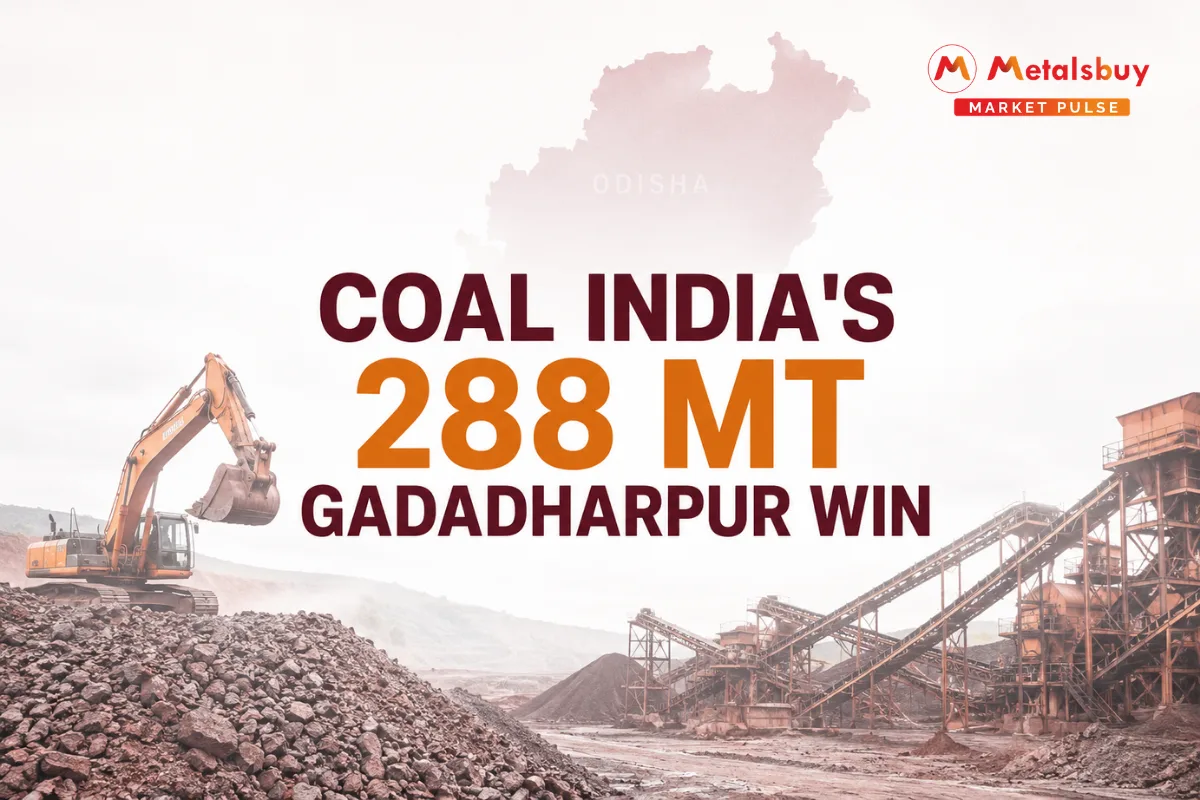
- Massive Resource Base: The Gadadharpur asset holds an estimated 288 million tonnes of iron ore at the G3 preliminary exploration stage.
- Strategic Location: Spread across 265.05 hectares in the highly mineralized Kendujhar district of Odisha.
- Aggressive Bidding Strategy: Secured through a competitive government auction with a premium quote of 114.05 percent.
- Unprecedented Diversification: Marks the maiden entry of the world's largest coal producer into the high-growth ferrous metals sector.
- Scaling National Output: Aligns with national projections targeting 340 to 345 million tonnes of iron ore production by 2027.
MARKET ANALYSIS
In a landmark development for the domestic mining sector, Coal India Limited has emerged as the preferred bidder for the Gadadharpur iron ore block in Odisha, signaling a decisive shift in its corporate trajectory. Secured through a highly competitive state government auction on August 6, 2026, this acquisition represents far more than a routine capacity expansion. It serves as a structural pivot for the state-owned enterprise, strategically designed to capture new value streams. The Gadadharpur block, covering 265.05 hectares in the Kendujhar district, is situated within one of the highest-density iron ore belts in the country. Geologically defined by banded iron formations and rich hematite deposits, this specific region has historically yielded some of the nation's most lucrative and essential mineral wealth.
Currently classified under the G3 exploration stage of the United Nations Framework Classification system, the block holds an estimated 288 million tonnes of preliminary iron ore resources. To secure this highly coveted asset, Coal India committed to an aggressive auction premium of 114.05 percent of the value of minerals dispatched. Under prevailing mining regulations, the company now operates within a one-year window to obtain all statutory environmental and forestry clearances, alongside a three-year timeframe to execute the formal mining lease deed.
This strategic entry into the ferrous metals space reflects a broader mandate for public sector undertakings. By stepping into Odisha’s thriving mining ecosystem, Coal India is effectively mapping its future revenue generation to sectors guaranteed to see sustained, multi-decade growth. The Kendujhar district alone contributes massively to the state's total mineral output, providing an established logistical framework and supply chain network that will severely reduce friction when facilitating the rapid commercial development of the Gadadharpur asset.
WHAT IT MEANS FOR THE STEEL INDUSTRY
India is firmly positioned as the world's second-largest crude steel producer, with aggressive capacity expansion plans currently underway to meet an unprecedented domestic infrastructure boom. The entry of an industrial heavyweight like Coal India into iron ore mining introduces a massive new participant capable of deploying substantial capital to accelerate resource extraction. According to recent commodity market assessments, domestic iron ore output is projected to reach between 340 million and 345 million metric tonnes during the 2026-27 fiscal cycle. This represents a robust increase from the roughly 316 million tonnes recorded in the previous year, highlighting the urgent need for new mining operationalization.
For domestic steelmakers, this development injects a promising layer of supply chain stability. As the nation rapidly scales its manufacturing capabilities under the Make in India initiative, the fundamental appetite for high-quality iron ore is threatening to outpace current supply pipelines. Having a well-capitalized, state-backed entity operating the Gadadharpur block ensures that long-term extraction will be steadily aligned with broader national industrial interests rather than fluctuating purely on short-term commercial cycles. Odisha serves as the undisputed backbone of the country's ferrous metals supply, and bringing new, large-scale blocks into active production is critically essential for steel plants that rely on uninterrupted raw material flow.
The sheer willingness of Coal India to pay a 114.05 percent premium underscores exactly how tight the race for quality iron ore assets has become. It strongly signals to the broader industry that raw material security remains the highest operational priority for future growth. With major steel corporations aggressively expanding their blast furnace capacities across eastern and southern India, the reliance on stable, domestically sourced iron ore has reached absolute peak levels. The Gadadharpur block’s eventual transition from exploration to the production phase will alleviate significant pressure on the open market, potentially stabilizing regional ore pricing and providing a highly reliable feed source for nearby pellet plants and integrated steel mills.
MARKET OUTLOOK
Looking ahead, the successful bid for the Gadadharpur block sets a powerful precedent for the commodities market. For decades, Coal India has operated almost exclusively as the foundational engine of the country's energy supply, single-handedly managing roughly 80 percent of total domestic coal output. However, with the accelerating pace of global decarbonization and aggressive commitments to expanding renewable energy capacity, long-term thermal coal demand faces inevitable structural moderation. This acquisition acts as a masterclass in preemptively hedging a corporate balance sheet by boldly entering an adjacent, high-growth sector.
Iron ore mining inherently shares significant operational synergies with large-scale open-cut coal extraction. This allows the enterprise to effortlessly leverage its existing logistical expertise, heavy machinery deployment capabilities, and unparalleled project management scale. Over the next few years, primary capital focus will shift toward completing the required core drilling and closer-spaced sampling necessary to upgrade the Gadadharpur block from a G3 preliminary resource into a fully delineated, production-ready asset.
As urbanization drives physical infrastructure expansion, the structural hunger for steel will inherently intensify. By capturing a massive 288-million-tonne resource base, Coal India has not only secured a lucrative new operational revenue stream but has simultaneously positioned itself as a pivotal pillar in the industrial future. The market can fully expect further aggressive participation from diversified public sector firms in future critical mineral block auctions, fundamentally reshaping the competitive landscape of domestic mining for decades to come.