Key Numbers
• Washery Capacity: 2.5 Million Tonnes Per Annum
• Asset Owner: Bharat Coking Coal Limited (BCCL)
• New Operator: JSW Steel
• Agreement Model: Asset Monetization Through Private Operation
• India's Coking Coal Import Dependence: More Than 85%
• Coal India FY26 Production: Over 875 Million Tonnes
• India's Crude Steel Production FY26: ~169 Million Tonnes
• National Steel Capacity Target by 2030: 300 Million Tonnes
Market Analysis
1. BCCL Moves Ahead with Coal Asset Monetization
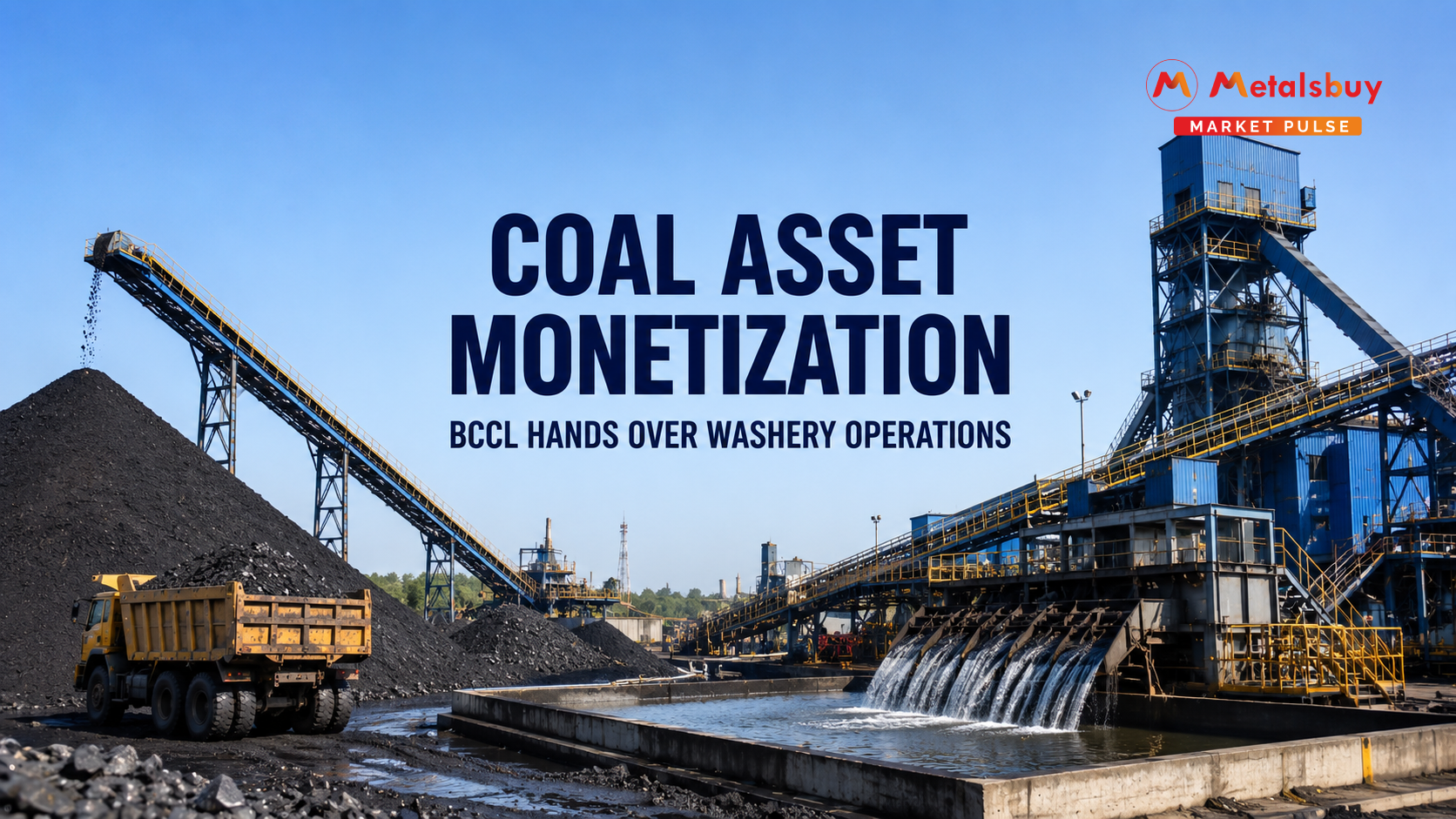
Bharat Coking Coal Limited (BCCL), a subsidiary of Coal India, has handed over the operation of one of its coal washeries to JSW Steel under an asset monetization initiative. While ownership of the asset remains with BCCL, the operational responsibility will now be managed by JSW Steel. The move reflects a growing trend within India's mining and energy sectors where public sector companies are looking to unlock greater value from existing assets through private participation. Rather than investing additional capital in modernization and operations, companies are increasingly partnering with industry players that can bring operational expertise and efficiency. This model allows public sector enterprises to generate returns from underutilized assets while ensuring better utilization of existing infrastructure.
2. Why Coal Washeries Matter to the Steel Industry
Coal washeries play a critical role in improving the quality of coal before it reaches steel plants. Raw coal often contains impurities such as ash and unwanted minerals that reduce efficiency during steelmaking. Through the washing process, these impurities are removed, resulting in cleaner coal with improved calorific value and better metallurgical properties. For steel producers, higher-quality washed coal translates into improved blast furnace performance, lower fuel consumption, and better productivity. As steelmakers continue to focus on cost optimization, securing reliable access to quality coking coal has become increasingly important. This is one reason why steel companies are showing growing interest in coal beneficiation and related infrastructure.
3. JSW Steel Strengthens Raw Material Integration
For JSW Steel, taking over the operation of the washery is more than just an operational contract. It aligns with the company's broader strategy of strengthening control over critical raw material supply chains. Steel producers across India are increasingly looking beyond steelmaking and investing deeper into mining, logistics, beneficiation, and raw material processing. Such integration helps reduce procurement risks, improve supply consistency, and provide greater visibility over production costs. In a business where margins are often influenced by raw material prices, securing operational control over key inputs can offer a meaningful competitive advantage.
4. Coking Coal Remains a Strategic Challenge for India
India's steel industry continues to face significant dependence on imported coking coal. Despite being one of the world's largest coal-producing nations, the country imports a substantial portion of the coking coal required by integrated steel plants. Rising global coal prices, freight volatility, and geopolitical disruptions have repeatedly exposed steelmakers to supply-side risks. Against this backdrop, initiatives that improve domestic coal quality and washing capacity are becoming increasingly important. Better utilization of existing washeries can help improve domestic availability of usable coal and reduce pressure on imported raw materials over time.
5. Asset Monetization Gains Momentum Across Mining Sector
The transfer of washery operations also reflects a broader policy direction being pursued across India's resource sector. Government-owned companies are increasingly exploring asset monetization as a way to improve efficiency and generate additional revenue without divesting ownership. Similar models are being evaluated across mining, logistics, transportation, and infrastructure assets. The objective is simple: leverage private sector expertise while retaining public ownership of strategic assets. If successful, such partnerships could improve productivity, encourage investment, and create a more efficient ecosystem across the mining and metals value chain.
6. Stronger Raw Material Infrastructure Needed for Future Steel Growth
India's ambition to increase steelmaking capacity to 300 million tonnes by 2030 will require significant improvements across the raw material supply chain. Expanding steel capacity alone will not be sufficient unless coal, iron ore, logistics, and beneficiation infrastructure keep pace. Coal washeries form an important part of this ecosystem because they help improve the quality and efficiency of fuel used in steel production. As steel demand continues to rise, investments in supporting infrastructure will become increasingly important. The BCCL-JSW arrangement therefore highlights the industry's growing focus on strengthening the foundations that support long-term steel sector growth.
Industry Impact
The handover of washery operations to JSW Steel represents a practical example of how collaboration between public sector resource companies and private industry can create mutual benefits. BCCL gains improved utilization of its asset while JSW Steel strengthens its access to a critical raw material processing facility. The arrangement also supports the broader objective of improving efficiency across India's coal value chain.
For the steel industry, such developments are becoming increasingly relevant as companies seek greater control over raw material quality, supply security, and production costs. Similar partnerships could emerge across other mining and beneficiation assets as producers prepare for the next phase of steel capacity expansion.
Outlook
The BCCL-JSW Steel agreement is likely to be viewed as more than a standalone transaction. It reflects a larger shift toward operational efficiency, asset monetization, and deeper integration across India's mining and steel sectors. As steel production continues to expand, the importance of reliable and cost-effective raw material infrastructure will only increase.
Going forward, industry participants will closely watch whether similar asset monetization models are adopted across other coal and mining assets. If executed successfully, such partnerships could play an important role in strengthening India's resource ecosystem while supporting the country's long-term steel growth ambitions.