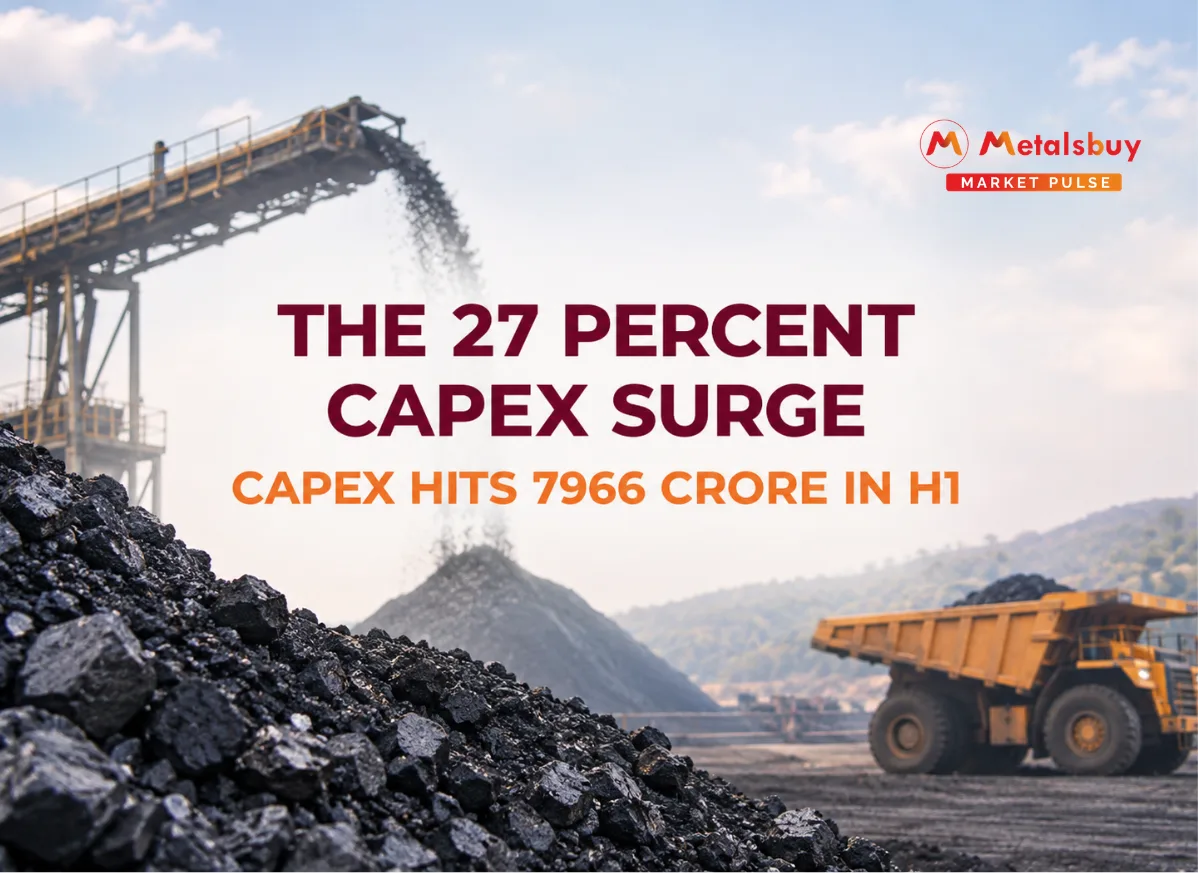
India's energy ecosystem is witnessing a massive infrastructural push as the country's primary state-owned mining giant aggressively accelerates its financial investments. Coal India Limited has officially recorded a staggering 27 percent year-on-year increase in its capital expenditure during the first half of the 2026-27 financial year. By injecting roughly ₹7,966 crore into critical infrastructural upgrades between April and September, the Maharatna enterprise is proactively ensuring that the nation's booming thermal power, steel, and heavy manufacturing sectors have uninterrupted access to vital raw materials. This aggressive capital deployment highlights a strategic shift from basic extraction to building a highly modernized, tech-driven, and resilient domestic energy supply chain.
Aggressive capital deployment fuels mining modernization
The latest financial disclosures from the Ministry of Coal underscore a highly disciplined and execution-oriented approach by the mining major. Achieving a 27 percent growth in capital expenditure during the traditionally challenging monsoon months is a significant operational victory. During the first six months of the current fiscal year, Coal India Limited successfully utilized ₹7,966 crore toward its capital expenditure initiatives. This marks a substantial increase compared to the ₹6,274 crore deployed during the corresponding April-September window of the previous financial year. This robust spending velocity is deeply intertwined with the company’s overarching mandate to continuously scale its domestic production capabilities. As the Indian government pushes the domestic power and steel sectors to operate at maximum capacity to fuel the national infrastructure boom, Coal India is under immense pressure to systematically elevate its annual output toward the ambitious one billion tonne mark. Hitting this massive production target requires heavy, continuous investments in every single node of the mining value chain.
Securing land and heavy machinery for future capacity
A detailed analysis of the capital expenditure breakdown reveals that the company is heavily prioritizing the fundamental building blocks of open-cast mining: land acquisition and heavy machinery. Securing physical land and the associated environmental clearances remains one of the most complex hurdles in the Indian mining sector. A significant portion of the ₹7,966 crore capex has been directed toward the acquisition and rehabilitation of land for expanding existing pitheads and opening new, high-yield mining blocks across states like Jharkhand, Odisha, and Chhattisgarh. Concurrently, Coal India is aggressively upgrading its fleet of Heavy Earth Moving Machinery. The procurement of high-capacity dumpers, massive electric rope shovels, and autonomous drilling rigs is transforming the efficiency of domestic mines. By replacing legacy equipment with these high-capacity machines, the company is structurally lowering its per-tonne cost of excavation, drastically improving workplace safety, and ensuring that daily extraction run-rates remain exceptionally high.
Strengthening railway logistics for seamless coal evacuation
Extracting record volumes of coal is economically useless if the raw material remains stranded at the pithead. Consequently, Coal India is channeling massive capital into revolutionizing its outbound logistics and freight evacuation infrastructure. A major strategic focus within the H1 FY27 capex deployment is the ongoing execution of First Mile Connectivity projects. Historically, coal was transported from the mine face to railway sidings via road, leading to severe dust pollution, high diesel costs, and seasonal logistical bottlenecks. To counter this, Coal India is investing heavily in mechanized coal handling plants, rapid loading silos, and dedicated conveyor belt networks. These advanced systems seamlessly transport crushed, sized coal directly into railway wagons at unprecedented speeds. Furthermore, the company is funding the construction of new railway sidings and dedicated freight lines in collaboration with Indian Railways. This logistical modernization ensures that the extracted fuel reaches coastal power plants and inland steel mills much faster, effectively neutralizing the risk of localized grid disruptions.
Balancing core mining with sustainable diversification goals
From a macroeconomic perspective, Coal India’s aggressive spending is not solely focused on fossil fuels; it also reflects a mature, forward-looking diversification strategy designed to future-proof the state-run enterprise. While maintaining absolute dominance in thermal and coking coal extraction, a strategic portion of the capital expenditure is being funneled into sustainable business verticals. The company is actively investing in large-scale solar power generation to fulfill the captive energy requirements of its massive mining operations, thereby reducing its own operational carbon footprint. Additionally, significant groundwork is being laid for surface coal gasification projects. By converting domestic coal into high-value synthesis gas, the company aims to support the production of alternative industrial chemicals and fertilizers, reducing India's reliance on expensive imported natural gas.
Ultimately, this 27 percent surge in capital expenditure proves that Coal India is operating with exceptional financial agility. By successfully deploying ₹7,966 crore in just six months, the company is actively insulating the Indian economy against global energy shocks. This proactive investment guarantees that as the nation's industrial and manufacturing sectors accelerate into the busy second half of the year, the underlying raw material foundation will remain incredibly secure, cost-competitive, and technologically advanced.