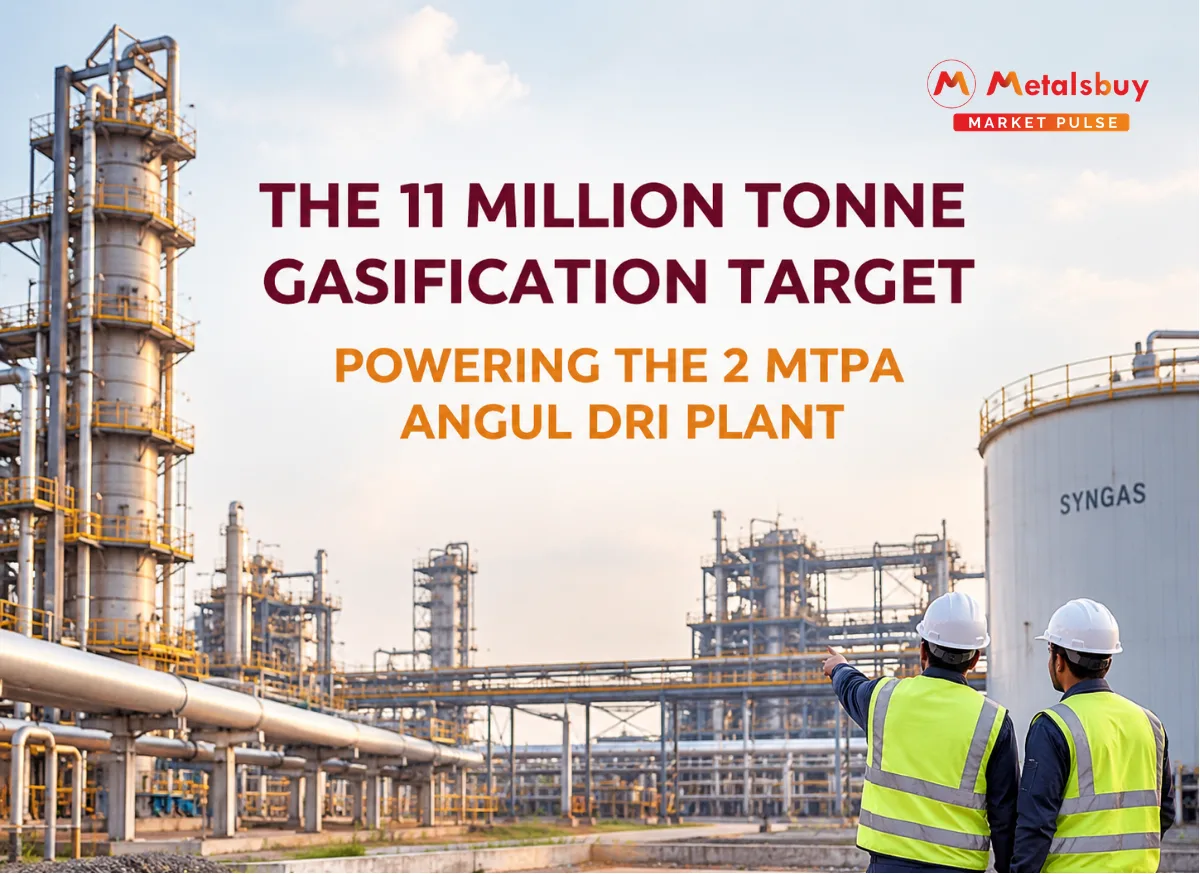
India’s heavy manufacturing sector is actively accelerating its transition towards sustainable, self-reliant operations. Jindal Steel has officially unveiled a highly ambitious roadmap to more than double its coal gasification capacity, targeting an expansion from the current 4.5 million metric tonnes to approximately 11 million metric tonnes by the end of 2030. This monumental capacity upgrade, detailed during the recent Coal Gasification India Conference 2026, represents a massive technological pivot for the domestic metals industry. By aggressively scaling up gasification-based production, the company aims to extract significantly higher economic value from local natural resources, simultaneously reducing India's heavy reliance on imported energy feeds and fostering a robust ecosystem for industrial value addition.
Unlocking domestic value through coal gasification
The primary driver behind this multi-million-tonne expansion is the strategic utilization of India's vast, largely untapped energy reserves. Speaking at the industry conference, Naveen Ahlawat, the President and Head of Sustainability and Decarbonisation at Jindal Steel, emphasized that the transition to 11 million tonnes of gasification capacity will fundamentally reshape the company's resource management.
India currently boasts coal reserves of nearly 300 billion tonnes, with an annual extraction rate hovering around one billion tonnes. At this current pace, these domestic reserves are projected to last for approximately three centuries. However, rather than utilizing this raw material exclusively for conventional thermal power generation, advanced gasification technology allows manufacturers to cleanly convert coal into synthesis gas. This syngas acts as a highly versatile foundational element, enabling the domestic production of critical synthetic natural gas, agricultural fertilizers, and specialized industrial chemicals. By producing these high-value commodities locally, the manufacturing sector can drastically reduce the massive foreign exchange outflows associated with importing crude oil derivatives and natural gas, directly fortifying the national economy.
Accelerating green steel with direct reduced iron
At the operational level, this expanded gasification capacity acts as the ultimate bedrock for producing low-carbon, highly efficient green steel. Jindal Steel already commands a unique position on the global metallurgical stage, operating the world’s first and only coal gasification-based Direct Reduced Iron facility in Angul, Odisha.
This pioneering plant has been successfully operational for over 12 years, utilizing domestic coal to produce a clean reducing gas that strips oxygen from iron ore without the need for imported premium coking coal. To capitalize on this proven technology, the company is currently executing the second phase of its massive 2 million tonnes per annum Direct Reduced Iron plant. This new capacity is scheduled for successful commissioning by the end of 2027. By integrating the upcoming 11 million tonnes of gasification capacity with these advanced ironmaking units, and simultaneously exploring renewable energy linkages, the steelmaker is actively lowering the emission intensity of its massive blast furnaces. This approach structurally lowers the carbon footprint of its finished steel products, perfectly aligning corporate operations with stringent global sustainability benchmarks.
Aligning with the national coal gasification mission
From a broader macroeconomic and policy perspective, Jindal Steel’s aggressive capacity rollout is perfectly synchronized with the central government's long-term energy visions. The Indian Ministry of Coal has formally launched the National Coal Gasification Mission, setting an overarching national target to gasify 100 million tonnes of coal by the year 2047, which marks the centenary of the country's independence.
By committing to an 11 million tonne capacity by 2030, Jindal Steel alone will be responsible for fulfilling over ten percent of this massive national mandate well ahead of schedule. However, realizing this aggressive expansion requires absolute stability in the upstream supply chain. Industry leaders stress that uninterrupted, high-quality coal feeds from state-run entities like Coal India are mandatory for maximizing gasifier efficiencies. To further insulate its operations from potential logistical bottlenecks or merchant market price volatility, the steelmaker is heavily prioritizing backward integration by actively developing its own captive coal blocks, ensuring a highly predictable and customized raw material supply.
Securing a resilient and profitable industrial future
The successful execution of this gasification strategy guarantees a highly resilient and profitable future for the steel giant. The proactive shift towards alternative, domestic fuels insulates the company's operational margins from the unpredictable price shocks of the international seaborne coking coal market.
Furthermore, this focus on sustainable technology and robust operational planning has recently earned the company a CARE AA+ credit rating upgrade, reflecting immense confidence from financial institutions. As the Indian economy continues its massive infrastructure and manufacturing boom over the current decade, the demand for high-quality, sustainably produced structural and flat steel will accelerate rapidly. By scaling its coal gasification capabilities to 11 million tonnes, Jindal Steel proves that heavy industry can successfully marry immense volumetric growth with environmental responsibility, setting a powerful operational standard for the rest of the global metals market to follow.