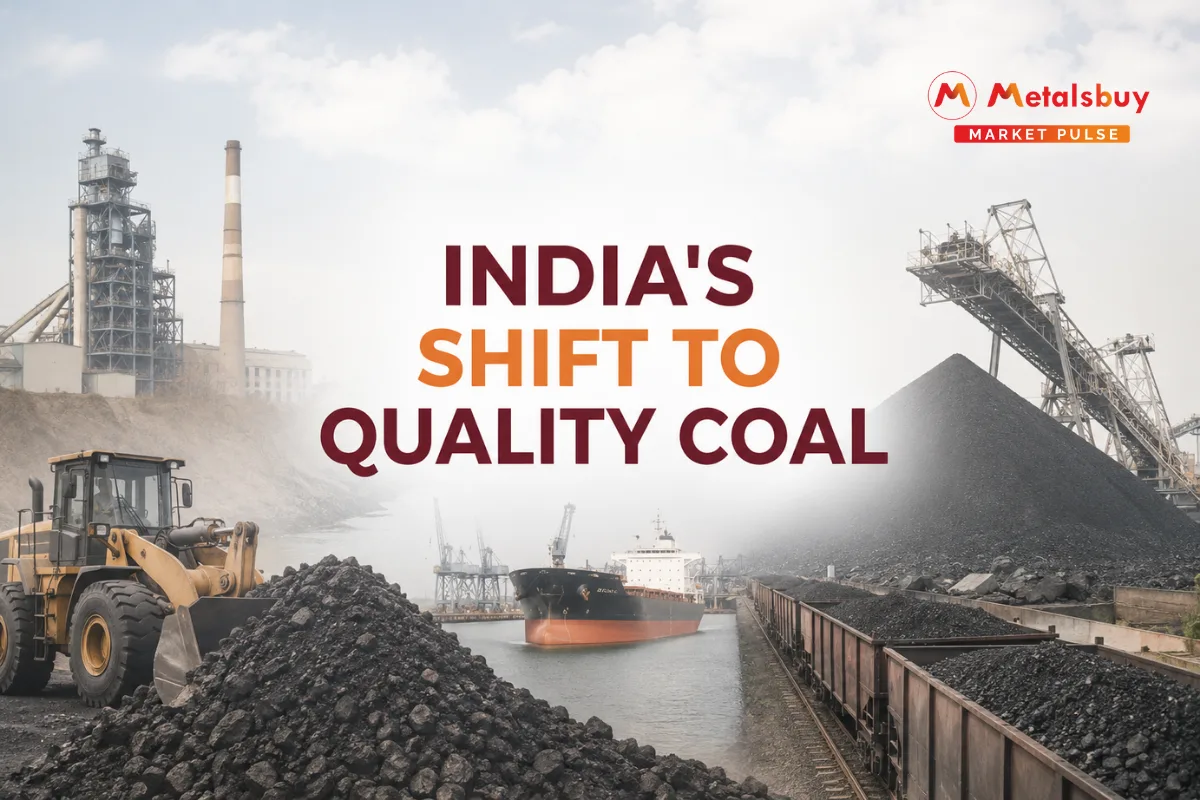
India’s coal industry is undergoing a clear structural transformation. For years, the primary focus for miners and policymakers was simply increasing raw extraction volumes to meet the massive demands of a growing economy. However, recent market dynamics and a rapidly evolving energy mix are forcing a shift in how coal is procured, priced, and managed. The domestic market is now moving away from a purely volume-driven approach toward one that prioritizes operational flexibility, better raw material quality, and sophisticated risk management.
A Transition Driven By Flexibility And Quality
While coal remains the absolute anchor of India’s electricity system, the way the fuel is utilized is changing. Recent market analysis highlights that coal-fired power plants generated approximately 1,280 billion units of electricity in the 2025-2026 financial year. This accounted for nearly 69 percent of the country’s total power generation, which is a slight decline from the 72 percent share it held in the previous year.
This drop in percentage does not indicate a loss of relevance. Instead, coal plants are no longer operating solely as continuous, rigid baseload providers. The rapid expansion of renewable energy across the grid means thermal plants are increasingly required to ramp operations up or down to balance generation fluctuations. This pressing need for operational flexibility requires better quality coal and more reliable, transparent procurement strategies, rather than just securing bulk quantities of lower-grade fuel.
Captive Mines And Import Substitution Gain Ground
The push for a more mature coal market is being heavily supported by changing domestic production demographics. State-owned entities are no longer carrying the entire burden of incremental supply on their own. Captive and commercial coal mines have become a highly crucial component of the domestic supply chain. By the end of the recent fiscal year, private and captive producers accounted for around 26 percent of India’s total coal production, marking a significant jump from the 20 percent share they held just four years earlier in 2022.
This diversification in production has directly improved domestic fuel availability and quality, leading to a noticeable reduction in imported thermal coal. Industry data shows that non-coking coal imports declined to approximately 159.7 million tonnes in the recent fiscal year, down from 169 million tonnes previously. As domestic availability improves, India's import basket is becoming much more focused on specialized, steel-centric coking coal rather than generic thermal grades.
Focus On Infrastructure And Efficient Evacuation
The transition beyond mere production volumes is most visible in the industry's logistics and infrastructure upgrades. Extracting millions of tonnes of coal is only useful if it can be efficiently evacuated from pitheads to end-users without degradation in quality or heavy logistical delays.
To address this, the government and major miners have aggressively pushed First Mile Connectivity projects. By mid-2026, 72 such projects with a cumulative capacity of nearly 589 million tonnes per annum had already been commissioned. These mechanized coal handling plants and silos with rapid loading systems largely eliminate the need for road transport via trucks. This drastically reduces dust pollution and prevents the deterioration of coal quality before it reaches railway rakes.
Recent monthly data shows exactly how this logistical improvement is playing out on the ground. In July 2026, while national coal production rose by a steady 7.5 percent year-on-year to 69.75 million tonnes, overall coal dispatches jumped by a massive 17.3 percent to reach 86.33 million tonnes.
Even in August, when heavy monsoon rains disrupted some extraction and led to a minor 5.7 percent drop in Coal India's production, the company's supplies to consumers still managed to rise by 5.5 percent. This divergence proves that supply chain efficiency and inventory management are now functioning independently of raw daily output.
Impact On The Metals And Sponge Iron Sectors
Better domestic coal quality and improved evacuation infrastructure hold immense value for India's secondary steel sector. Sponge iron manufacturers rely heavily on consistent, specific thermal coal grades to maintain production efficiency.
When the market prioritizes quality over raw volume, these industrial consumers face fewer supply chain disruptions and lower energy inefficiencies in their kilns. The ability to source higher-grade domestic coal reliably also protects these mid-sized manufacturers from the severe price volatility often seen in the seaborne international coal market.
Portfolio Management Replaces Simple Procurement
The broader implication for the industrial and power sectors is that India’s coal narrative has permanently evolved. It is no longer just a race to mine more material at any cost. Procurement is becoming highly strategic. Large consumers are focusing on securing the right fuel grade, at the right transparent price, while minimizing logistical hurdles.