KEY HIGHLIGHTS
- Strategic MoU: Coal India Limited (CIL) and ArcelorMittal Nippon Steel (AM/NS) partner to assess syngas viability.
- Green Transition: Planned coal gasification unit to feature advanced Carbon Capture, Utilization, and Storage (CCUS) tech.
- Prime Location: Facility to be constructed adjacent to AM/NS India’s robust 12 MTPA capacity pellet plant in Paradip, Odisha.
- Resource Optimization: Syngas to act as a cleaner chemical reducing agent, curbing heavy reliance on imported natural gas.
- Feasibility Roadmap: Immediate focus on evaluating commercial metrics and preparing a Preliminary Feasibility Report (PFR).
MARKET ANALYSIS
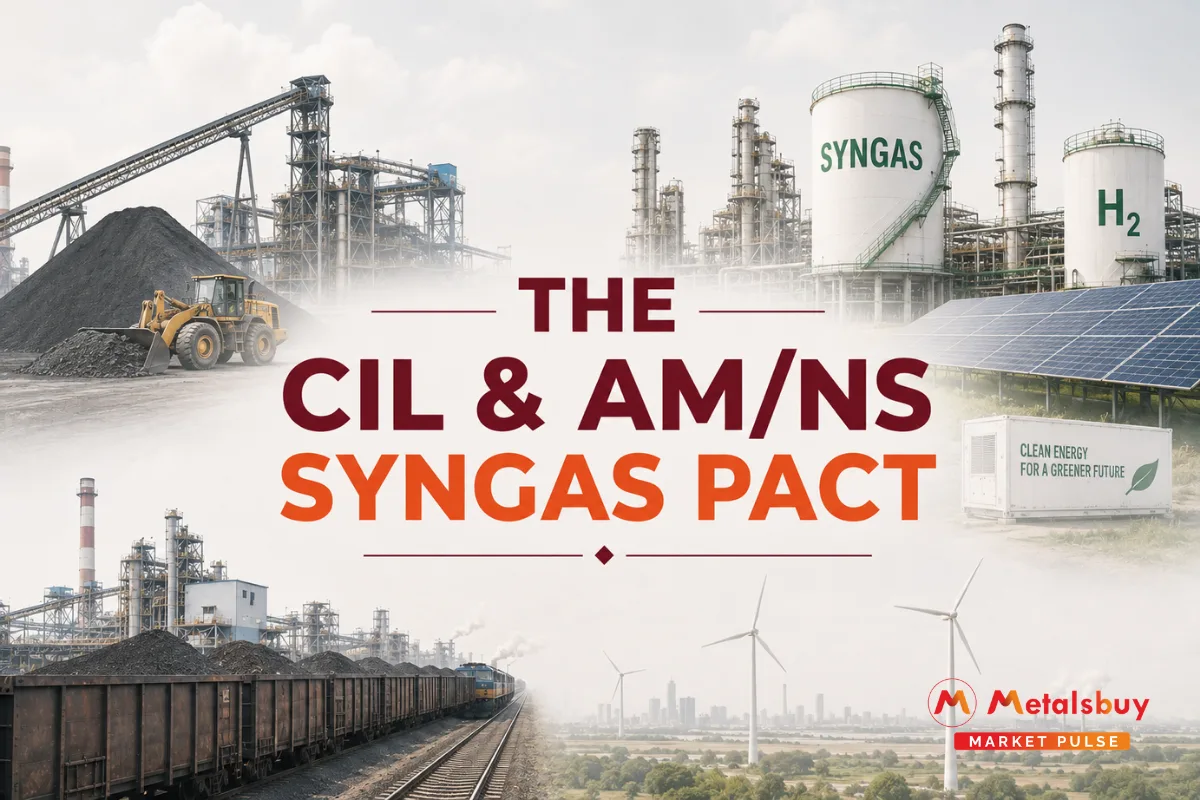
State-owned mining giant Coal India Limited (CIL) and leading domestic steel manufacturer ArcelorMittal Nippon Steel Limited (AM/NS) have officially entered into a Memorandum of Understanding (MoU). This pivotal agreement focuses on exploring the deployment of synthetic gas—commonly known as syngas—derived from a specialized coal gasification plant proposed by CIL. The gas is targeted for direct application at AM/NS’s state-of-the-art pellet plant located in Paradip, Odisha, a region that accounts for over 20% of the nation's total steelmaking capacity.
The broader market dynamics reveal a pressing need for such innovations. Currently, India imports over 85% of its coking coal requirements, amounting to roughly 50 to 55 million tonnes annually, exposing domestic steelmakers to volatile international pricing and severe supply chain disruptions. By converting domestic high-ash coal into syngas, steel producers can secure a reliable, localized energy source. Syngas acts as an effective and cleaner substitute for imported natural gas and serves as a powerful chemical reducing agent when injected into blast furnaces.
Furthermore, the integration of Carbon Capture, Utilization, and Storage (CCUS) technology into the CIL gasification facility underscores a tangible commitment to sustainable industrial practices. This aligns perfectly with national mandates to reduce the carbon footprint of heavy industries. Incorporating CCUS ensures that the carbon emissions inherent in coal processing are captured before they reach the atmosphere, making the syngas a significantly greener alternative for the energy-intensive pelletizing process. As raw material prices continue to fluctuate globally, this localized approach provides a robust hedge against inflationary pressures, ensuring tighter control over production margins.
WHAT IT MEANS FOR THE STEEL INDUSTRY
The collaboration between India's primary raw material provider and a top-tier global steel producer marks a transformative shift in operational strategies within the sector. For AM/NS India, utilizing syngas directly at the Paradip pellet plant translates to optimized production costs and enhanced energy security. Replacing expensive imported coking coal and natural liquefied gas with domestically produced syngas significantly buffers the company against geopolitical market shocks and currency depreciation impacts.
From an industry-wide perspective, this MoU serves as a critical proof-of-concept for the entire metallurgical landscape. The successful implementation of coal gasification paired with CCUS technology can create a scalable blueprint for other integrated steelmakers in India. As the country pushes toward aggressive capacity expansions—aiming for an ambitious 300 million tonnes of crude steel capacity by 2030—securing cost-effective, low-emission energy alternatives is paramount. This initiative demonstrates that traditional coal resources can be repurposed cleanly to fuel the next wave of industrial growth without compromising ESG (Environmental, Social, and Governance) commitments.
Moreover, this partnership could accelerate the adoption of alternative reduction technologies. With blast furnaces heavily dependent on high-grade coking coal, the gradual shift towards syngas injection can extend the operational life of existing furnaces while simultaneously lowering the emissions intensity per tonne of steel produced. It sets a precedent that decarbonization in the steel sector does not solely rely on hydrogen or electric arc furnaces, but can also be achieved through intelligent optimization of existing fossil fuel reserves through modern gasification and capture techniques.
MARKET OUTLOOK
Looking ahead, the trajectory for coal gasification in India appears highly promising and strategically vital. The federal government has already set bold targets to gasify 100 million tonnes of coal by 2030, supported by extensive financial incentives, viability gap funding, and supportive policy frameworks. As CIL and AM/NS move forward with their technical and commercial feasibility assessments, the upcoming Preliminary Feasibility Report (PFR) will be a critical milestone. Positive findings from this report could trigger accelerated capital expenditure in similar gasification projects across the mineral-rich eastern mining and steel corridors of India.
Ultimately, the successful commercialization of this syngas project at Paradip is expected to catalyze a ripple effect, encouraging more cross-sector partnerships between mining PSUs and private steel entities. Investors and market analysts will be closely monitoring these developments, as they hold the immense potential to redefine cost margins, reduce import dependency, and establish new sustainability benchmarks for the entire South Asian steel market. The shift towards indigenous, cleaner energy solutions is no longer just an environmental goal but a core economic necessity for long-term industrial resilience.