KEY NUMBERS
6 To 12 Months : Estimated recovery period for damaged Iranian steel facilities
Several Gulf Steelmakers : Reportedly reduced output during the past month
Middle East : Critical transit route for bulk commodity shipping
Iron Ore Pellets : Among the raw materials affected by shipping disruptions
Ferro Alloys : Trade flows impacted by regional supply chain constraints
India : One of the largest importers and consumers of ferro alloys globally
Iran : One of the region’s major steel producing nations
2026 : Year of renewed disruption across Middle Eastern commodity routes
⸻
MARKET ANALYSIS
Commodity markets rarely change direction because of a single event.
They change when trade routes stop behaving normally.
That is beginning to happen across parts of the Middle East.
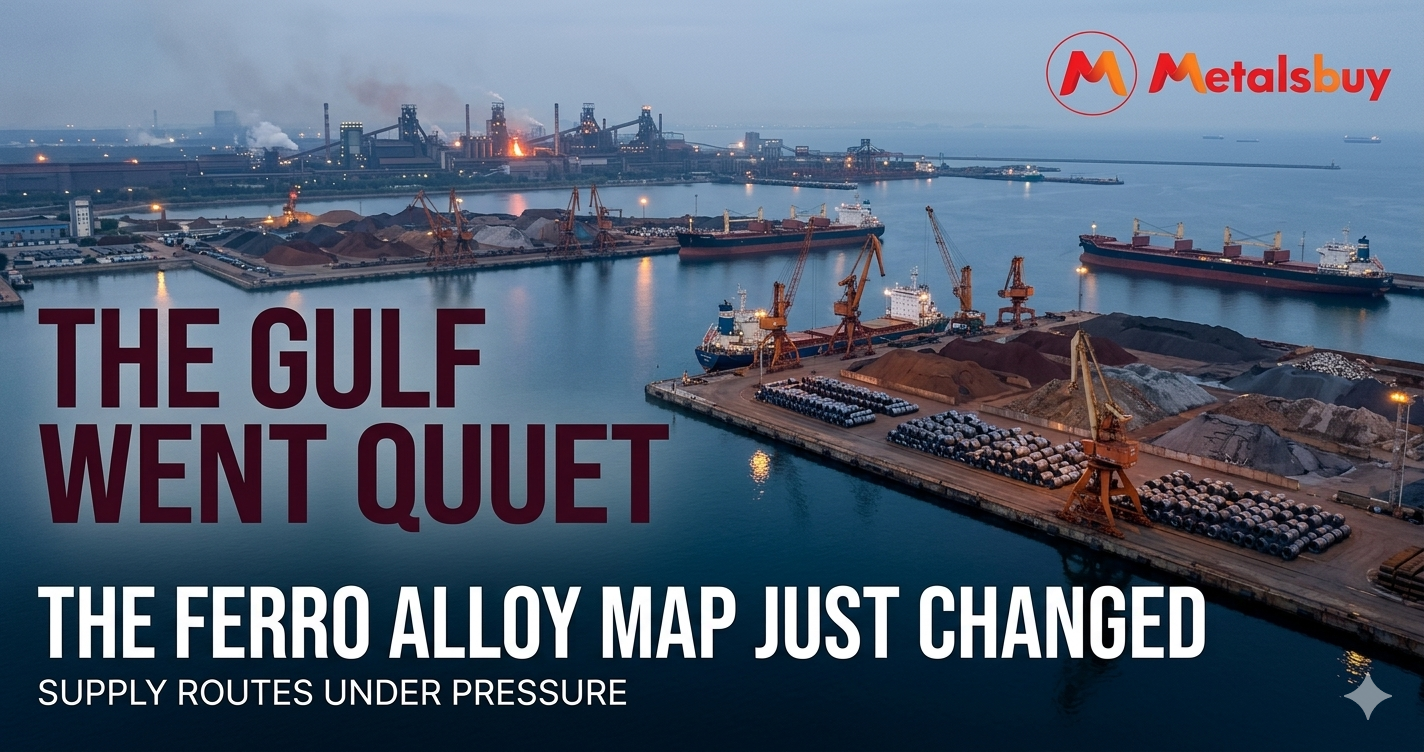
Over the past month, several Gulf steelmakers have reportedly reduced production as access to seaborne raw materials became more difficult. Iron ore pellets, ferro alloys and other industrial inputs have faced delays, higher freight costs and increased uncertainty as regional tensions disrupted established shipping patterns. At the same time, damage to major Iranian industrial facilities has introduced another layer of instability into an already stressed market.
The immediate impact appears local.
The implications are not.
The Gulf has become an increasingly important steel producing region over the past two decades. Integrated steel plants across Saudi Arabia, the UAE, Oman and Iran rely heavily on imported raw materials moving through some of the world’s busiest shipping corridors. When those routes function normally, production remains predictable. When they become constrained, mills begin adjusting operating rates.
That adjustment is already being felt in ferro alloys.
Steel production and alloy consumption move together. A mill producing fewer tonnes of steel requires fewer tonnes of ferrochrome, silico manganese and ferro manganese. Reduced Gulf steel output therefore removes a portion of regional alloy demand from the market.
Under normal circumstances, that might create excess supply.
These are not normal circumstances.
The same disruption reducing demand is also restricting movement of material. Ferro alloy shipments moving through regional trade routes face longer transit times, rising insurance costs and greater logistical uncertainty. Supply is becoming harder to move at precisely the moment demand is becoming harder to predict.
That combination creates an unusual market environment.
Less demand does not automatically translate into abundant supply.
For India, the situation is particularly relevant.
The country continues expanding steel production at record levels while remaining heavily integrated into global ferro alloy trade flows. Material that might previously have moved smoothly through Gulf markets now faces additional friction. Procurement teams are watching closely because supply chain disruptions often matter more than headline price movements.
The market is discovering that geography still matters.
Even in a globalised industry.
⸻
INDUSTRY IMPACT
The first impact is logistical.
Shipping routes influence commodity markets as much as mines and smelters. Delays at critical transit points can reshape procurement decisions thousands of kilometres away. Buyers who previously relied on predictable delivery schedules may increasingly seek additional inventory cover.
The second impact is strategic.
Gulf steelmakers have spent years expanding production capacity and becoming larger consumers of ferro alloys. Any prolonged reduction in operating rates changes regional demand patterns and affects suppliers serving those markets.
For Indian producers, the picture is mixed.
Reduced Gulf demand may create additional export opportunities in some product categories. At the same time, tighter shipping conditions can complicate raw material procurement and increase transportation costs.
Markets dislike uncertainty.
Commodity supply chains dislike it even more.
⸻
WHAT TO WATCH NEXT
The most important variable is duration.
Short disruptions rarely alter long term trade flows. Prolonged disruptions often do.
Watch recovery timelines for Iranian steel facilities carefully. Estimates currently suggest six to twelve months before damaged operations return to normal capacity. That timeline will influence regional steel production and alloy consumption through much of the coming year.
Shipping conditions deserve equal attention.
Freight rates, insurance costs and vessel availability will provide early signals about whether disruptions are easing or becoming embedded in market behaviour.
The Gulf’s steel industry is not disappearing.
The question is how long it remains constrained.
⸻
MARKET OUTLOOK
The Middle East conflict is not fundamentally changing the world’s steel industry.
It is changing how parts of that industry connect with one another.
Trade routes that once operated routinely are becoming less predictable. Mills that once relied on uninterrupted raw material flows are reassessing procurement strategies. Suppliers are adjusting sales priorities. Buyers are evaluating risk differently.
Those changes may prove temporary.
They may not.
What is clear is that the ferro alloy market is already responding.
The Gulf’s quieter steel mills are creating effects far beyond the region itself.
And in commodity markets, those secondary effects are often the ones that matter most.
Written by Metalsbuy Editorial Desk
May 2026
The Gulf Went Quiet. The Ferro Alloy Map Just Changed.