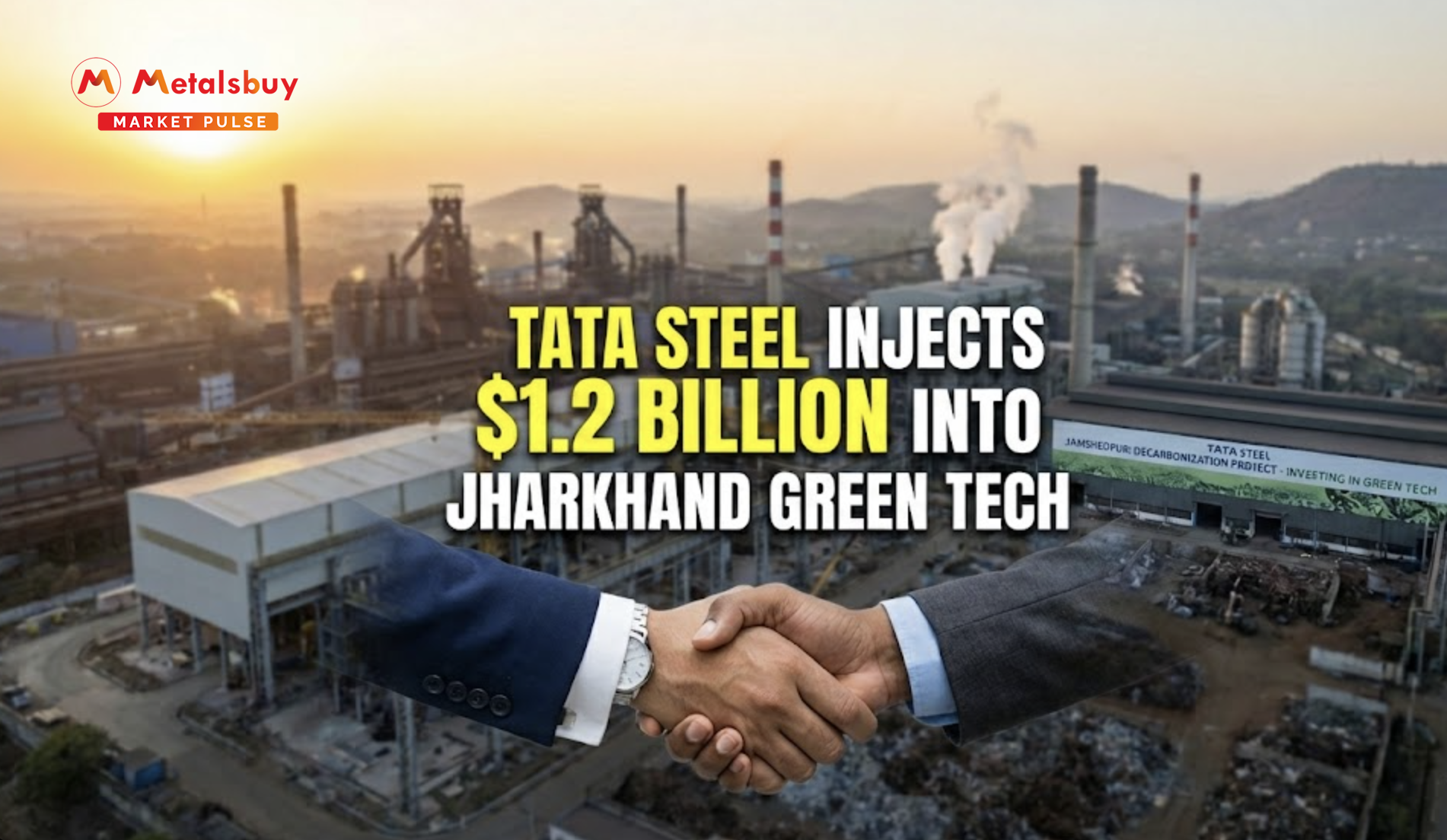
JAMSHEDPUR – Tata Steel has signed a historic Memorandum of Understanding (MoU) with the state government to invest $1.2 billion (₹10,000 crore) in the company’s primary production facility in Jharkhand, with the goal of making it a decarbonized facility. This is a major turning point for India’s oldest steel company.
Scaling Low-Carbon Infrastructure
As per the memorandum of understanding that has been recently implemented, Tata Steel is shifting from volume-driven growth to decarbonization technology. The $1.2 billion investment will be used to integrate high-capacity Electric Arc Furnaces and gas-cleaning systems in its Jamshedpur plants.
Although the company is working towards realizing a total domestic capacity of 40 MTPA by 2030, the current project focuses on the application of the circular economy principles. Through the application of the latest scrap shredding and processing technologies, Tata Steel will move towards a recycling-intensive production system. This will significantly lower the energy requirements and decouple the future production from coking coal.
Regulatory and Economic Catalysts
The timing of this investment is dependent on two main factors:
- Global Trade Barriers: The European Union’s Carbon Border Adjustment Mechanism (CBAM) is scheduled to be fully operational by 2026. Without the development of proven low-carbon technologies, Indian exporters could be hit by high tariffs that could impact the competitiveness of their goods in the West.
- Domestic Mandates: The Indian National Green Hydrogen Mission, along with the emerging “Green Steel Policy,” is pushing an industry that contributes 12% of the country’s total greenhouse gas emissions.
Economically, while green transitions involve substantial capital outlay, they lower risks of carbon taxes and inefficiencies in energy. The resource base that Jharkhand already has makes it the natural site for testing such massive sustainability upgrades.
Benchmarking Performance and Impact
India is the second-largest producer of steel in the world, with a production level of over 140 MT in the latest fiscal year. However, the average carbon intensity is still high at 2.5 tonnes of CO2 per tonne of steel produced, compared to the global average of 1.8.
The roadmap for Tata Steel outlines a target of less than 2 tons of CO2 per ton of steel, and a net-zero target by 2045. In addition to the environmental metrics, the $1.2 billion investment also supports the regional economy by securing jobs for thousands of people and transforming the industrial hub of Jamshedpur to meet the requirements of a post-carbon world.
Outlook: The Hydrogen Frontier
This project sets a precedent for other domestic majors, including JSW and SAIL. The sector is moving towards the “Green Steel” norm as a pre-requisite for being part of international trade.
The next stage will involve intensive blending of hydrogen. The initial results of Tata Steel’s trial project involving hydrogen injection into blast furnaces show a possible short-term reduction of 10% in emissions. With the lowering of the cost of green hydrogen because of government subsidies, the infrastructure that is being developed in Jharkhand will support a 100% clean energy production process.
While there are still issues that need to be addressed, such as high electricity charges and the supply of scrap materials, this investment shows that the future of heavy industry in India is being reshaped not by size, but by environmental viability.