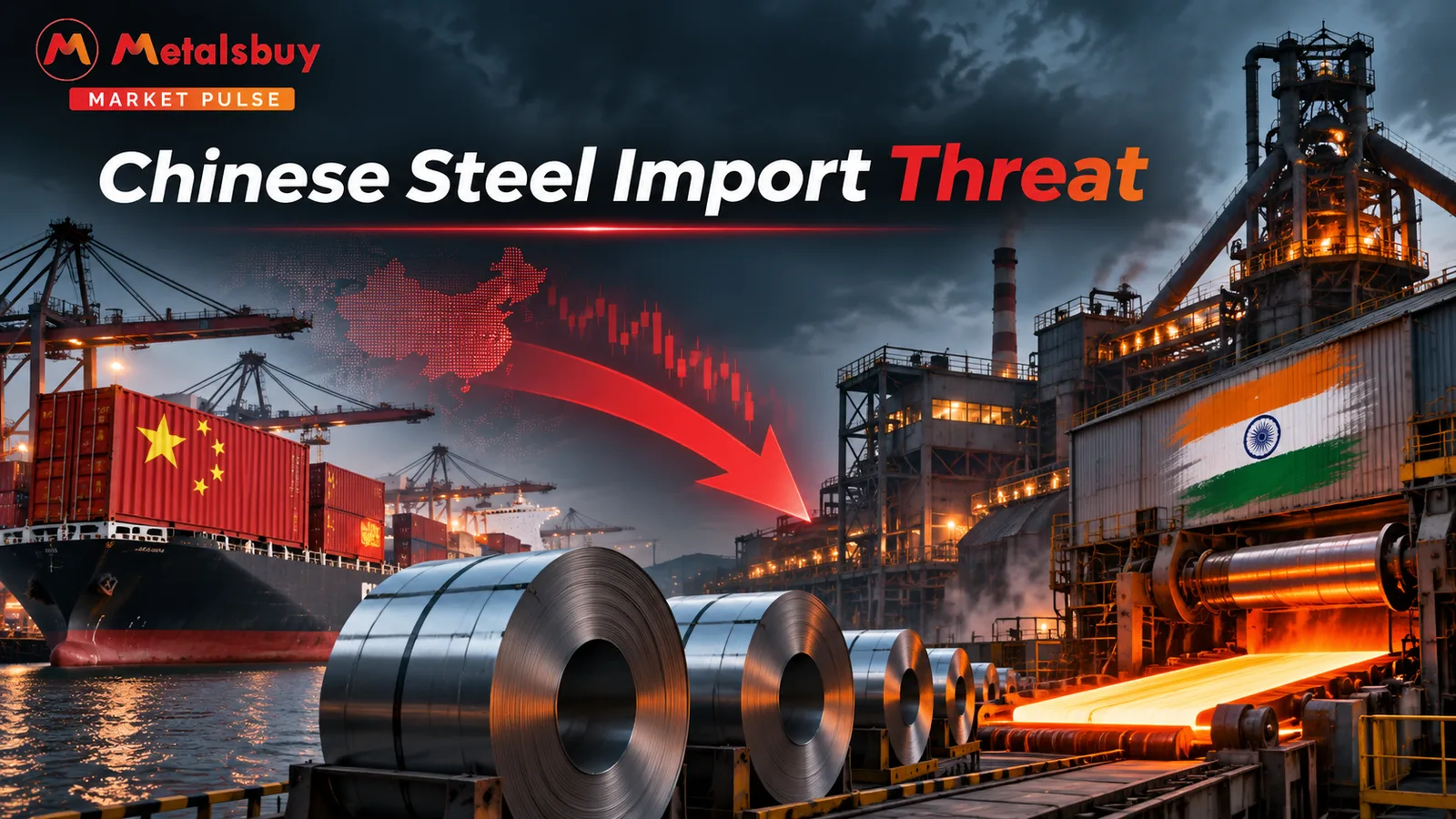
Rising iron ore costs, dependence on imported coking coal and increasing global competition add to concerns as Indian steelmakers undertake major capacity expansion plans.
Speaking to reporters on the sidelines of an industry event in New Delhi on November 18, Narendran emphasised the importance of ensuring that domestic manufacturers are not placed at an unfair disadvantage while undertaking major investments in steelmaking infrastructure. He indicated that the industry continues to engage with the government over measures aimed at protecting Indian producers from potentially disruptive import competition. Although the government has previously introduced measures to address import-related concerns, uncertainty surrounding Chinese steel exports continues to influence the outlook for domestic manufacturers.
China remains a dominant force in the global steel industry, and its substantial production capacity continues to influence international pricing and trade flows. With domestic steel consumption in China facing structural challenges, producers have increasingly looked towards overseas markets to absorb surplus output. This has intensified competition across several steel-consuming economies, including India, where domestic producers are simultaneously preparing for significant capacity additions to meet anticipated growth in infrastructure, construction and manufacturing demand.
According to trade figures cited in Reuters' November 18 report, China accounted for nearly one-third of India's finished steel imports during the first half of the current financial year. The substantial share highlights the continuing importance of Chinese supplies in India's import basket, even as domestic manufacturers seek to strengthen their position in the market. Import competition can also influence domestic steel prices, as relatively inexpensive overseas offers may affect procurement decisions among traders, distributors and industrial consumers, particularly during periods of subdued demand.
Import Protection Remains a Key Industry Concern
The Indian steel industry's concerns extend beyond the immediate volume of imports to the broader implications for long-term capital investment and manufacturing competitiveness. Establishing new steelmaking facilities requires considerable expenditure on land, equipment, utilities, raw material infrastructure and supporting logistics. These investments are generally undertaken with expectations of sustained domestic demand growth and reasonable capacity utilisation over several years. Persistent pressure from lower-priced imported steel could weaken domestic price realisations and potentially affect the commercial returns on such projects.
Indian steel manufacturers have consequently sought appropriate policy support to address unfair trade practices and prevent excessive import pressure from undermining domestic production. However, the government's approach remains cautious. Reuters reported in October that India's steel ministry was unlikely to pursue additional restrictions on inexpensive steel imports in the immediate future, despite requests from domestic producers for stronger protection. This indicates that policymakers are continuing to balance the interests of steel manufacturers with those of downstream industries that depend on competitively priced steel for their operations.
The policy challenge is particularly relevant because steel is a fundamental input for industries such as automobiles, engineering, construction equipment, infrastructure and consumer durables. While domestic producers benefit from measures that address unfair import competition, downstream manufacturers also require reliable access to reasonably priced raw materials. An effective trade framework must therefore distinguish between legitimate competition and potentially injurious trade practices without unnecessarily increasing costs across the broader manufacturing economy.
Tata Steel's Expansion Plans Highlight Long-Term Confidence
Despite the challenges posed by imports, Tata Steel continues to pursue an ambitious capacity expansion strategy in India. The company expects to reach approximately 40 million tonnes of annual steel production capacity between 2033 and 2035, supported by investments planned through the end of the current decade. The expansion reflects management's confidence in India's long-term steel consumption prospects, which remain closely linked to infrastructure development, urbanisation, industrial investment and rising demand for value-added steel products.
However, the economics of future capacity additions will depend on more than domestic demand growth. Steel manufacturers must assess capital expenditure requirements, raw material availability, production costs and the competitive environment before committing to large-scale investments. For companies such as Tata Steel, the ability to maintain efficient operations while expanding capacity will be essential to sustaining profitability in an increasingly competitive market.
The company's growth plans also reflect a broader industry trend, with major Indian steel producers evaluating investments to increase production capabilities over the coming decade. As additional capacity enters the market, the relationship between domestic steel demand, import volumes and production growth will become increasingly important. A sustained increase in supply without a corresponding improvement in consumption could place pressure on capacity utilisation and pricing, even if the industry's longer-term fundamentals remain favourable.
Rising Raw Material Costs Add to Steelmakers' Challenges
Alongside import competition, Tata Steel has highlighted increasing iron ore costs as another challenge for the domestic industry. Narendran indicated that iron ore prices have been rising in India, adding to the cost pressures faced by manufacturers. Although the country possesses substantial iron ore resources, domestic availability does not necessarily guarantee stable or competitive procurement costs, particularly when mining expenses, transportation charges and regional supply conditions are taken into consideration.
Iron ore is a critical input for integrated steel producers, and changes in its procurement cost can significantly influence production economics. When raw material expenses increase while finished steel prices remain constrained by market competition, operating margins can come under pressure. The situation becomes more challenging for producers undertaking large capital expenditure programmes, as higher input costs may affect internal cash generation and the financial flexibility available for expansion.
Dependence on imported coking coal represents an additional structural consideration for India's integrated steel industry. Narendran stated that Tata Steel continues to source the majority of its imported coking coal requirements from Australia, with smaller quantities procured from Indonesia. He also indicated that the company has no current plans to invest in overseas coking coal mines. Consequently, international coal pricing, freight movements and supply conditions will remain important factors influencing the company's raw material procurement strategy.
The combination of domestic iron ore cost pressures and imported coking coal dependence creates a challenging operating environment, particularly when steel prices are influenced by cheaper international supplies. For Indian steelmakers, improving raw material efficiency, strengthening procurement arrangements and managing production costs will be crucial to maintaining competitiveness. These considerations are likely to become increasingly significant as the industry moves towards higher production volumes and more capital-intensive manufacturing operations.
Separately, Narendran confirmed that Tata Steel has approached the Dutch government for financial assistance, with discussions continuing. The development highlights the company's broader international operational considerations alongside its expansion and competitive priorities in India.
Market Outlook: Competitiveness Will Determine the Success of Capacity Expansion
India's steel consumption outlook remains supported by several structural growth drivers, including infrastructure investment, expanding urban development, industrial manufacturing and increasing steel intensity across major economic sectors. Nevertheless, the industry's ability to translate these opportunities into sustainable profitability will depend on maintaining a competitive balance between production costs, market prices and capacity utilisation.
The continuing availability of Chinese steel in international markets introduces an important variable into this equation. Should global steel supply remain elevated, Indian producers may encounter greater difficulty in improving domestic price realisations, particularly during periods when demand growth temporarily moderates. At the same time, increasing domestic production capacity could intensify competition among Indian manufacturers, making cost efficiency and product differentiation more important.
For steel traders and downstream buyers, international market developments will continue to influence procurement strategies and inventory decisions. Competitive import offers may provide alternative sourcing opportunities, but buyers must also consider delivery schedules, product specifications, applicable trade measures and domestic market availability. Changes in import prices and supply conditions can have wider implications for domestic steel distribution networks, particularly when market participants are managing inventories during periods of price volatility.
Metalsbuy Market Pulse Analysis
Tata Steel's warning highlights a central challenge facing the Indian steel industry: the country's ambitious capacity expansion plans must be supported by an equally strong focus on cost competitiveness and market stability. While India's long-term steel demand prospects remain encouraging, domestic manufacturers operate within a global market where Chinese export volumes, international trade restrictions and raw material price movements can substantially influence business conditions.
The immediate concern for producers is the possibility of facing pressure on both sides of their operating margins, with rising input costs increasing production expenses while competitive imports constrain finished steel prices. This combination could become particularly challenging as steelmakers undertake capital-intensive expansion projects requiring sustained cash generation and healthy capacity utilisation.
For the broader steel value chain, the developments reinforce the importance of monitoring Chinese export activity, domestic iron ore prices, imported coking coal costs and government trade policy. These factors are likely to remain significant indicators of market direction over the coming months.
Ultimately, India's emergence as a larger global steel producer will depend not merely on the addition of new manufacturing capacity, but on the industry's ability to operate efficiently, compete internationally and generate sustainable returns on investment.
— Metalsbuy Market Pulse | Industry Intelligence & Market Analysis