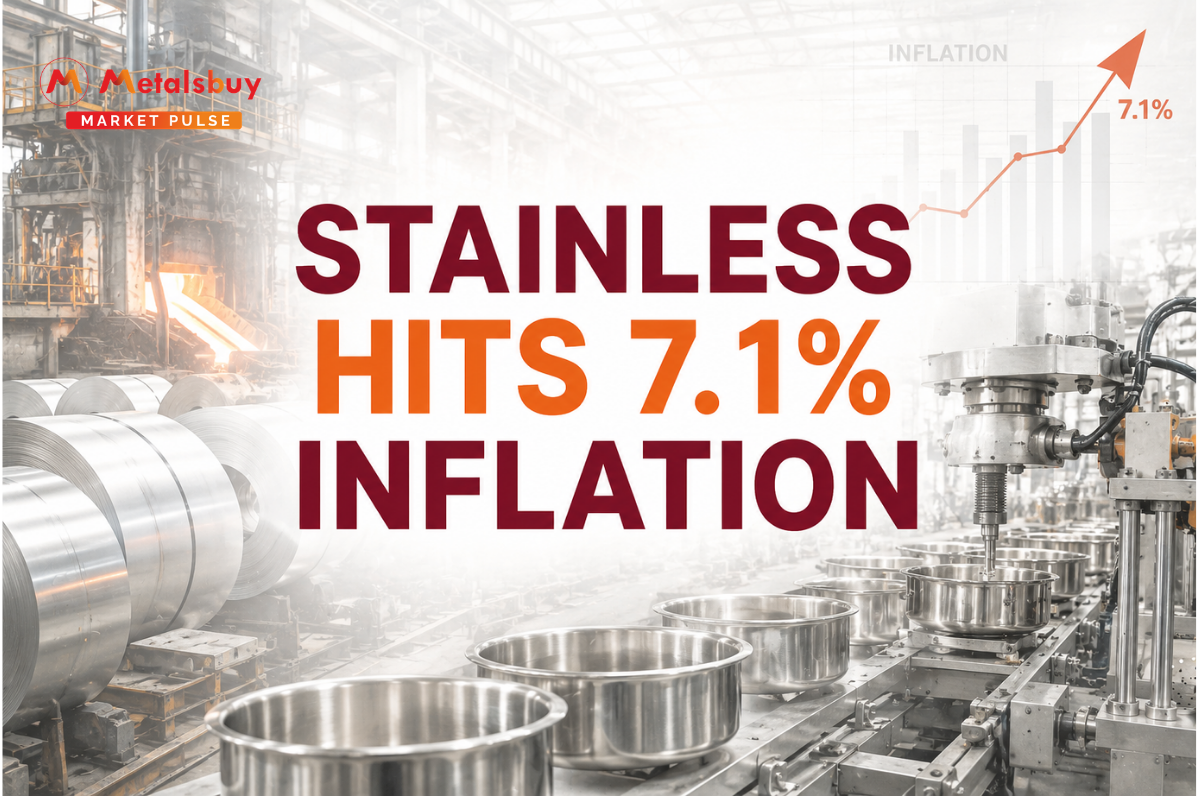
Kitchen Essentials See A Price Hike As Global Metal Markets Climb, With Stainless Steel Inflation Hitting 7.1 Percent. Experts Anticipate Prices To Remain Firm Through The Third Quarter, Though Relief May Be On The Horizon For Consumers By Late 2026.
KEY NUMBERS:
- Stainless Steel Utensil Inflation: 7.1% (up from 6.4% in May)
- Pressure Cooker Price Increase: 4.7%
- Other Metal Utensils (Including Non-stick): 4.8%
MARKET ANALYSIS
The cost of outfitting a kitchen has seen a noticeable uptick recently, directly tied to the escalating global metal costs and elevated stainless steel production expenses. In June, consumers faced higher retail prices across a range of kitchen essentials, from basic steel utensils to advanced non-stick cookware. The inflation rate for stainless steel utensils accelerated significantly, reaching 7.1% year-on-year in June, a substantial jump from 6.4% in May and 4.5% at the beginning of the year in January.
This upward trend wasn't limited to basic stainless steel. Prices for pressure cookers and pressure pans also saw a 4.7% climb last month. Furthermore, inflation in the category of other metal utensils, which encompasses popular non-stick cookware, increased to 4.8% from 4.2%. These rising costs at the retail level are a direct reflection of the broader economic pressures within the metal industry, particularly regarding raw materials and production processes. The reliance on commodities like nickel and chromium for stainless steel, alongside the energy-intensive nature of manufacturing, has created a scenario where increased input costs are inevitably passed down to the final consumer.
WHAT IT MEANS FOR THE STEEL INDUSTRY
For the steel industry, this situation highlights the delicate balance between managing input costs and maintaining consumer demand. While higher retail prices reflect the reality of current production expenses, manufacturers must navigate these waters carefully to avoid dampening consumer spending.
The current market dynamics underscore the industry's vulnerability to global metal price fluctuations. Integrated producers and specialized processors alike are feeling the pressure of these elevated costs. However, it also presents an opportunity for innovation in manufacturing processes and supply chain optimization. Companies that can effectively manage their production efficiencies or source raw materials more strategically may find a competitive advantage even in a high-cost environment.
Furthermore, this scenario emphasizes the importance of the domestic market for Indian steelmakers. As global factors drive up costs, sustaining strong domestic demand across sectors, including consumer goods like cookware, becomes vital for the industry's overall stability and growth.
MARKET OUTLOOK
Looking ahead, industry analysts project that these elevated costs will likely remain firm over the next few months, extending through the third quarter. Consumers should anticipate paying higher prices for kitchenware in the near term.
However, the outlook is not entirely without optimism. Market indicators suggest that stainless steel prices are likely to stabilize by September. This anticipated stabilization could pave the way for more advantageous buying opportunities for consumers as 2026 progresses. Once the current wave of high production costs subsides and global metal markets find a new equilibrium, retail prices for cookware and utensils may begin to reflect those improved conditions, offering potential relief to household budgets later in the year.