India’s solar expansion is entering a decisive phase. With the country targeting 300 GW of installed solar capacity by 2030, the industry’s focus is shifting from rapid capacity addition to long-term performance, structural reliability, and cost sustainability. At this juncture, infrastructure quality, not just module efficiency will determine the success of India’s renewable transition.
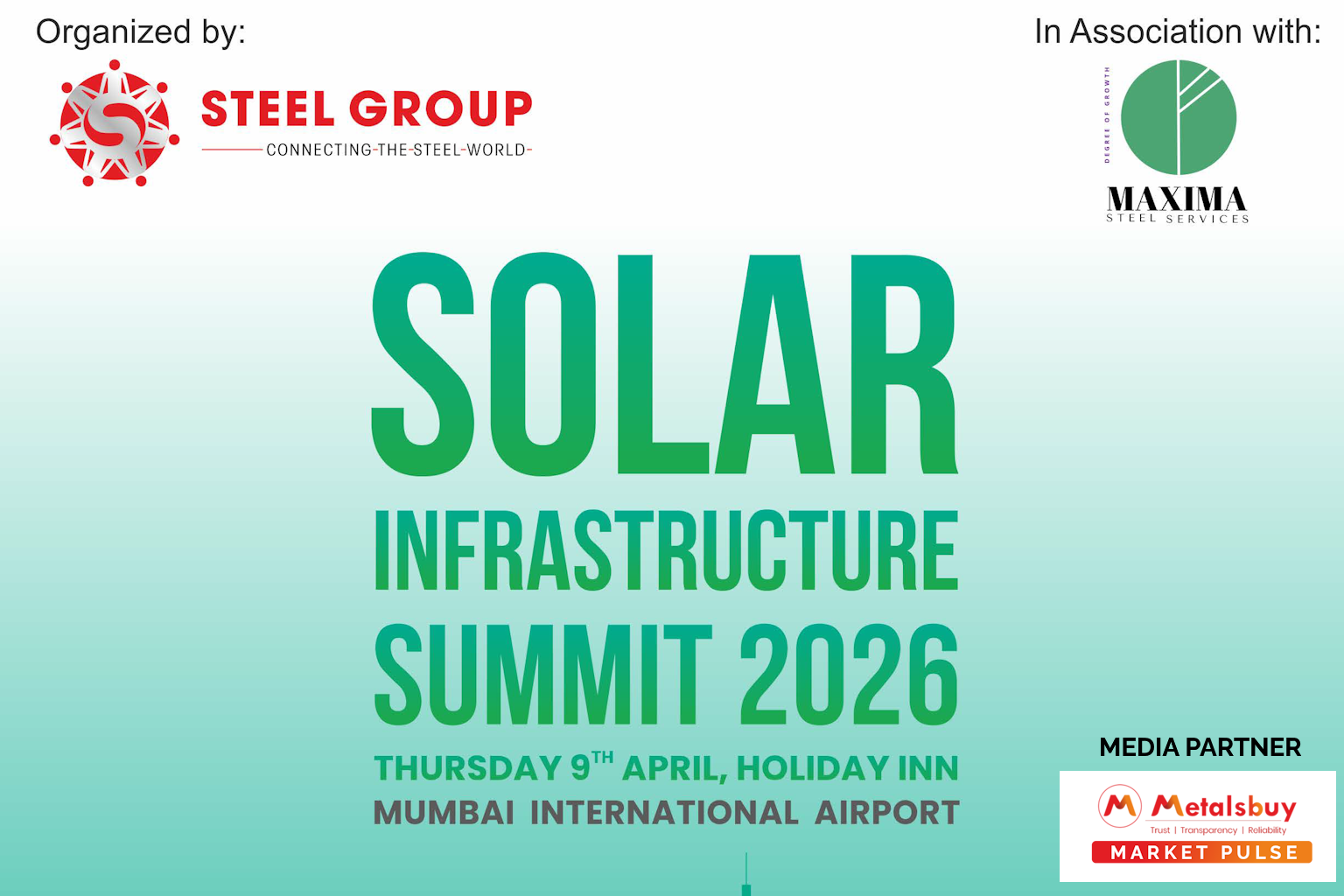
The Solar Infrastructure Summit 2026, scheduled for 9 April 2026 in Mumbai, directly addresses this transition by placing infrastructure, materials, and engineering decisions at the centre of the solar growth narrative
Unlike conventional solar conferences that emphasise policy or generation capacity, this Summit highlights a critical but often under-discussed reality: solar infrastructure is the backbone of asset longevity, bankability, and lifecycle economics.
From Capacity Creation to Asset Durability
India’s first solar decade prioritised speed and scale. The next decade will be judged by how reliably solar assets perform over 25–30 years. Structural failures, corrosion risks, sub-optimal foundations, and inconsistent material standards can erode project economics far faster than tariff assumptions anticipate.
As solar installations expand across diverse terrains—coastal zones, high-temperature regions, high-wind corridors—the role of engineering design, material selection, and corrosion protection becomes non-negotiable. The Summit’s focus on balance-of-system (BoS) optimisation, civil works, foundations, and structural stability reflects this emerging reality.
Materials and Engineering Move to Centre Stage
A defining strength of the Solar Infrastructure Summit is its emphasis on materials and metals, including steel structures, aluminium components, galvanisation and coating technologies, trackers, fasteners, and mounting systems. These inputs directly influence:
-
Plant reliability and safety
-
O&M intensity and failure rates
-
Long-term LCOE stability
-
Asset financing and insurability
As solar projects grow in size and complexity, standardisation and quality consistency across infrastructure components will increasingly differentiate successful developers from the rest.
Cost Efficiency Beyond Modules
With solar tariffs remaining under pressure, developers are seeking efficiency gains beyond modules and inverters. Structural optimisation, faster execution through design standardisation, and improved material performance are emerging as key levers for maintaining margins without compromising reliability.
The Summit’s agenda—covering site engineering, power evacuation systems, digital monitoring, and O&M strategies—signals an industry-wide recognition that infrastructure-led optimisation is the next frontier of cost competitiveness.
Why This Matters for Metals & Steel Markets
Solar is no longer just a power story—it is a structural demand story.
-
Structural steel demand is shifting from volume-driven to specification-driven.
Solar developers increasingly prioritise strength, corrosion resistance, and lifecycle performance over lowest-cost procurement. -
Galvanised and coated steel consumption will rise structurally.
Long-duration exposure requirements (25–30 years) elevate demand for higher-grade galvanisation, advanced coatings, and better fabrication standards. -
Aluminium and hybrid structures gain relevance.
Lightweight structures, trackers, and rooftop systems are driving selective substitution and innovation across materials. -
Standardisation creates scale opportunities.
As EPCs move toward repeatable designs, steel processors and structure manufacturers with consistent quality and capacity stand to benefit. -
Closer alignment between solar EPCs and metals suppliers is inevitable.
Infrastructure reliability is increasingly a joint responsibility, not a downstream procurement decision.
For the metals industry, solar infrastructure represents long-term, quality-led demand, not short-cycle consumption.
Metalsbuy Outlook
As India accelerates toward its renewable energy goals, the success of solar deployment will depend as much on engineering discipline and material integrity as on capacity targets. Platforms like the Solar Infrastructure Summit 2026 play a critical role in aligning solar ambition with execution capability.
For metals, steel, and engineering stakeholders, this Summit is not merely a renewable energy event—it is a strategic forum shaping the future demand profile of industrial materials in India’s energy transition.
As Media Partner, Metalsbuy sees this dialogue as essential to building a solar ecosystem that is scalable, resilient, and economically sustainable.
Event Snapshot
-
Event: Solar Infrastructure Summit 2026
-
Date: 9 April 2026
-
Venue: Holiday Inn, Mumbai International Airport
-
Focus: Solar infrastructure, materials, engineering & lifecycle performance
-
Media Partner: Metalsbuy