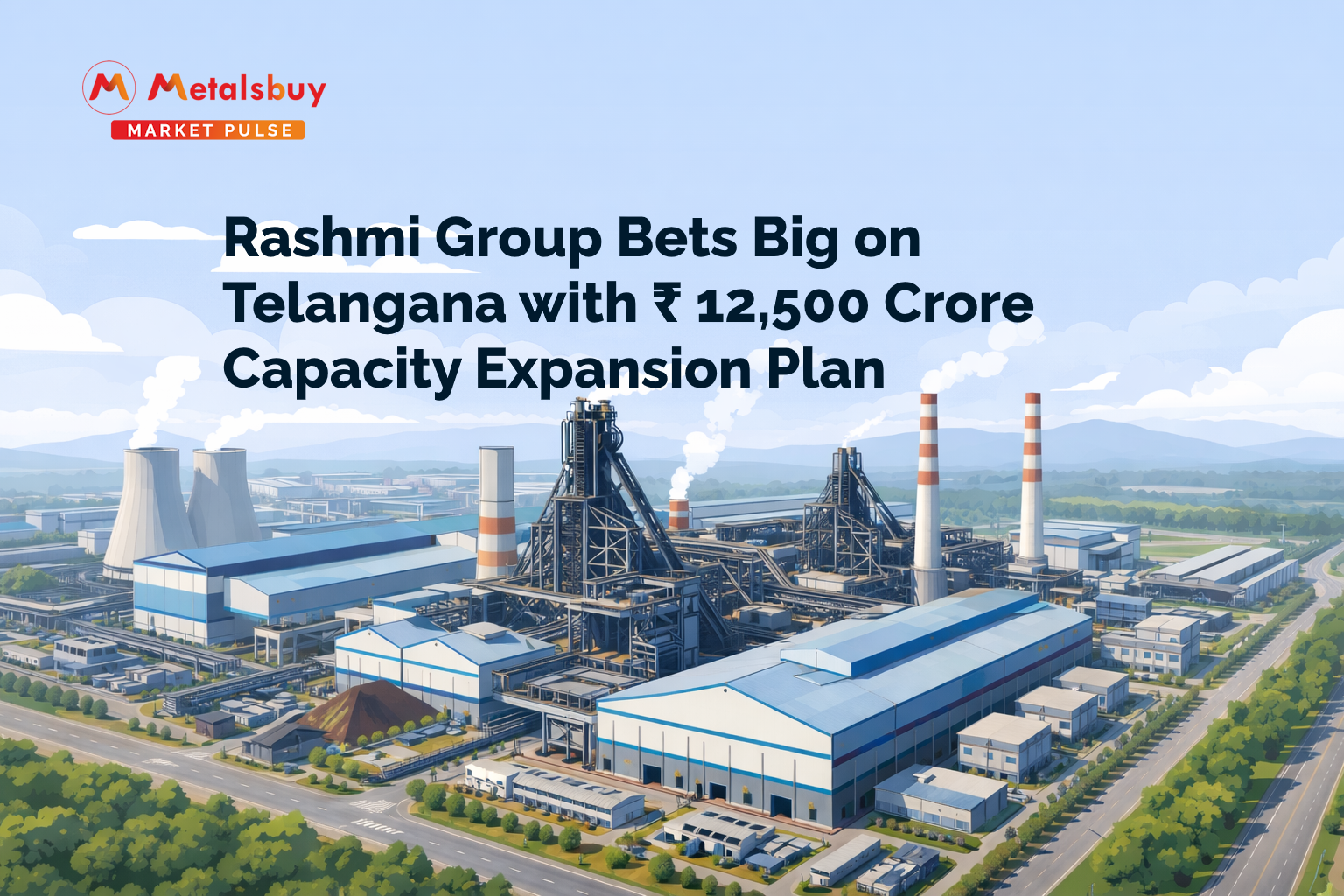
The 2026 World Economic Forum at Davos has emerged as a pivotal moment for India’s industrial expansion narrative, with Rashmi Group announcing a ₹12,500 crore investment commitment in Telangana. At the heart of this agreement lies a decisive capacity expansion strategy that significantly strengthens the Group’s manufacturing footprint beyond Eastern India.
This investment represents one of Rashmi Group’s largest greenfield expansions outside its traditional base and positions Telangana as a new anchor for the Group’s long-term growth in steel and allied infrastructure manufacturing.
Steel Capacity Expansion at the Core
While the investment spans multiple industrial segments, the cornerstone of the ₹12,500 crore plan is the establishment of a large integrated steel manufacturing facility in Telangana. The proposed plant is designed to serve high-consumption markets across Southern and Western India, offering proximity advantages that are critical for bulk steel logistics.
The new facility aligns with India’s national objective of achieving 300 million tonnes of steelmaking capacity by 2030 and will function as a regional supply hub for infrastructure, construction, and engineering sectors. For Rashmi Group, the project marks a structural scale-up that complements its existing 8.3 million tonnes per annum steel capacity in West Bengal, enabling a more balanced national production footprint.
Supporting Capacities: DI Pipes and Renewable Manufacturing
Alongside steel, the expansion roadmap includes the creation of additional manufacturing capacities in two strategically linked segments:
- Ductile Iron Pipes: A dedicated DI pipe unit will cater to India’s expanding water infrastructure requirements, driven by nationwide initiatives such as the Jal Jeevan Mission. Locating production closer to southern markets significantly reduces freight costs and improves delivery efficiency.
- Solar PV Module Assembly: The inclusion of solar module manufacturing reflects a measured diversification into renewable-linked infrastructure. While smaller in scale compared to steel, this segment offers quicker capital rotation and aligns the Group with evolving ESG-driven industrial policies.
Together, these capacities form an integrated industrial ecosystem rather than standalone facilities.
Strategic Geography and Logistics Advantage
Rashmi Group’s expansion into Telangana represents a calculated geographic rebalancing of manufacturing capacity. Historically concentrated in Eastern India’s mineral-rich regions, steel producers have faced elevated logistics costs when supplying distant consumption centers.
By establishing a second major production base in Telangana, the Group decentralizes supply chains and adopts a hub-and-spoke logistics model, improving cost competitiveness and delivery reliability. In a margin-sensitive industry like steel, such logistics optimization can materially influence long-term market positioning.
Employment Creation and Industrial Multiplier
The scale of the capacity expansion is expected to generate 12,000 to 15,000 direct jobs, with indirect employment potentially exceeding 40,000 opportunities across logistics, maintenance, raw materials, and ancillary services.
Beyond direct employment, the steel-led expansion is likely to trigger a strong cluster effect. Secondary vendors across engineering services, specialty chemicals, transport, and industrial maintenance are expected to follow, potentially giving rise to a new industrial corridor around Hyderabad or identified growth zones in the state.
Financial Structuring and Execution Timeline
Large steel projects typically involve extended gestation periods, with capital payback cycles ranging from seven to nine years. Rashmi Group’s multi-segment expansion strategy introduces financial balance, where faster-turnover segments such as renewable manufacturing help support cash flows during the ramp-up phase of core steel operations.
The Telangana government has indicated support through a fast-track single-window clearance mechanism, with an aggressive target of 18 to 24 months to operationalize the first phase of the project—an important factor in maintaining execution momentum.
A Strategic Inflection Point
The ₹12,500 crore Telangana investment marks a strategic inflection point for Rashmi Group. It reflects a shift from regionally concentrated manufacturing to a nationally balanced capacity strategy driven by market proximity, logistics efficiency, and policy readiness.
For Telangana, the project reinforces the state’s positioning as a preferred destination for capital-intensive, large-scale industrial investments. For Rashmi Group, it lays the foundation for long-term capacity growth, supply chain resilience, and deeper integration into India’s evolving steel and infrastructure ecosystem.
As implementation progresses, the true impact of this expansion will be measured not just in installed capacity, but in how effectively it reshapes production geography, cost structures, and industrial competitiveness across the country.