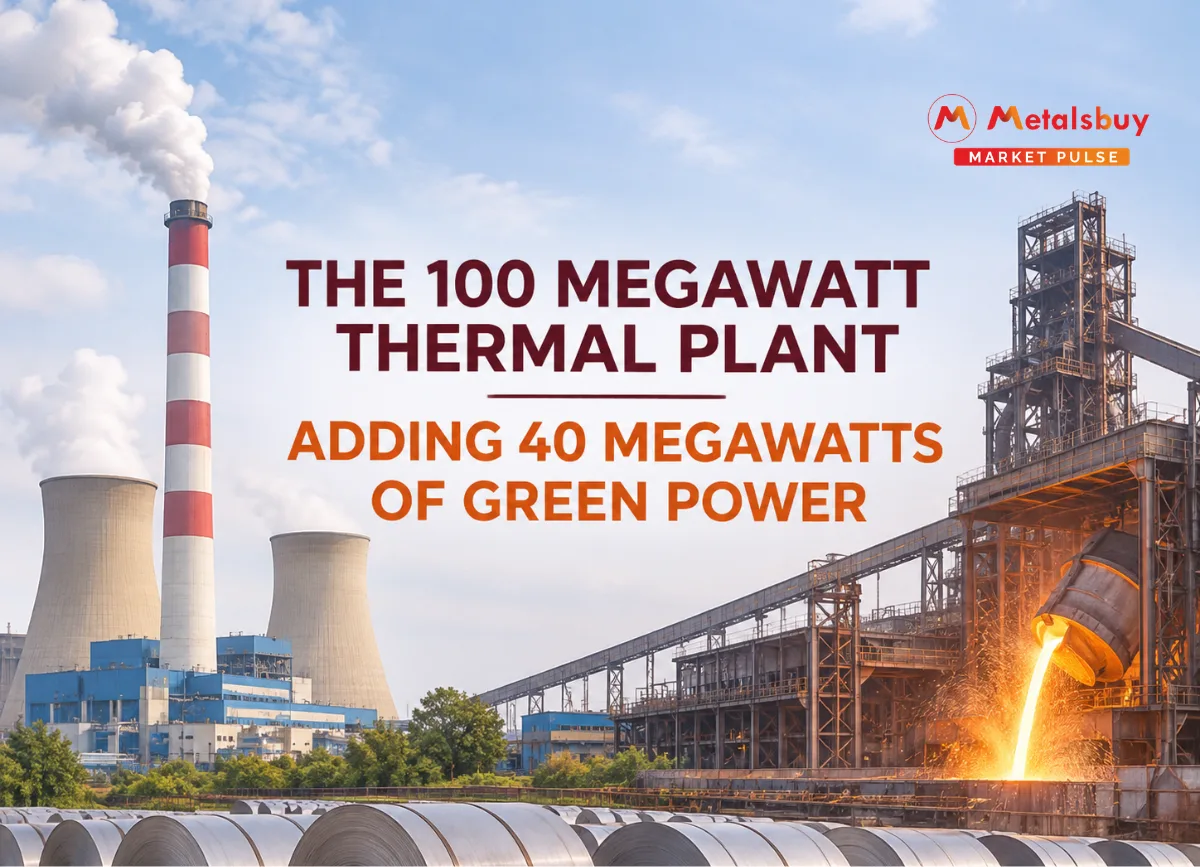
India's secondary steel and mining sector is witnessing a massive strategic pivot toward complete operational self-reliance as manufacturers aggressively insulate their supply chains from external price shocks. Lloyds Metals and Energy Limited has officially approved a major capital deployment strategy to establish dedicated thermal and renewable energy power plants. By securing its own captive electricity generation, the prominent iron ore miner and sponge iron manufacturer is actively protecting its expanding industrial operations in Maharashtra from volatile commercial grid tariffs. This strategic backward integration ensures that the company can maintain continuous, cost-effective manufacturing to meet India's booming infrastructure demand while supporting its long-term capacity goals.
Integrating captive power to secure massive capacity expansions
Developing in-house energy infrastructure provides absolute operational security for the company's rapidly expanding direct reduced iron and steel melting facilities. The core of this new capital expenditure initiative revolves around securing the massive electrical load required to run heavy metallurgical operations. According to recent regulatory disclosures, the board of directors at Lloyds Metals and Energy Limited has officially granted approval for the installation of a new 100 megawatt thermal power plant. This high-capacity thermal unit is designed to act as the absolute baseload anchor for the company's expanding industrial footprint.
The company is currently undergoing a period of hyper-growth, aggressively scaling up its iron ore extraction at the Surjagarh mines in the Gadchiroli district of Maharashtra while simultaneously expanding its downstream steelmaking capabilities. The manufacturing of direct reduced iron, commonly known as sponge iron, alongside the operation of electric steel melting shops, is an incredibly power-intensive process. A continuous, high-voltage electricity supply is non-negotiable for maintaining optimal thermal efficiency inside the rotary kilns and induction furnaces. By establishing a dedicated 100 megawatt thermal plant, the company guarantees that its factory run-rates will never be interrupted by regional power cuts or seasonal grid load-shedding, allowing the rolling mills to continuously churn out finished products.
Balancing baseload stability with green energy initiatives
Incorporating a 40 megawatt renewable energy project allows the manufacturer to optimize its power costs while actively adhering to long term decarbonization goals. While the thermal plant provides the necessary uninterrupted baseload power, the corporate management is simultaneously aligning its operations with the global shift toward sustainable manufacturing. Alongside the thermal unit, the board has also greenlit the development of a 40 megawatt renewable energy project. This dual-fuel approach highlights a highly mature and pragmatic industrial strategy.
Integrating 40 megawatts of solar or wind power directly into the captive energy mix serves a dual purpose for the steelmaker. Financially, renewable energy generated internally carries an incredibly low variable cost, drastically reducing the overall blended cost of electricity consumed by the plant during daylight hours. Environmentally, injecting this massive volume of clean energy into the production cycle allows Lloyds Metals to systematically displace a significant portion of its reliance on fossil fuels. This measurable reduction in the plant's overall carbon intensity is highly critical. As the Indian government enforces stricter environmental mandates and major downstream buyers increasingly demand green steel supply chains, possessing active renewable energy assets gives the company a massive competitive edge in securing premium commercial contracts.
Protecting corporate profit margins through deep backward integration
By severing reliance on expensive commercial grid tariffs the steelmaker structurally lowers its per tonne production cost and enhances overall market competitiveness. From a broader macroeconomic and corporate finance perspective, this heavy investment in captive power is a masterclass in margin protection. In the Indian secondary steel sector, electricity and fuel expenses frequently constitute a staggering 25 to 30 percent of the total cost of production. Industrial manufacturers operating in heavily industrialized states like Maharashtra often face some of the highest and most volatile commercial electricity tariffs in the country, exacerbated by cross-subsidy surcharges and peak-hour pricing.
By completely bypassing the state electricity distribution network and generating its own power, Lloyds Metals and Energy Limited fundamentally alters its financial baseline. The captive thermal and renewable plants will generate highly cost-effective electricity, structurally lowering the base cost required to produce every single tonne of sponge iron and finished steel. Financial analysts note that steelmakers utilizing captive power consistently report significantly wider Earnings Before Interest, Taxes, Depreciation, and Amortization margins compared to their non-integrated peers. This enhanced financial agility allows the company to price its finished products much more aggressively in the retail market. As the domestic market accelerates into the busy post-monsoon construction peak, having a fully secured, low-cost energy feed ensures that Lloyds Metals will remain a highly profitable and globally competitive force in the Indian metals ecosystem.