KEY NUMBERS
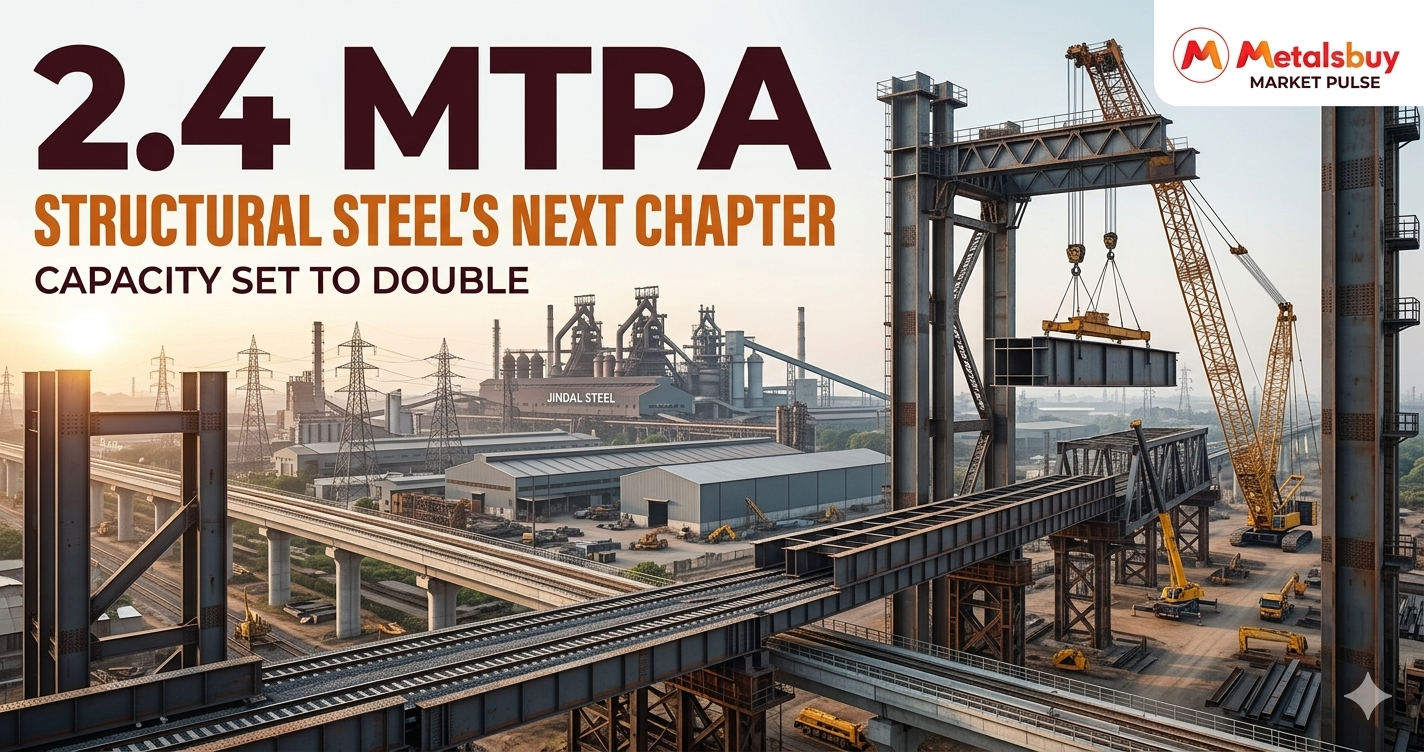
2.4 MTPA : Target structural steel capacity by mid 2028
1.2 MTPA : Current structural steel manufacturing capacity
100% : Planned increase in structural steel capacity
Mid 2028 : Target completion period for expansion
11 To 11.5 Million Tonnes : Jindal Steel production target for FY27
Coal Gasification Unit : New facility supporting cleaner DRI production
Infrastructure Sector : Primary demand driver for structural steel growth
Railways : Key end use market for heavy steel sections
Industrial Construction : Expanding source of structural steel demand
Three Major Brokerages : Diverging views on the company’s future outlook
⸻
MARKET ANALYSIS
Not all steel is created equal.
The steel used to build a warehouse is different from the steel used to build a bridge. The steel inside a residential tower is different from the steel supporting a freight corridor, a metro line or a massive industrial plant.
That distinction is becoming increasingly important.
While much of the market remains focused on blast furnace expansions and headline steel capacity announcements, Jindal Steel is placing a different bet. The company plans to double structural steel manufacturing capacity from 1.2 million tonnes to 2.4 million tonnes by mid 2028, positioning itself for what may become one of India’s most significant infrastructure cycles.
Structural steel rarely attracts the attention that flat products or commodity steel grades receive.
Yet it often provides a clearer signal about the direction of industrial investment. Heavy beams, columns and structural sections appear when governments build rail corridors, when private companies build factories and when infrastructure projects move from planning documents into physical construction.
India appears to be entering precisely that phase.
Railway investments continue expanding. Industrial corridors are growing. Data centres, warehouses, logistics parks and manufacturing facilities are being built across multiple states simultaneously. Every one of those projects consumes structural steel.
Jindal Steel wants a larger share of that demand.
The company’s expansion plan aligns closely with broader trends reshaping India’s manufacturing economy. Integrated steel projects are emerging across Odisha, Maharashtra and Chhattisgarh. Logistics infrastructure is expanding rapidly. Energy projects continue requiring large quantities of heavy steel sections. Demand is becoming increasingly linked to industrial development rather than purely residential construction.
The company is preparing for that shift in other ways as well.
Its coal gasification initiative reflects growing pressure on steelmakers to improve production efficiency while reducing environmental impact. Direct reduced iron remains one of the most important inputs for modern steelmaking, and cleaner production routes are increasingly becoming part of long term competitiveness.
Investors remain divided.
Brokerages have produced sharply different assessments of the stock, reflecting broader uncertainty around steel markets globally. Some see sustained infrastructure demand supporting further growth. Others remain cautious about pricing cycles, raw material costs and execution risks.
That disagreement is part of the story.
The market is no longer debating whether India will build more infrastructure.
It is debating how much.
⸻
INDUSTRY IMPACT
Structural steel occupies a unique position within the steel value chain.
Unlike commodity grades that can fluctuate heavily with short term construction activity, structural steel often follows long duration investment cycles. Once governments commit to rail networks, industrial corridors or large manufacturing projects, steel demand tends to remain visible for years rather than months.
That visibility matters.
For steel producers, it provides a more predictable demand base. For ferro alloy suppliers, it creates stable consumption patterns because higher structural steel output requires corresponding increases in alloy additions during production and refining.
Silico manganese stands out in particular.
India’s structural steel industry remains a significant consumer of silico manganese, making capacity expansion directly relevant for alloy producers concentrated across Raipur, Odisha and eastern India. As structural steel demand grows, alloy procurement typically follows.
The coal gasification project also highlights a broader trend.
Steelmakers are increasingly looking beyond capacity growth and focusing on how steel is produced. Energy efficiency, emissions management and raw material optimisation are becoming competitive variables rather than regulatory afterthoughts.
That shift mirrors developments already visible in Europe and China.
The difference is that India still has significant demand growth supporting investment.
⸻
WHAT TO WATCH NEXT
Infrastructure execution remains the biggest variable.
Announcements alone do not consume steel. Projects do. Markets will closely monitor railway construction, industrial corridor development and manufacturing investments over the next two years to determine whether demand grows at the pace producers expect.
Watch Jindal’s coal gasification project as well.
The economics of cleaner DRI production could influence future investment decisions across India’s steel sector if the model proves commercially successful.
Broker sentiment is also worth tracking.
Diverging analyst views often indicate uncertainty about how quickly market conditions are changing. The next few quarters may reveal whether bullish projections or cautious forecasts better reflect the reality of India’s steel cycle.
Structural steel demand itself will provide the answer.
⸻
MARKET OUTLOOK
Jindal Steel’s expansion is ultimately a bet on one idea.
India is going to build far more than it does today.
Factories. Railways. Warehouses. Industrial corridors. Manufacturing hubs. Power infrastructure.
All of it requires steel.
The company is positioning itself not for the next quarter, but for the next phase of India’s industrial development. If infrastructure spending continues accelerating, structural steel could become one of the most attractive segments within the broader steel market.
That opportunity explains why capacity is being doubled.
The challenge will be timing.
Steelmakers have always known how to build capacity.
The real question is whether demand arrives quickly enough to fill it.
For now, Jindal Steel appears confident that it will.
Jindal Steel Wants To Double Structural Steel Capacity. India’s Infrastructure Boom Is Getting Heavier.