Key Numbers
-
Winning Premium: ~111.15% over base price
-
Estimated Iron Ore Resources: ~38 million tonnes
-
High-Grade Ore (≈60% Fe): ~29 million tonnes
-
Average Iron Content: ~57–58% Fe
-
Location: Keonjhar district, Odisha
-
Block Area: ~84 hectares
1. Aggressive Bidding Highlights Strategic Importance of Iron Ore
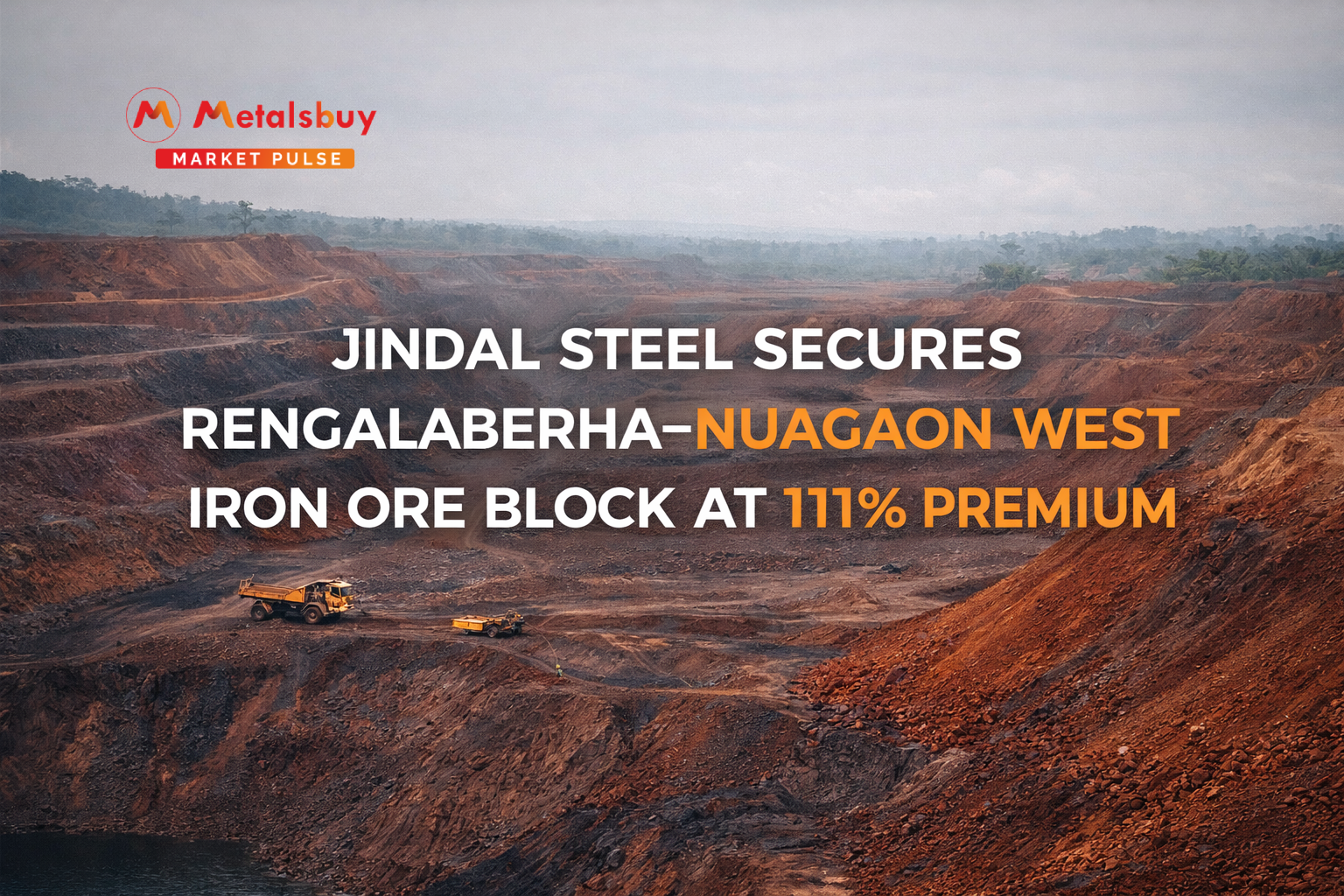
Jindal Steel has emerged as the preferred bidder for the Rengalaberha North-East Extension and Nuagaon West iron ore block in Odisha, securing the asset with a premium of over 111% in the state government auction.
Such strong bidding premiums underline the strategic importance of captive iron ore resources for integrated steel producers in India. As the domestic steel industry continues to expand capacity, access to secure raw material supply remains a key competitive advantage.
Market Interpretation:
2. Resource Base Adds Strength to Raw Material Security
The newly secured block is estimated to contain around 38 million tonnes of iron ore resources, including a significant portion of high-grade ore with approximately 60% Fe content.
Odisha continues to remain India’s largest iron ore producing state, hosting some of the country’s most important mining assets that supply steel plants across eastern and central India.
Market Interpretation:
3. Supporting Expansion Plans of Domestic Steel Producers
The acquisition comes at a time when several large Indian steel companies are expanding their production capacity to meet rising domestic demand driven by infrastructure development, manufacturing growth, and energy transition projects.
Securing iron ore resources early in the expansion cycle allows producers to align mining supply with future steel production capacity.
Market Interpretation:
4. Odisha Continues to Attract Strong Mining Competition
Recent mineral auctions in Odisha have seen intense competition and elevated bidding premiums, reflecting the value of high-quality iron ore deposits in the state.
Mining assets in the region remain highly sought after due to proximity to steel manufacturing clusters, established logistics infrastructure, and consistent ore quality.
Market Interpretation:
Industry Impact
Jindal Steel’s successful bid reinforces a broader trend within India’s steel sector toward greater raw material integration and long-term supply security.
Key implications include:
-
Increased focus on mine-to-metal integration strategies
-
Intensifying competition in future mineral auctions
-
Strengthening raw material security for expanding steel capacities
As India’s steel industry scales up to meet infrastructure and manufacturing demand, control over iron ore resources is expected to remain a critical strategic priority for major producers.