India's premier manufacturer of high-grade steel pipes and iron ore pellets has delivered a resilient top-line performance for the second quarter of the 2026-27 financial year. While Jindal SAW faced significant margin compression due to complex global shipping delays and rising input costs, the company successfully grew its consolidated revenue. This ability to maintain sales momentum in the face of severe geopolitical headwinds proves the underlying strength of its global supply chain and product demand, keeping the manufacturer well-positioned for the upcoming quarters.
Top line revenue expands as global demand persists
The most encouraging takeaway from the company's recent regulatory filings is its ability to push higher volumes and generate increased sales despite a turbulent macroeconomic and logistical environment.
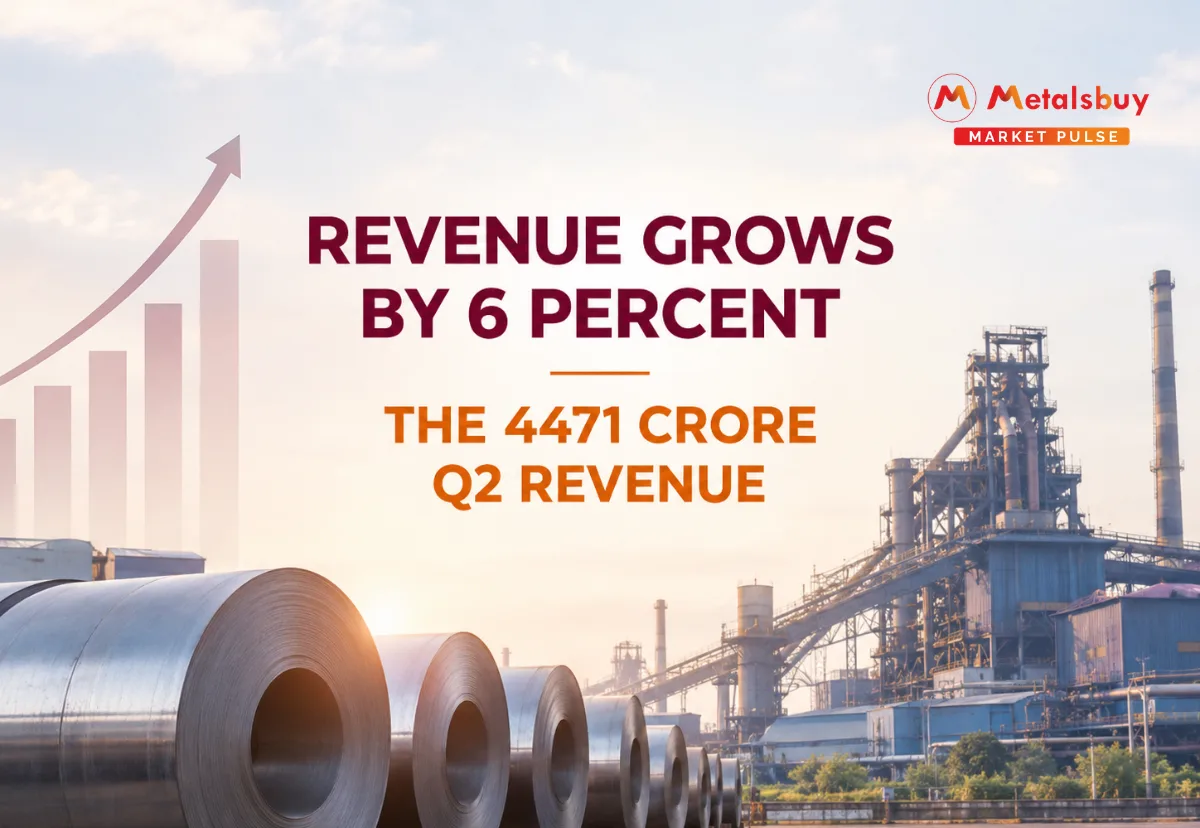
During the July to September quarter of the current fiscal year, Jindal SAW reported a consolidated revenue of approximately ₹4,471.79 crore, translating to roughly $470 million. This marks a steady 6 percent year-on-year growth compared to the corresponding period of the previous year. For a heavy industrial manufacturer heavily reliant on complex international trade routes, achieving continuous top-line growth is a massive indicator of market trust and operational bandwidth.
The company, which specializes in longitudinal and helical submerged arc welded pipes, ductile iron pipes, and seamless tubes, continues to see strong underlying demand. The global energy transport sector relies heavily on its large-diameter pipes for oil and natural gas infrastructure, while domestic civic projects consume vast quantities of ductile iron pipes for water distribution. By successfully keeping its sales channels active and fulfilling orders amidst global uncertainty, the company has ensured that its overall market share remains completely intact, providing a highly reliable revenue baseline.
Navigating margin compression and rising raw material costs
While the sales figures climbed steadily, the company’s bottom line faced a temporary but severe contraction, largely driven by external market forces that impacted the entire heavy manufacturing sector.
Jindal SAW reported a consolidated net profit of ₹47.04 crore (approximately $4.94 million) for the quarter, representing a 69 percent decline from the ₹151.89 crore recorded during the same window last year. This sharp drop in profitability is primarily the result of severe margin compression. The company's earnings before interest, taxes, depreciation, and amortization experienced a noticeable squeeze, dropping to 6.6 percent from a much healthier 9.8 percent a year ago.
Industry analysts note that this profitability challenge was not caused by a lack of incoming orders, but rather by the escalating costs associated with fulfilling them. A combination of higher raw material prices and general inflation across the industrial landscape significantly elevated the base cost of production. Furthermore, an unfavorable shift in the product mix during this specific quarter temporarily ate into the profit margins of each tonne of finished steel pipe dispatched from the factory gates.
Geopolitical tensions disrupt supply chain logistics
The primary headwind impacting the company's operational efficiency during the second quarter was the severe disruption of global maritime logistics, particularly across critical trade corridors in the Middle East.
Jindal SAW relies heavily on exporting its specialized steel pipes to lucrative international markets. However, escalating geopolitical tensions in West Asia have caused massive delays in shipping schedules, forcing commercial vessels to take longer, more expensive alternative routes around the African continent. This logistical crisis triggered a sharp spike in freight inflation and container shortages, dramatically increasing the outbound transportation costs for the manufacturer.
Furthermore, these shipping bottlenecks caused finished inventory to remain stranded at port terminals longer than anticipated, leading to delayed revenue realization and slightly lower gross profit per kilogram of material. Domestically, the second quarter coincides with the peak Indian monsoon season, which naturally slows down civil construction and water pipe-laying activities. This seasonal slowdown led to a temporary underutilization of certain capacities in the water pipe business, further contributing to the quarterly profit dip.
Building resilience for long term market recovery
From a broader corporate perspective, the challenges faced during the second quarter are viewed by industry insiders as highly transitional hurdles rather than structural flaws in the company's business model.
By maintaining robust top-line revenue growth of 6 percent, Jindal SAW has proven that the fundamental global appetite for its high-grade steel infrastructure products remains incredibly strong. The company is actively adjusting its operational strategies to mitigate these elevated logistical costs and is optimizing its raw material procurement to protect future profit margins.
As global freight markets eventually normalize and domestic government spending on national water infrastructure initiatives accelerates in the post-monsoon months, the company’s profitability is expected to rebound sharply. Historically, the second half of the financial year yields much stronger execution rates for civic engineering projects. Ultimately, Jindal SAW’s ability to successfully weather this complex storm of rising costs and delayed shipments highlights a mature, highly resilient manufacturing enterprise that is perfectly equipped to capitalize on the next wave of industrial expansion.