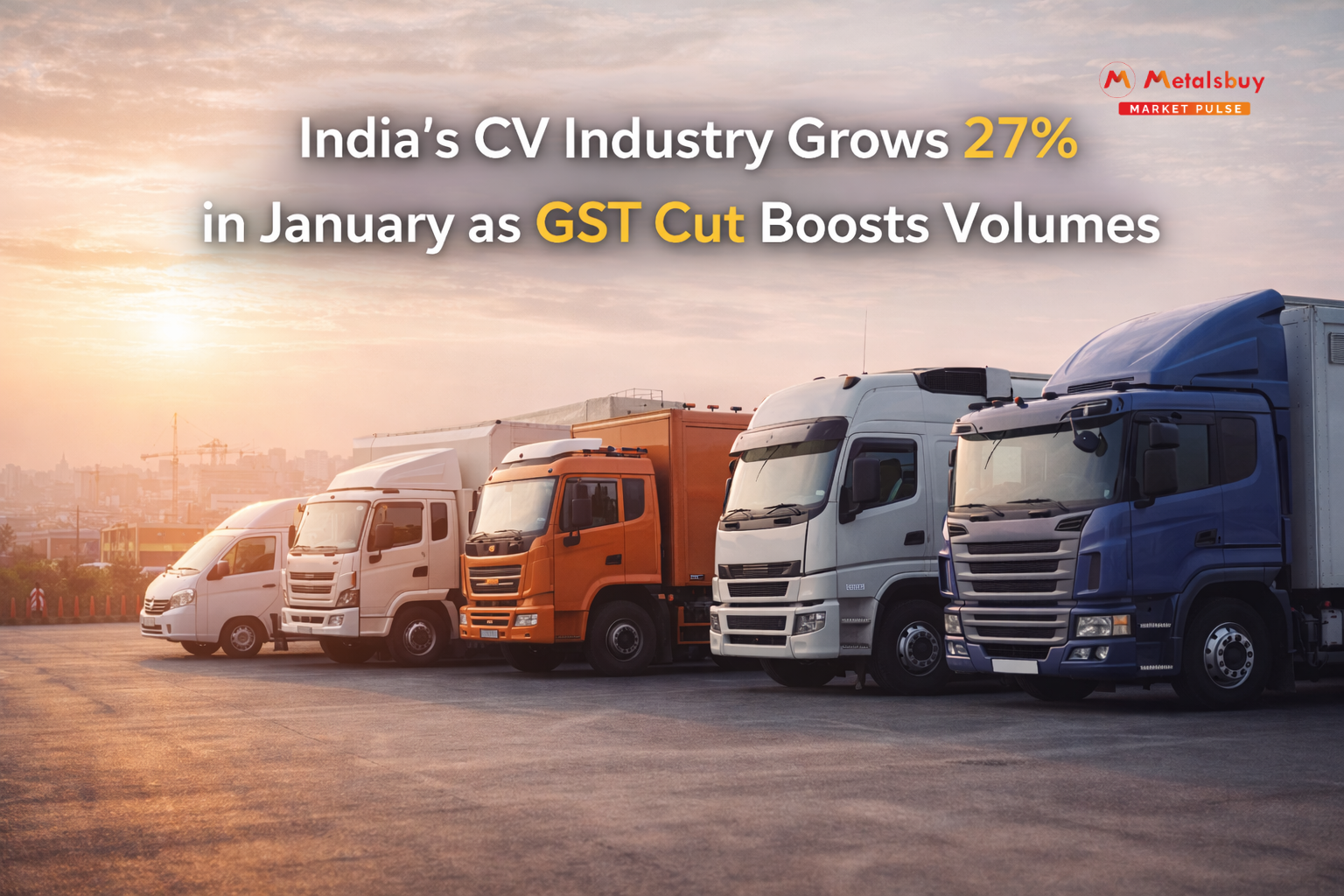
The surge reflects improving freight demand, stronger infrastructure activity, and accelerated replacement cycles — reinforcing the CV segment as a leading indicator of broader industrial momentum.
1. January Performance – Strong Start to the Year
The 27% YoY growth marks one of the strongest monthly expansions in recent quarters. Volumes also registered a sequential increase over December, suggesting that the recovery is not merely seasonal but structurally supported.
The key catalyst has been the GST rate reduction from 28% to 18%, which directly lowered acquisition costs for buyers. For fleet operators, where margins are tightly linked to financing costs and operating efficiency, this tax cut materially improved purchasing viability.
Analytical Insight: Capital goods segments such as commercial vehicles respond quickly to fiscal incentives. The January spike reflects pent-up demand aligning with improved affordability.
2. Segment Dynamics – Broad-Based Growth
Medium & Heavy Commercial Vehicles (M&HCV)
The M&HCV segment saw healthy double-digit growth, supported by:
-
Strong freight movement
-
Infrastructure-led cargo demand
-
Replacement demand in long-haul transport
This segment typically correlates closely with construction, mining, and industrial activity.
Light Commercial Vehicles (LCV)
The LCV segment witnessed even sharper momentum sequentially, driven by:
-
Urban logistics growth
-
E-commerce delivery demand
-
Small fleet operator purchases post-GST relief
LCVs are generally more price-sensitive, making them quicker to respond to tax-driven affordability improvements.
Analytical Insight: The sharper uptick in LCV volumes suggests strong last-mile logistics activity and MSME-led transport demand recovery.
3. FY26 Momentum – Beyond a One-Month Spike
For the current fiscal year so far, the CV industry has maintained positive growth trajectory, indicating that January’s performance builds on an improving base rather than marking an isolated spike.
While the initial GST-driven boost may normalize over the coming quarters, the industry now appears to be operating at a structurally higher demand baseline compared to pre-GST cut levels.
Analytical Insight: Sustained freight demand and infrastructure capex could support steady growth even after the tax-induced acceleration fades.
4. What This Means for Steel & Industrial Demand
Commercial vehicles are steel-intensive products. Growth in CV production directly impacts:
-
Flat steel demand
-
Long steel components
-
Auto-grade steel requirements
-
Ancillary manufacturing supply chains
A 27% YoY surge in CV volumes indicates stronger underlying industrial demand, particularly in logistics, construction, and manufacturing.
Analytical Insight: If CV growth sustains into Q1 FY27, it could reinforce steady demand support for the automotive steel segment.
5. Outlook
Industry projections suggest moderated but steady growth for the full fiscal year. Key variables to monitor include:
-
Freight rate stability
-
Fuel price movements
-
Infrastructure spending momentum
-
Financing availability for fleet operators
While January’s 27% surge is unlikely to be replicated every month, the direction of demand remains positive.
Conclusion
India’s commercial vehicle industry has started the calendar year on a strong note, driven by GST-led affordability gains and improving freight activity. The 27% YoY growth in January underscores the responsiveness of capital goods demand to policy support.
For steel producers, auto component suppliers, and commodity traders, sustained CV growth signals improving industrial momentum and continued demand resilience in transport-linked sectors.