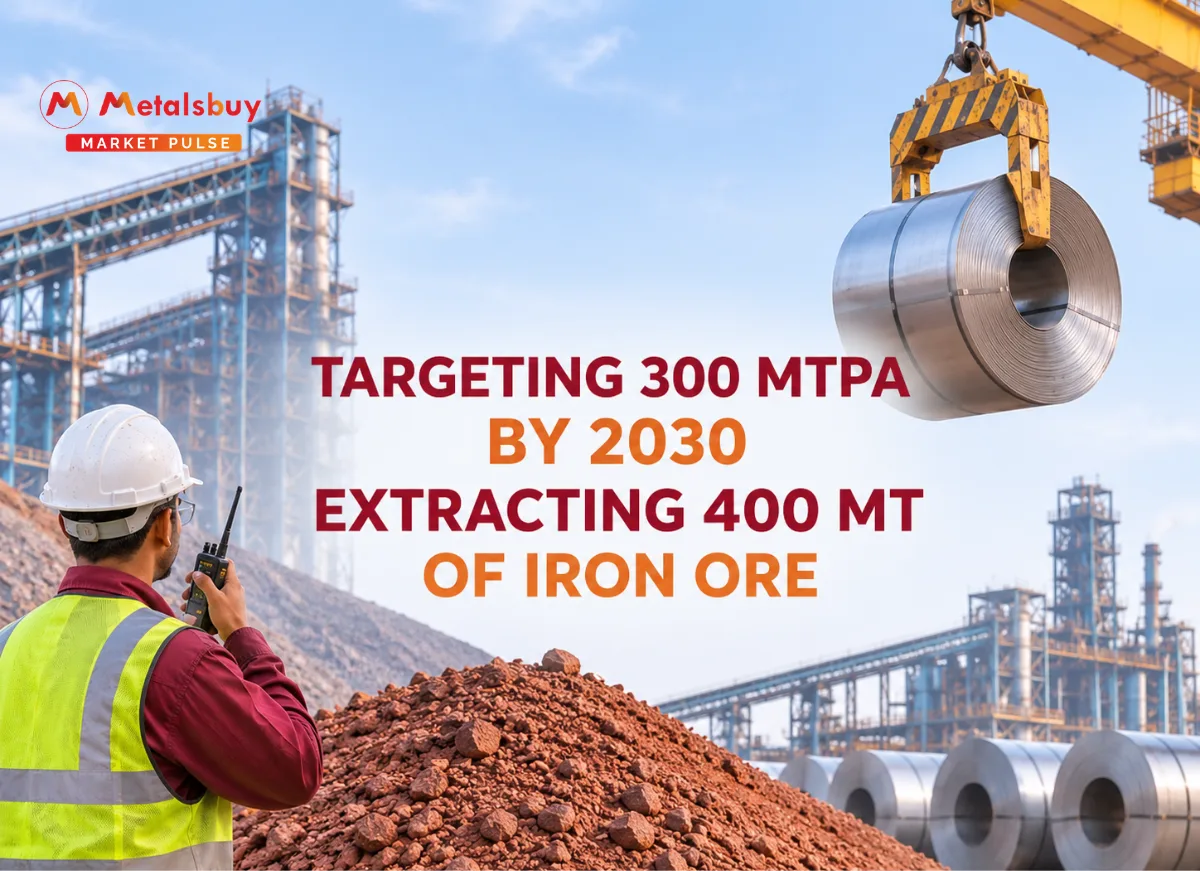
The Indian metallurgical landscape is entering its most ambitious expansion phase in modern industrial history. As primary steelmakers and secondary rolling mills aggressively scale their production to meet the nation’s booming infrastructure demands, industry leaders are shifting their strategic focus entirely toward the backend supply chain. To successfully achieve the government’s target of 300 million metric tonnes of annual crude steel capacity by 2030, domestic manufacturers are proactively optimizing their raw material procurement strategies today. By investing heavily in mineral beneficiation, alternative coal technologies, and localized scrap recycling, the industry is building an unbreakable resource foundation that guarantees long-term global competitiveness and uninterrupted economic growth.
Accelerating domestic iron ore extraction and beneficiation upgrades
Enhancing the quality and volumetric output of local mineral feeds ensures that integrated blast furnaces operate at maximum thermal efficiency. Iron ore remains the absolute bedrock of primary steelmaking. To support a national capacity of 300 million tonnes, the domestic mining sector will need to consistently extract upwards of 400 million tonnes of iron ore annually over the coming decade. Recognizing this massive volumetric requirement, major state-owned enterprises and private merchant miners are aggressively deploying capital to expand their pithead limits across the mineral-rich eastern corridors of Odisha, Jharkhand, and Chhattisgarh.
However, top-tier industry leaders emphasize that sheer volume is only a fraction of the commercial equation. Indian iron ore fines frequently possess a lower ferrous content, requiring extensive processing before they can be efficiently smelted inside modern, high-capacity blast furnaces. To permanently bridge this quality gap, steel conglomerates are heavily investing in advanced beneficiation and massive pelletization plants. By upgrading low-grade fines into premium, high-strength pellets directly at the mine heads, steelmakers can drastically reduce their reliance on expensive, high-grade lump ore. This localized value addition structurally lowers the overall cost of goods sold, allowing integrated mills to protect their operational profit margins while offering highly competitive pricing for finished construction steel.
Diversifying coking coal imports and advancing gasification technology
Reducing reliance on volatile international seaborne trade corridors shields corporate balance sheets from sudden fuel price shocks. Securing a reliable and cost-effective feed of metallurgical coal presents one of the most complex logistical challenges for the heavy manufacturing sector. Currently, the domestic industry imports approximately 85 percent of its annual coking coal requirements, translating to roughly 55 to 60 million tonnes of inbound seaborne cargo every year. As global extraction rates plateau and premium hard coking coal prices out of traditional hubs like Australia continue to exhibit severe volatility, Indian procurement desks are rapidly diversifying their supply networks to protect their operating margins.
Industry stalwarts are actively expanding their import portfolios to include high-grade, discounted metallurgical coal from the Russian Federation and emerging mining blocks in Mozambique and North America. More importantly, the sector is aggressively pushing for long-term import substitution through technological innovation. Leveraging India’s vast reserves of nearly 300 billion tonnes of non-coking thermal coal, major private steelmakers are piloting massive coal gasification projects. By converting domestic thermal coal into synthesis gas for direct reduced iron facilities, manufacturers can entirely bypass the traditional blast furnace route and its strict coking coal requirements. This strategic technological pivot ensures that the industry remains highly self-reliant and financially insulated from international supply chain disruptions.
Formalizing the domestic scrap ecosystem for sustainable metallurgy
Building a highly liquid circular economy provides a cost effective and low emission raw material base for secondary manufacturers. As global trade regulations evolve, particularly with the implementation of strict carbon border taxes in Western markets, the Indian steel sector is placing a massive premium on decarbonization. The most immediate and commercially viable pathway to green steel production is maximizing the utilization of recycled ferrous scrap in electric arc and induction furnaces. Melting steel scrap requires a fraction of the thermal energy needed for primary ore reduction, drastically lowering the overall carbon footprint of the finished metal.
Recognizing this critical shift, industry leaders are urgently calling for the rapid formalization of India's metal recycling ecosystem. Currently, the domestic scrap market remains highly fragmented, forcing secondary steelmakers to import millions of tonnes of scrap annually to keep their kilns firing. By actively collaborating with the government to establish automated vehicle scrapping facilities and organized urban metal collection hubs, the industry aims to generate a massive, high-purity domestic scrap supply. A robust circular economy not only lowers greenhouse gas emissions but also guarantees that mid-tier steelmakers have an uninterrupted, affordable feed of clean raw materials right at their doorstep.
Securing a resilient industrial future through proactive investments
Strategic resource management ensures that the national manufacturing boom is fully supported by an unbreakable backend supply chain. From a broader macroeconomic perspective, this proactive focus on raw material security acts as a massive confidence booster for institutional investors and infrastructure developers alike. The central government is currently deploying a massive capital expenditure budget exceeding ₹11.11 lakh crore to modernize national highway networks, expand urban mass transit systems, and upgrade railway freight corridors. Executing mega-projects of this magnitude requires absolute certainty in the supply of high-strength TMT rebars and heavy structural beams.
By aggressively addressing potential raw material bottlenecks today, Indian steelmakers are completely neutralizing the risk of future supply deficits. This comprehensive strategy of blending domestic mineral upgrades, diverse global procurement, and advanced metal recycling guarantees that the Indian steel industry will effortlessly meet its 2030 capacity targets. Ultimately, a secure and highly optimized raw material backbone ensures that India's ongoing economic resurgence remains fiercely competitive, highly profitable, and globally dominant for decades to come.