The Indian metallurgical landscape is currently showcasing a highly resilient pricing environment, completely defying the sluggishness that is dragging down international commodity markets. As the third quarter gathers momentum, domestic steel prices are holding remarkably firm, heavily supported by an aggressive acceleration in national construction activity. A distinct divergence is emerging within the product mix, where demand for long steel products, primarily rebars, is significantly outpacing flat products like hot-rolled coils. This sustained domestic strength has caught the attention of international financial analysts, with major global brokerages maintaining a highly optimistic outlook on the sector and retaining strong buy recommendations for India's leading integrated steel manufacturers.
Construction sector drives rapid rebar price appreciation
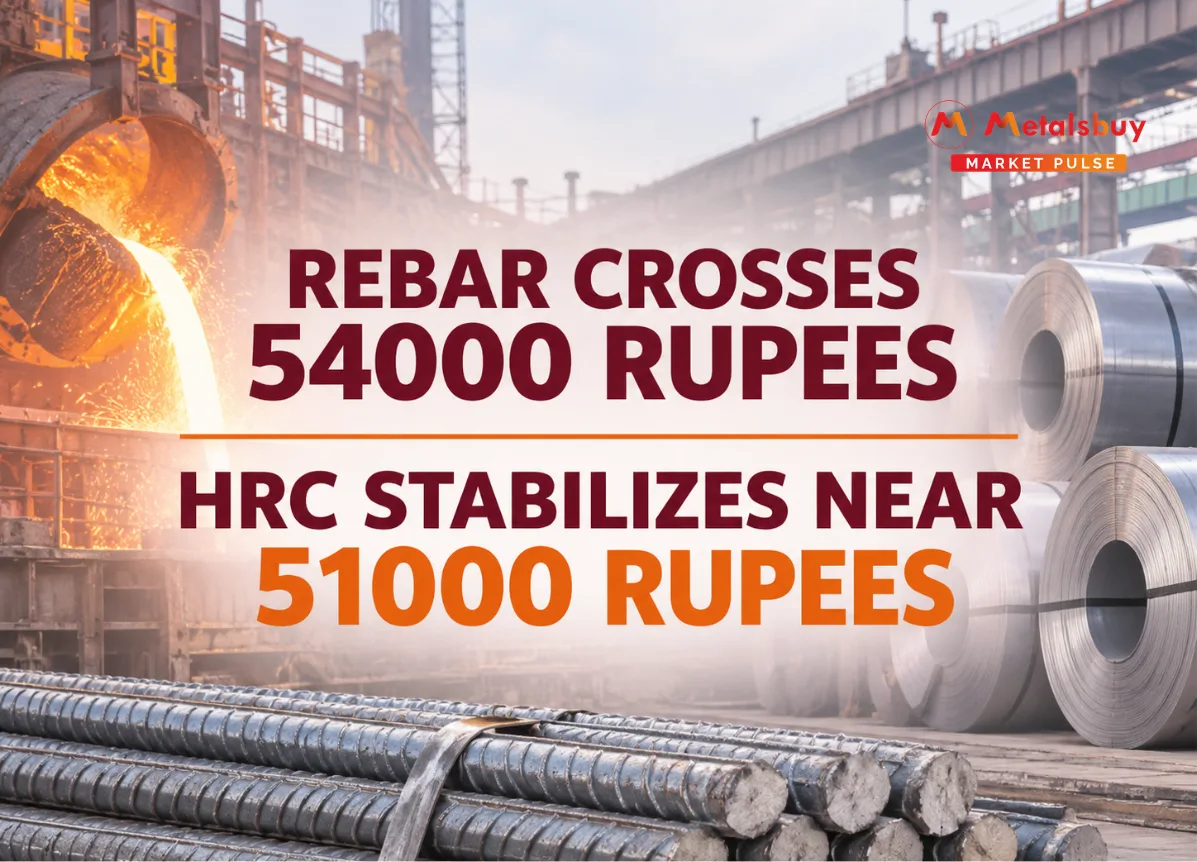
The absolute driving force behind the current firmness in the domestic steel market is the relentless appetite of the Indian civil engineering and real estate sectors. As the heavy monsoon rains have completely retreated from the subcontinent, large-scale infrastructure projects have resumed their maximum execution speeds. This rapid on-the-ground activity has triggered an immediate and massive surge in the procurement of Thermo Mechanically Treated rebars and heavy structural beams. Consequently, the pricing for long products has experienced a noticeable upward trajectory, comfortably outpacing the price realization of flat steel alternatives. Market intelligence indicates that benchmark rebar prices in key trading hubs like Raipur and Mandi Gobindgarh have firmly crossed the ₹53,500 to ₹54,000 per metric tonne threshold, demonstrating strong week-on-week gains.
This aggressive price appreciation is not driven by artificial supply constraints but by genuine, high-volume end-user absorption. The central government is aggressively deploying its massive capital expenditure budget toward the completion of national highway corridors, urban metro expansions, and the modernization of railway freight networks. Simultaneously, private real estate developers are rapidly launching new residential projects to capture post-festive consumer demand. Because rebars form the essential structural skeleton for all reinforced concrete applications, top-tier contractors are actively rushing to secure bulk shipments, providing primary and secondary steelmakers with highly lucrative and fully booked order pipelines.
Hot rolled coil market navigates sideways movement and cheap imports
While the long products segment enjoys a rapid upward rally, the market for flat steel products is currently experiencing a period of strategic consolidation and sideways movement. The pricing environment for hot-rolled coils and cold-rolled sheets remains relatively stable, hovering comfortably in the range of ₹51,000 to ₹52,000 per tonne across major western and western wholesale markets like Mumbai. This sideways momentum is primarily a result of the ongoing influx of competitively priced flat steel imports originating from East Asian manufacturing hubs. Chinese and Vietnamese steelmakers, dealing with their own subdued domestic consumption, continue to push surplus flat steel cargo into the highly liquid Indian market, which naturally caps any explosive upward price movement for local producers.
However, domestic primary steelmakers are not facing a distressed market. The internal consumption of flat products remains incredibly robust, providing a firm floor for these prices. The Indian automotive sector is currently running its assembly lines at peak capacity, continuously procuring high-grade automotive steel and galvanized sheets. Furthermore, the consumer durables and heavy industrial machinery sectors are actively absorbing domestic output. By focusing on specialized, value-added flat products rather than basic commercial grades, major Indian mills are successfully protecting their profit margins against the pressure of cheaper foreign alternatives.
Global brokerages maintain bullish stance on major domestic steelmakers
The combination of firm rebar prices and stable flat steel absorption has generated immense confidence among institutional investors and global financial watchdogs. Prominent international brokerage firm Nomura has actively analyzed this unique market divergence and remains exceptionally positive regarding the future trajectory of the Indian heavy manufacturing ecosystem. Acknowledging that the domestic market is successfully absorbing massive volumes of material at elevated prices, Nomura recently reaffirmed its bullish stance on the sector. The brokerage has specifically retained its 'Buy' ratings on major Indian conglomerates, notably Tata Steel and JSW Steel, citing their robust operational frameworks and strategic capacity expansions.
This institutional optimism is deeply rooted in the underlying financial health of these integrated giants. Both Tata Steel and JSW Steel boast highly secure raw material supply chains, either through captive iron ore mines or optimized global procurement networks. As domestic finished steel prices stay elevated and global coking coal prices experience a moderate cooling phase, these primary producers are perfectly positioned to witness a significant expansion in their earnings before interest, taxes, depreciation, and amortization margins. Nomura’s assessment validates the notion that India’s top-tier steelmakers are fundamentally equipped to deliver strong profitability, regardless of the broader global macroeconomic turbulence.
Infrastructure spending guarantees a resilient fourth quarter
From a broader macroeconomic perspective, the current pricing dynamics underscore the unmatched resilience of the Indian industrial economy. As the industry prepares to enter the final quarter of the financial year, the localized demand engines are showing zero signs of fatigue. Government capital deployment typically reaches its absolute peak during the winter months as ministries rush to fully utilize their allocated annual budgets before the fiscal closure. This guarantees that the aggressive procurement of construction rebars and structural steel will remain a permanent fixture in the market for the foreseeable future.
For domestic steelmakers, this environment offers a highly secure commercial runway. By balancing the production of high-demand long products with specialized, value-added flat steel, manufacturers can continuously optimize their factory run-rates and maximize revenue realization. Ultimately, the ability of the Indian market to sustain elevated steel prices purely through organic domestic growth proves that the nation's ongoing infrastructure boom is the most reliable and lucrative growth anchor in the modern global commodities landscape.