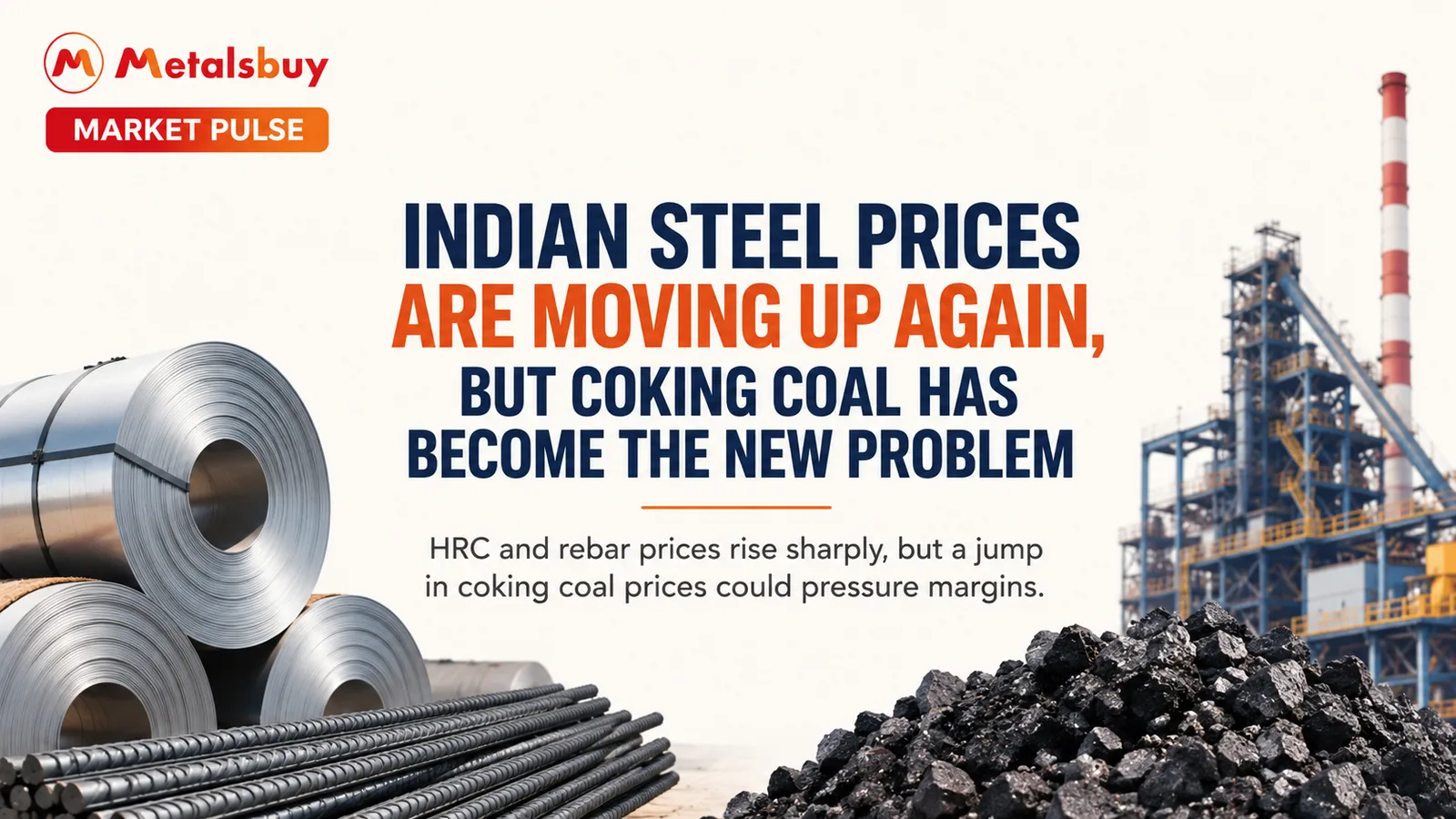
After spending much of the last few months under pressure, domestic steel prices have started moving in the other direction. The latest numbers tracked by Nomura show HRC prices rising by ₹1,200 per tonne in a week to ₹59,750 per tonne, while rebar prices were up ₹1,050 per tonne to ₹54,750 per tonne. The recovery is significant, particularly for the long steel market, which had been under more pressure than flats.
Nomura has retained its positive view on Indian steel stocks, arguing that the latest price increases should help producers deal with the increase in raw material costs. That is probably the main reason the recent price movement is getting attention. Steel prices are improving, but they are doing so just when coking coal has become more expensive.
The recovery is real, but it is still recent
HRC had held up better than rebar during the earlier correction. The latest round of increases has pushed the gap between the two products back above ₹5,000 per tonne. Nomura estimates India's HRC spot margin for August at around ₹35,838 per tonne, up by roughly ₹1,117 per tonne from July. That gives an indication of how much the pricing environment has improved over the month.
Of course, spot margins are only one part of the picture. Actual profitability will vary from company to company depending on iron ore sourcing, coking coal contracts and inventory positions. Still, the direction has changed. A few weeks ago, the conversation was largely around falling domestic steel prices. Right now, mills are seeing better realisations.
Coking coal is where things get uncomfortable
Imported coking coal prices have jumped by $24 per tonne in a week to $259 per tonne. According to Nomura, that is the highest level seen so far in 2026. The increase has been linked to supply concerns and developments in China, including a mine accident that pushed domestic Chinese coking coal prices higher. Nomura noted that Chinese domestic spot prices had increased by more than 30%, reaching around $320 per tonne.
For Indian steelmakers, this matters more than a stable or marginally lower iron ore market. India remains heavily dependent on imported coking coal, and a sustained increase in prices eventually works its way into steelmaking costs. So the question is not simply whether steel prices are rising. The more important question is whether they are rising fast enough.
Iron ore is giving mills some relief
Iron ore has been relatively quiet compared with coking coal. Global iron ore prices were around $93 per tonne, still close to the lower range seen this year. NMDC also reduced domestic iron ore prices in August by ₹200 per tonne for both lump and fines. After the revision, NMDC's lump price stood at ₹5,250 per tonne, while fines were priced at ₹4,500 per tonne.
That does not cancel out the increase in coking coal, but it does prevent raw material costs from rising across the board. For integrated producers with access to domestic ore, the difference between the two raw materials is particularly important.
China is still sitting in the background
Nomura's positive view on Indian steel is also linked to the protection available to domestic producers against imports. Chinese steel exports remain something the market is watching closely. China's property sector continues to be weak, and unless domestic demand improves meaningfully, Chinese mills will continue looking at export markets to move volumes.
India currently has an 11.5% safeguard duty, which is scheduled to gradually reduce to 11% until April 2028. Nomura sees this as an important factor supporting domestic steel prices. There is no guarantee that imports will stop being a concern. But compared with earlier periods, Indian producers currently have a stronger layer of protection against aggressive import pricing.
For now, the market has improved
The numbers tell a fairly simple story. HRC is at ₹59,750 per tonne. Rebar is at ₹54,750 per tonne. Both have moved up sharply in a week. That is good news for steelmakers after the correction seen earlier.
But the other number to watch is $259 per tonne for imported coking coal. If coking coal continues moving higher, mills will need to push through further steel price increases to protect margins. If coal stabilises while domestic steel prices hold at current levels, the September quarter could look much better for producers than the market was expecting a few weeks ago.
For now, Nomura remains positive. The price recovery has given the Indian steel sector some breathing room. Whether that translates into better margins will depend largely on what happens next to coking coal.