The Indian steel sector has concluded the 2025-26 financial year on an exceptionally strong note, cementing its position as a major global outlier in an otherwise sluggish international market. Driven by massive government capital expenditure and a rapid revival in private-sector manufacturing, the domestic steel industry recorded remarkable double-digit growth in both production and consumption. While the overall narrative remains overwhelmingly positive, primary steelmakers are also beginning to recalibrate their strategies to navigate a fresh set of supply chain and trade challenges that emerged during the latter half of the fiscal year.
Infrastructure Capex Propels Record Consumption
The standout narrative for the Indian steel industry in FY 2025-26 is the sheer volume of domestic absorption. Driven by a relentless nationwide infrastructure push, finished steel consumption surged past the 136 million tonne mark, representing a robust year-on-year growth rate of approximately 13 to 14 percent.
This massive appetite for raw materials was largely anchored by the government's continued focus on structural development. The accelerated execution of national highway networks, dedicated railway freight corridors, and urban metro systems created a continuous, high-volume demand pipeline for long products like TMT bars and heavy structural beams. Simultaneously, the consumer-driven segments performed exceptionally well. A booming passenger vehicle market and a resurgent real estate sector drove heavy procurement of value-added flat steel products, ensuring that domestic mills operated with highly comfortable order books throughout the fiscal year.
Production Volumes Scale New Highs
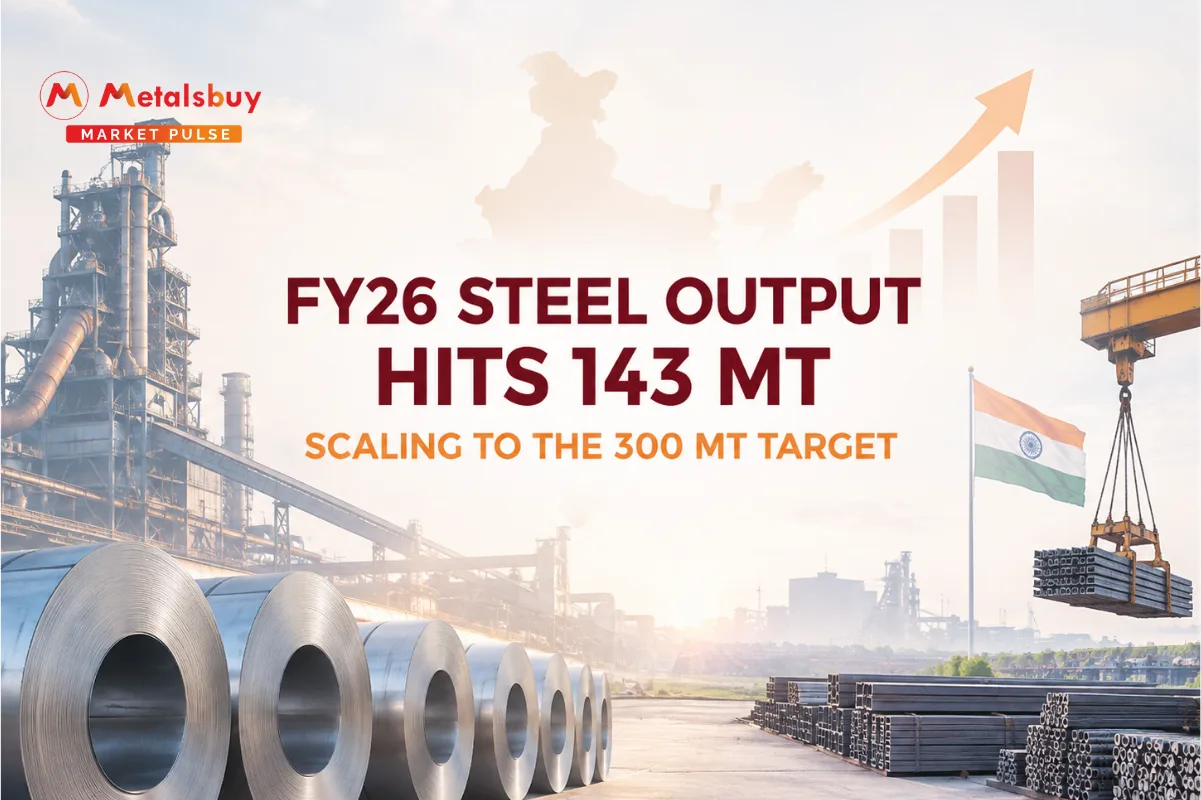
To meet this surging domestic appetite, Indian steelmakers operated their blast furnaces and electric arc furnaces at peak efficiency. Total crude steel production for the fiscal year crossed 143 million tonnes, showcasing a steady upward trajectory of around 12 percent compared to the previous year.
This production milestone proves that the operational bottlenecks that previously plagued the industry—such as raw material shortages and logistical delays—are being effectively managed. Major integrated producers successfully secured their supply chains, ensuring uninterrupted feeds of iron ore and coking coal to their plants. By actively pushing capacity utilization rates well above 85 percent, domestic mills ensured that the nation's massive infrastructure targets were not stalled by supply-side material shortages.
Rising Imports Require Strategic Navigation
Despite the phenomenal domestic growth, the fiscal year also brought a notable shift in trade dynamics that the industry is now closely monitoring. As global steel demand remained weak—particularly in major manufacturing hubs like China and Europe—international producers increasingly redirected their surplus materials toward the vibrant Indian market.
Consequently, finished steel imports into India rose sharply, crossing the 8.5 million tonne threshold during the fiscal year. A significant portion of this inbound cargo consisted of aggressively priced hot-rolled coils and galvanized sheets originating from China, Vietnam, and nations holding Free Trade Agreements (FTAs) with India. While these cheaper imports put moderate pricing pressure on domestic mills, the sheer scale of local consumption prevented any severe market destabilization. Primary producers are now actively engaging with policymakers to ensure a level playing field, focusing on producing high-grade, specialized steel that imported standard commodities cannot easily replace.
Capacity Additions Align With Long Term Goals
The industry’s response to these emerging trade challenges has been highly proactive. Rather than scaling back, Indian steelmakers are doubling down on capital investments to improve cost efficiency and scale. During FY 2025-26, top-tier private and state-owned enterprises successfully brought several brownfield expansion projects online, adding crucial millions of tonnes to the national capacity.
These ongoing investments are perfectly aligned with the National Steel Policy's ambitious target of achieving 300 million tonnes of annual production capacity by 2030. By upgrading their manufacturing technologies, adopting energy-efficient electric arc furnaces, and securing captive mining assets, Indian steel companies are structurally lowering their production costs. This strategic foresight not only protects their operational margins from cheaper imports but also prepares the industry to seamlessly supply the next wave of India's economic expansion.
A Positive Outlook For The New Fiscal Year
Looking ahead, the momentum generated in FY 2025-26 provides a highly secure foundation for the coming quarters. The macroeconomic fundamentals driving steel consumption remain entirely intact.
While the influx of foreign steel and volatile seaborne coking coal prices require careful margin management, the domestic market's ability to absorb over 136 million tonnes of material proves its underlying resilience. For investors, downstream manufacturers, and logistics partners, the Indian steel industry continues to offer one of the most reliable and high-growth commercial environments in the global commodities landscape today.