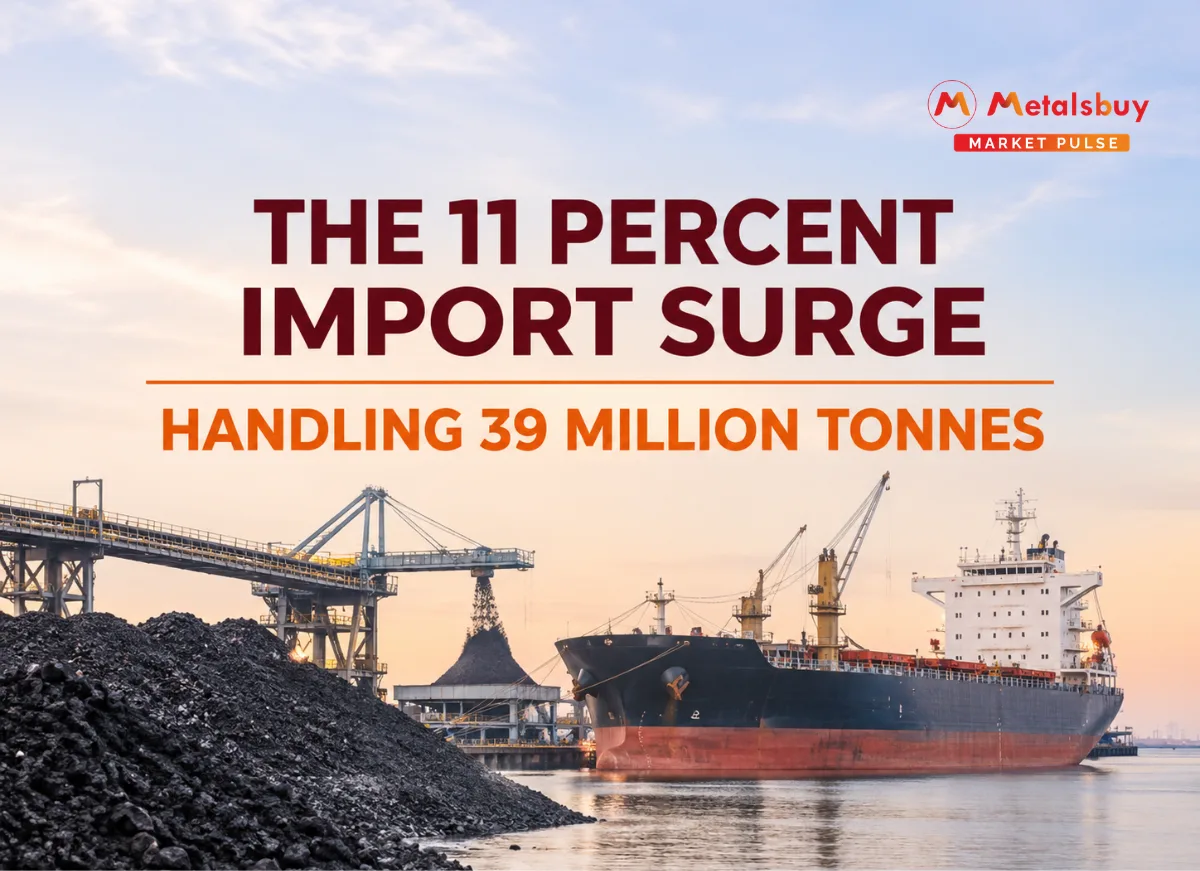
India’s maritime and logistics infrastructure is actively responding to the massive raw material appetite of the domestic heavy manufacturing sector. According to the latest traffic data released by the Indian Ports Association, the volume of coking coal handled across the country's major state-owned ports registered a robust double-digit expansion during the first seven months of the ongoing financial year. This steady influx of premium metallurgical fuel acts as a highly positive macroeconomic indicator. It proves that primary domestic steelmakers are not only sustaining their factory run-rates but are aggressively scaling up production to capture the surging demand generated by India's post-monsoon infrastructure and automotive boom.
Surging import volumes reflect robust blast furnace activity
A steady influx of premium metallurgical coal at major coastal hubs ensures integrated steelmakers can maintain high capacity utilization without facing input shortages. The logistical data covering the critical April to October window of the 2026-27 financial year reveals a highly fluid and active inbound trade corridor. Total coking coal traffic at major Indian ports grew by an impressive 11 percent year-on-year. During this extensive seven-month period, port authorities successfully processed and evacuated an estimated 39.4 million metric tonnes of incoming coking coal, marking a substantial volumetric leap from the cargo handled during the corresponding timeframe last year.
This 11 percent surge is a direct mirror of the underlying operational health of India’s primary steel ecosystem. Because the subcontinent's domestic reserves of low-ash metallurgical coal are structurally limited, integrated steel mills rely heavily on the international seaborne market for approximately 85 percent of their blast furnace fuel requirements. Consequently, port traffic serves as a highly accurate, real-time barometer for actual smelting activity. A double-digit growth in raw material handling indicates that major blast furnace operators across the country are running their plants at near-maximum thermal efficiency, perfectly aligning their hot metal output with the relentless consumption pace of the domestic economy.
Eastern maritime gateways dominate raw material logistics
Deep water ports along the eastern coast continue to handle the absolute bulk of inbound shipments to seamlessly feed the mineral rich steel belt. The geographical distribution of these heavy bulk imports highlights the strategic layout and efficiency of India's maritime supply chain. The eastern seaboard continues to dominate the inbound coking coal trade, acting as the primary logistical gateway for the heavily industrialized states of Odisha, Jharkhand, and Chhattisgarh.
Major facilities like the Paradip Port and the Syama Prasad Mookerjee Port in Kolkata and Haldia witnessed massive cargo clearances during the April to October period. The ability of these specific port authorities to handle an 11 percent surge in volume is largely attributed to recent, heavy capital investments in mechanized bulk cargo handling. By utilizing advanced ship unloaders, rapid railway loading silos, and extensive conveyor networks, these ports have drastically reduced the turnaround time for large Capesize and Panamax vessels. This logistical efficiency was especially crucial during the challenging monsoon months of July and August, ensuring that imported fuel reached inland factory gates swiftly and bypassing traditional road freight bottlenecks.
Strategic stockpiling protects mills from global price shocks
Building massive inventory buffers ahead of the winter manufacturing peak allows domestic producers to optimize their blending costs and protect profit margins. The timing of this 11 percent import growth is exceptionally strategic for the financial stability of the domestic steel market. Accumulating nearly 40 million tonnes of raw material between April and October demonstrates a highly proactive inventory management approach by Indian steelmakers. The third quarter of the financial year, stretching from October to December, traditionally represents the absolute peak season for civil construction, real estate development, and heavy engineering.
By securing massive volumes of coking coal ahead of this winter peak, steelmakers have successfully built a robust supply buffer directly at their plant stockyards. This proactive stockpiling ensures that mills are not forced into desperate, expensive spot-market purchases if international seaborne prices suddenly spike due to unpredictable weather disruptions in major exporting hubs like Australia. Furthermore, having abundant imported coal allows plant operators to optimize their blending ratios, mixing premium foreign grades with more affordable domestic supplies. This operational flexibility structurally lowers the average cost of goods sold, actively protecting corporate profit margins while allowing manufacturers to offer highly competitive prices for finished construction steel.
Securing the foundation for the national infrastructure boom
An active and well supplied raw material chain guarantees that India's heavy engineering sectors remain globally competitive and highly resilient. From a broader macroeconomic perspective, the double-digit growth in port traffic is the ultimate green flag for India's long-term industrial aspirations. The central government is currently deploying a massive capital expenditure budget exceeding ₹11.11 lakh crore to modernize national highway networks, expand urban mass transit systems, and upgrade railway freight corridors.
Executing infrastructure mega-projects of this magnitude requires a continuous, uninterrupted flow of high-strength TMT rebars and heavy structural beams. By ensuring that the foundational raw materials are securely imported, unloaded, and transported to the blast furnaces without delay, the Indian maritime sector is actively subsidizing this national growth. Ultimately, this seamless logistical performance proves that India possesses the backend operational bandwidth necessary to confidently achieve its ambitious National Steel Policy target of establishing 300 million tonnes of annual domestic capacity by the year 2030.