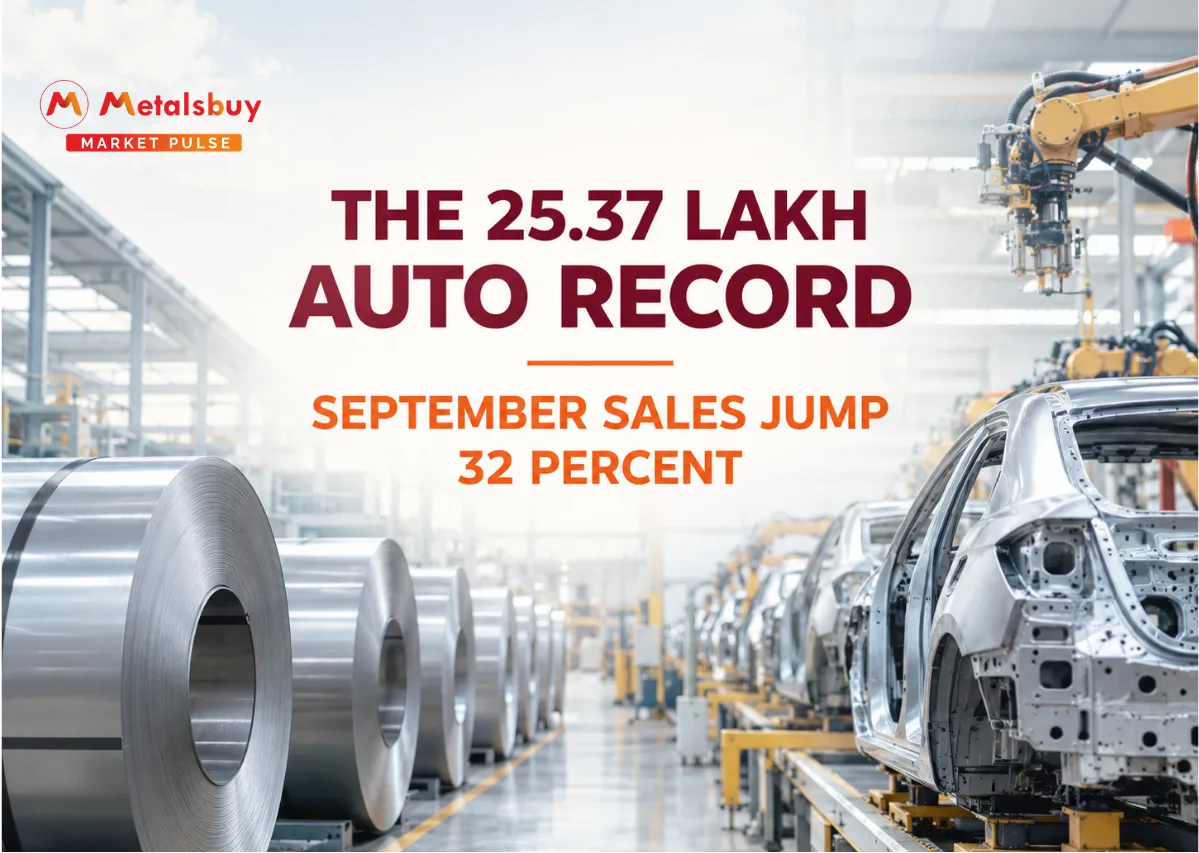
The Indian automotive sector delivered a monumental performance as the second quarter of the 2026-27 financial year drew to a close. According to the latest data released by the Federation of Automobile Dealers Associations, overall vehicle retail sales surged by an impressive 31.82 percent year-on-year in September, pushing total market volumes to a record 25.37 lakh units. This massive expansion sets a new historical benchmark for September sales across the country. While a favorable base effect played a role in the headline percentage growth, the underlying absolute volumes confirm that domestic consumer demand remains exceptionally resilient as the market enters the peak festive season.
Passenger vehicles and electric mobility achieve historic highs
The passenger vehicle segment served as a primary growth engine during the month, crossing a highly significant operational threshold. Dealerships across the country dispatched 4,27,213 passenger vehicles in September, representing a robust 32.10 percent year-on-year increase and a healthy 6.17 percent sequential growth from August.
This is the first time passenger vehicle retail sales have comfortably breached the 4.27 lakh mark in a September window. The growth was heavily anchored by the unrelenting consumer appetite for utility vehicles and feature-rich SUVs, which continue to command the lion's share of dealership footfall. Alongside traditional internal combustion engines, the rapid adoption of electric mobility is fundamentally reshaping the market. Total electric vehicle retail sales hit an all-time monthly high of approximately 3.34 lakh units across all categories. With overall EV penetration reaching 13 percent, it is clear that buyers are actively shifting toward sustainable transport options, supported by an expanding national charging infrastructure and improving battery economics.
Commercial and two wheeler segments post strong gains
Beyond passenger cars, the broader commercial and two-wheeler markets demonstrated exceptional strength, signaling robust economic activity at the grassroots level. The two-wheeler segment recorded sales of 17,90,188 units, marking a massive 33.08 percent year-on-year jump. This performance pushed volumes 15 percent higher than the previous September peak recorded back in 2018, driven heavily by an early rural market recovery and strong pre-festive purchasing.
Equally impressive was the commercial vehicle segment, which crossed the critical one lakh unit mark for the very first time in a September month. Retail registrations for commercial vehicles stood at 1,03,557 units, a staggering 37.62 percent year-on-year increase and a 14.09 percent month-on-month jump. This sharp sequential improvement in heavy and light commercial vehicles points toward accelerating industrial activity, stronger freight movement, and active fleet renewals by logistics operators preparing for the busy third quarter. Meanwhile, the three-wheeler segment saw a 22.25 percent annual growth to reach 1,32,570 units, with electric variants dominating nearly 65 percent of that total.
Understanding base distortions and rising inventory levels
While the 31.82 percent headline growth is undoubtedly positive, industry leadership is advising a degree of analytical caution. FADA officials highlighted that the year-on-year percentage is somewhat distorted by an unusually low base in September 2025, a period when consumers deliberately deferred their vehicle purchases ahead of the implementation of new GST frameworks.
Because of this base distortion, the sequential month-on-month growth of 4.69 percent provides a much more grounded reflection of the market's true momentum. Another critical metric requiring careful monitoring is the rising level of dealership inventory. Passenger vehicle inventory levels have expanded by an additional five days, now hovering between 43 and 45 days. This is significantly higher than the industry's recommended benchmark of 21 days. Automakers have aggressively pushed stock to dealerships in anticipation of the upcoming Navratri and Dussehra festivals, creating a high-stakes environment where strong retail conversion in October is absolutely necessary to clear these accumulating stockpiles.
Market outlook remains cautiously optimistic ahead of peak festivals
Looking ahead to the remainder of the festive window, the sentiment across the automotive supply chain remains highly active but cautiously optimistic. Dealership surveys indicate that over 75 percent of retailers expect to see continued sales growth in October.
If this anticipated consumer conversion materializes, it will act as a massive catalyst for the broader manufacturing ecosystem. Record-breaking auto sales immediately translate into robust, high-volume order books for domestic steel mills, aluminum extruders, and auto-component manufacturers. The steady absorption of flat steel products and specialized alloys by the automotive sector provides crucial margin support for primary steelmakers navigating a complex global market. Ultimately, the industry's ability to seamlessly match this high production run-rate with actual retail sales over the next few weeks will determine the financial health of India's heavy manufacturing supply chain for the rest of the fiscal year.