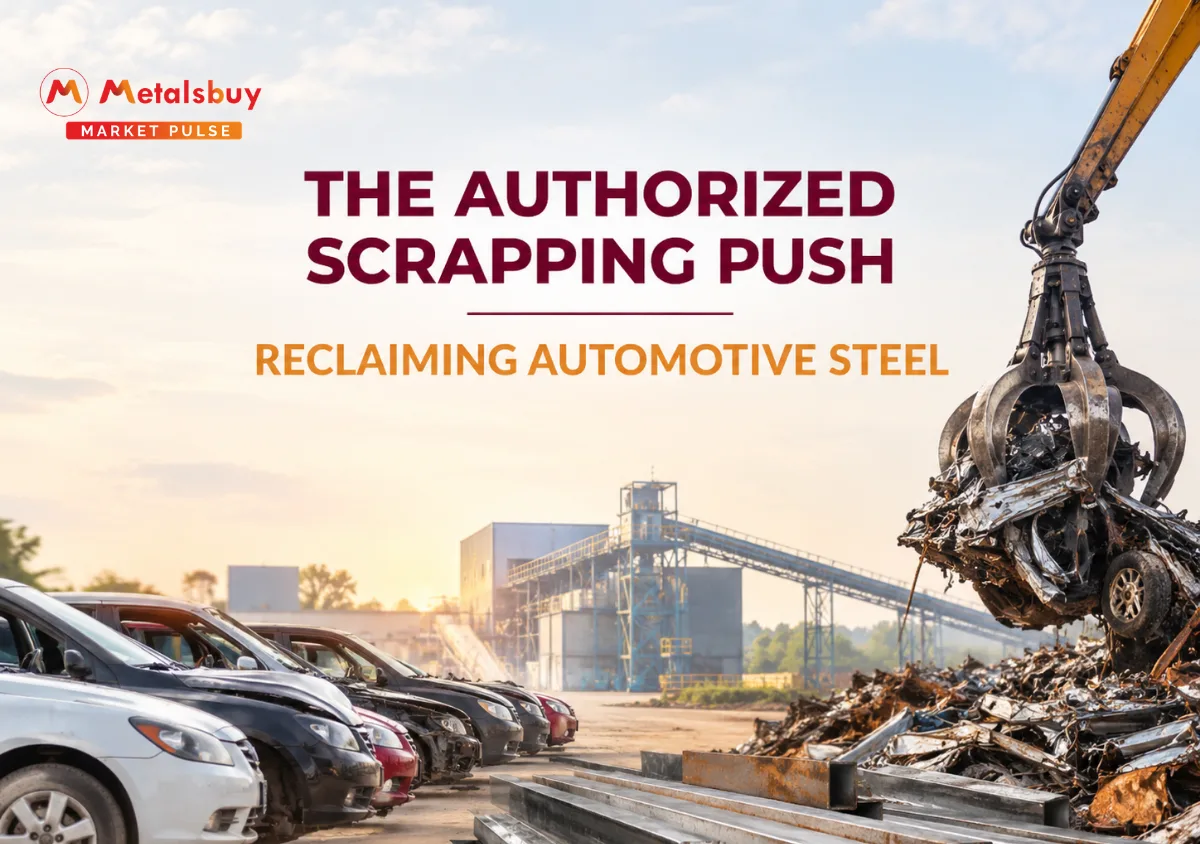
India’s automotive industry is taking a decisive step toward sustainability and resource optimization by actively integrating end-of-life vehicle management into its core business models. Major original equipment manufacturers are now entering into exclusive, formal agreements with Registered Vehicle Scrapping Facilities across the country. This strategic collaboration is designed to transition the disposal of aging vehicles away from the unorganized sector into a highly regulated, environmentally compliant ecosystem. For the broader manufacturing and metals sectors, this formalization promises a steady, domestic supply of high-grade ferrous and non-ferrous scrap, perfectly aligning with national circular economy ambitions.
Formalizing the end of life vehicle ecosystem
The push for structured recycling is gaining massive momentum in the passenger vehicle segment. Honda Cars India Limited recently established a strategic partnership with Maruti Suzuki Toyotsu India to offer its customers a seamless, eco-friendly vehicle scrapping solution. This collaboration effectively removes the logistical headaches typically associated with retiring an old car.
Under this joint program, Honda dealerships and Maruti Suzuki Toyotsu India will provide customers with comprehensive end-to-end services. This includes transparent vehicle evaluation, generating competitive quotes for the scrappage value, and managing the physical pick-up, transportation, and scientific dismantling of the car at certified recycling centers. Crucially, the facility issues a formal Certificate of Deposit and Destruction to the vehicle owner upon completion. According to the Ministry of Road Transport and Highways, India currently harbors an estimated 10 million unfit vehicles that are ripe for retirement. By streamlining the surrender process through trusted dealership networks, automakers are actively helping the government clear these highly polluting vehicles from national roads.
Commercial vehicle segment joins the green transition
The shift toward organized scrapping is not limited to passenger cars; heavy-duty and commercial transport manufacturers are also recognizing the immense value of formal recycling channels. Eicher Trucks and Buses, a key business unit of VE Commercial Vehicles, has formalized an arrangement with Rosmerta Auto Recycling to handle the authorized dismantling of end-of-life commercial fleets.
This commercial partnership is particularly vital because aging trucks and buses contribute disproportionately to urban air pollution and require highly specialized dismantling procedures to handle hazardous fluids and heavy automotive batteries safely. The Eicher and Rosmerta tie-up ensures strict adherence to environmental de-pollution standards before the physical dismantling begins. Furthermore, the collaboration facilitates complex regulatory documentation, including the generation and transfer of Extended Producer Responsibility credits. This system ensures that fleet operators have a financially viable and legally compliant alternative to the informal scrap yards that have historically dominated the commercial vehicle disposal market.
Securing raw materials for the metals sector
From a macroeconomic perspective, the rapid scaling of Registered Vehicle Scrapping Facilities is an incredibly positive development for India's secondary steel and metals manufacturing sector. When end-of-life vehicles are dismantled scientifically, the recovery rates for high-quality commodities increase dramatically.
Automobiles are massive reservoirs of prime raw materials, with steel making up roughly 60 to 65 percent of a standard vehicle's weight, alongside significant quantities of aluminum, copper, and specialized plastics. By capturing these materials through formal channels, facilities like Maruti Suzuki Toyotsu India and Rosmerta can supply domestic steel mills and foundries with premium, sorted ferrous scrap. Utilizing recycled automotive steel rather than extracting fresh iron ore allows steelmakers to save up to 60 percent of the energy typically required in the smelting process while drastically reducing greenhouse gas emissions. This localized, reliable scrap supply chain acts as a powerful buffer against the volatile pricing of international seaborne scrap markets.
Driving new vehicle sales through policy benefits
The ultimate success of these corporate partnerships rests heavily on the incentive structures established by the National Automobile Scrappage Policy. The official Certificate of Deposit issued by these authorized facilities acts as a high-value financial instrument for the consumer.
Currently, presenting this certificate unlocks a cascade of benefits designed to stimulate new vehicle purchases. State governments are mandated to offer up to a 25 percent rebate on road tax for personal vehicles and a 15 percent rebate for commercial vehicles against scrapped assets. Furthermore, the registration fees for the newly purchased vehicle are entirely waived. To sweeten the deal, multiple major automakers are now voluntarily offering additional financial discounts—ranging from 1.5 to 3 percent of the ex-showroom price—to customers who exchange a scrappage certificate for a new car. This combined incentive ecosystem creates a win-win scenario. Consumers receive substantial financial relief, automakers see a direct boost in new retail sales ahead of the festive season, and the nation takes a massive leap forward in its journey toward sustainable, low-carbon mobility.