Key Highlights
- India has strengthened its position as one of the world's fastest-growing manufacturing destinations, driven by the global China+1 supply chain strategy.
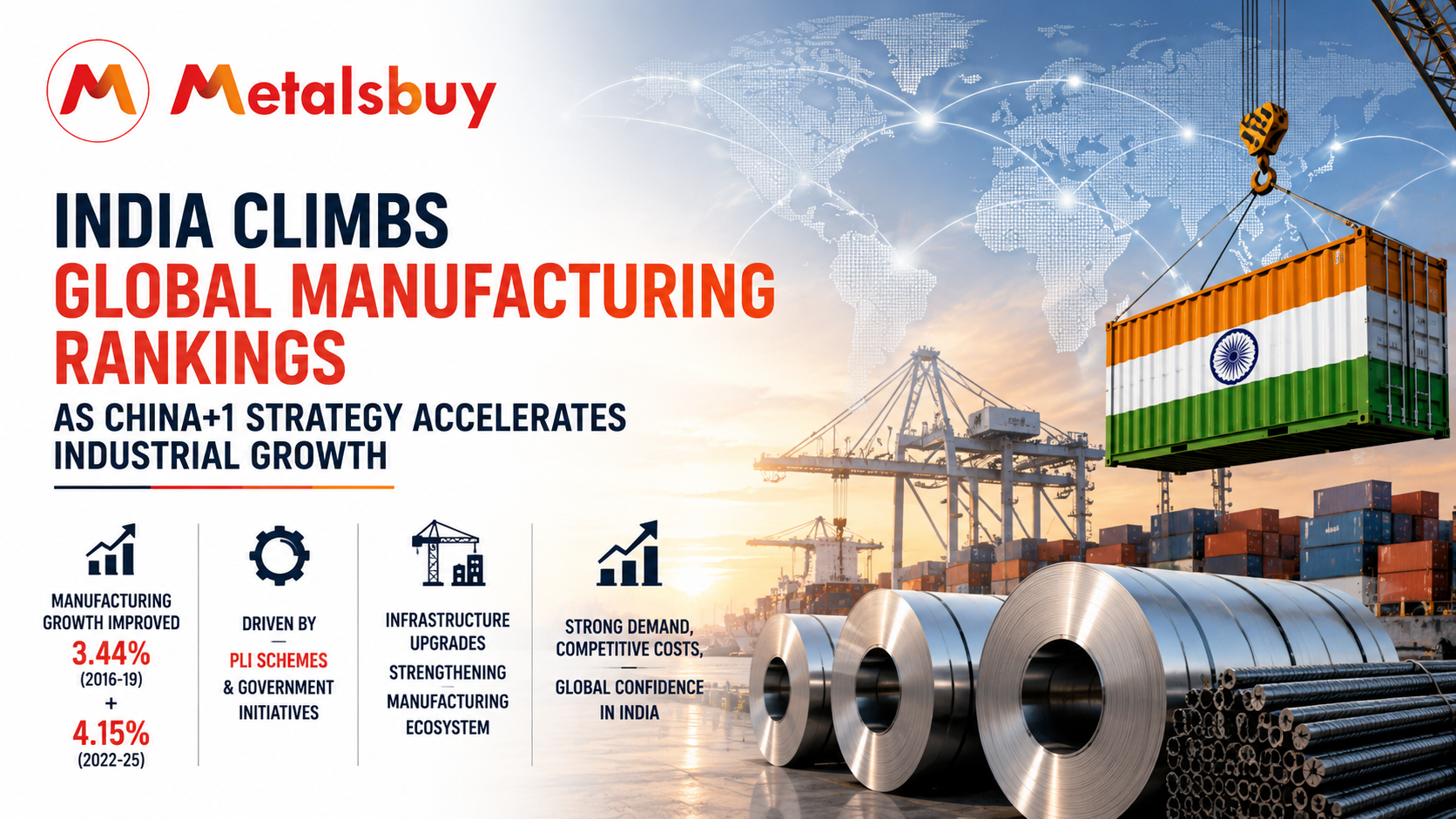
- According to an ASSOCHAM study, India's average manufacturing growth increased from 3.44% during 2016–19 to 4.15% during 2022–25.
- Growth has been supported by Production Linked Incentive (PLI) schemes, infrastructure development, competitive manufacturing costs and robust domestic demand.
- Global companies are increasingly diversifying supply chains beyond China, positioning India as a preferred manufacturing destination.
- The manufacturing momentum is expected to create significant opportunities for sectors such as steel, engineering, automotive, electronics and capital goods.
Introduction
India is rapidly strengthening its position as a global manufacturing powerhouse as multinational companies continue to diversify their supply chains under the China+1 strategy. According to a recent ASSOCHAM study, the country's manufacturing sector has recorded stronger growth over the past few years, supported by policy reforms, infrastructure investments and rising domestic demand. The shift reflects India's growing competitiveness in global manufacturing as businesses seek resilient and diversified production bases. For the steel industry, this transformation presents a significant opportunity, as manufacturing expansion directly drives demand for steel across multiple sectors.
Why India Is Benefiting from China+1
The China+1 strategy has become a key sourcing approach for global manufacturers seeking to reduce dependence on a single production base. India's large domestic market, improving logistics infrastructure, skilled workforce and supportive government policies have made it an attractive alternative. Initiatives such as the Production Linked Incentive (PLI) scheme, continued investment in industrial corridors and improvements in ease of doing business have further enhanced investor confidence. As companies expand manufacturing operations in India, the country continues to strengthen its role in global supply chains.
Market Analysis
The ASSOCHAM report highlights a notable improvement in India's manufacturing growth, with the average annual growth rate increasing from 3.44% during 2016–19 to 4.15% between 2022 and 2025. This growth has been supported by rising domestic consumption, increasing exports and strong investments across sectors including automotive, electronics, renewable energy and engineering. Manufacturing expansion is expected to generate sustained demand for flat steel, long steel, stainless steel and specialty steel products. As industrial activity accelerates, India's steel sector stands to benefit from higher capacity utilisation and fresh investment opportunities.
Industry Impact
A stronger manufacturing ecosystem will have a multiplier effect across the metals and mining value chain. Increased industrial production will boost demand for steel, aluminium, copper, ferro alloys, cement and other core industrial materials. Steel producers are likely to witness higher order volumes from infrastructure, capital goods, automotive and engineering sectors. At the same time, improved manufacturing competitiveness can strengthen India's export performance and enhance the country's position in global industrial value chains.
Metalsbuy Market Pulse Insight
The China+1 strategy is no longer a temporary trend but a structural shift that is reshaping global manufacturing. India's continued policy support, infrastructure development and expanding industrial base are creating favourable conditions for long-term manufacturing growth. For the steel industry, this transition represents one of the strongest demand drivers over the coming decade. Companies that invest in capacity expansion, technology upgrades and value-added products will be well positioned to benefit from India's emergence as a global manufacturing hub.
Conclusion
India's improving manufacturing performance demonstrates the country's growing importance in the global industrial landscape. Backed by government initiatives, infrastructure development and increasing international confidence, the manufacturing sector is poised for sustained expansion. As the China+1 strategy continues to reshape global supply chains, India's steel and manufacturing industries are expected to play an increasingly important role in driving economic growth, exports and industrial competitiveness.