KEY HIGHLIGHTS
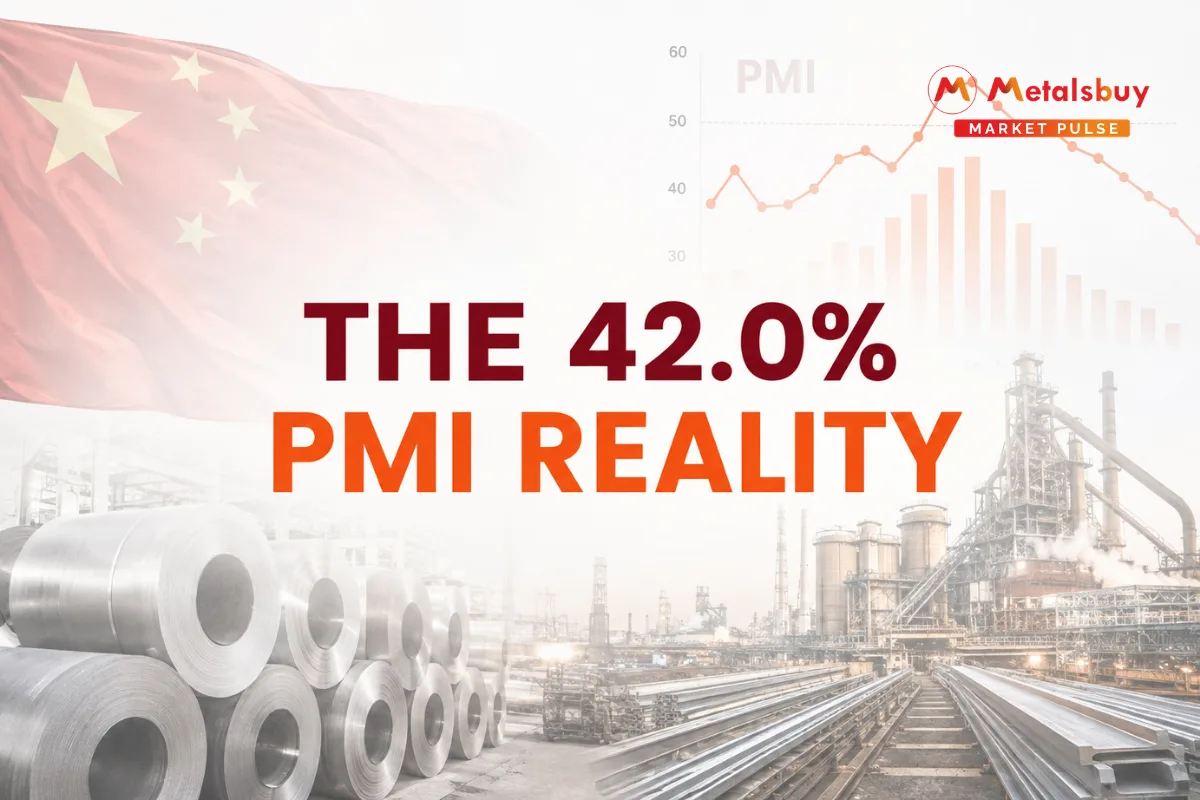
- Hebei Steel PMI: 42.0 percent recorded for July 2026
- New Order Index: 37.8 percent
- Order Index Adjustment: Down 1.2 percentage points month-on-month
- Iron Ore Benchmark: CFR China adjusting down by 3.64 percent
- Strategic Focus: Inventory optimization and high-margin steel production
MARKET ANALYSIS
The global steel economy is witnessing a profound structural transformation, and the latest manufacturing data from China’s largest steelmaking hub underscores this vital pivot. In July 2026, the Purchasing Managers’ Index (PMI) for the steel sector in Hebei Province settled at 42.0 percent. While this figure technically represents a contractionary phase on the standard economic index, seasoned industry experts view this normalization as a highly positive, necessary step toward long-term market sustainability. Rather than chasing unsustainable volume, Chinese steelmakers are proactively utilizing this period for a strategic and healthy recalibration.
A deeper dive into the specific metrics reveals that the overall new order index for Hebei’s steel sector decreased to 37.8 percent, reflecting a subtle moderation of 1.2 percentage points from the previous month. This adjustment aligns perfectly with traditional seasonal patterns. Historically, extreme summer temperatures across mainland China naturally temper immediate construction and infrastructure demand. Instead of forcing excess supply into a seasonally quiet market, Hebei’s major producers are embracing disciplined, demand-driven production schedules.
Furthermore, the current operating environment is benefiting from highly favorable shifts in raw material expenses. The benchmark 62% Fe iron ore prices CFR China experienced a 3.64 percent downward adjustment during this same period, while Russian export billets dropped by 1.6 percent. This synchronized easing of essential input costs provides regional mills with a valuable financial buffer. It actively protects their profit margins while they optimize their inventory levels. By intelligently throttling back output in response to the 37.8 percent new order index, manufacturers are preventing the accumulation of expensive, rapidly depreciating stockpiles. This ensures that capital remains highly liquid and corporate balance sheets stay remarkably resilient amidst shifting economic tides.
This phase of deliberate market consolidation serves as a strong indicator that the Hebei industrial landscape is rapidly maturing. The provincial focus has decisively shifted away from sheer output tonnage toward value realization, carbon emission reduction, and the production of specialized, high-strength steel products tailored specifically for advanced manufacturing sectors.
WHAT IT MEANS FOR THE STEEL INDUSTRY
For the broader international steel industry, Hebei’s current PMI data signals the adoption of a fundamentally healthier operational blueprint. When the world’s most concentrated and influential steel-producing region adopts strict production discipline, the entire global supply chain stands to benefit from significantly reduced volatility. The historical era of unchecked overproduction flooding international markets is increasingly being replaced by a more calculated, margin-focused approach.
This strategic moderation means global markets will likely face far less disruption from low-priced, commoditized exports. As Chinese mills align their output closely with the 42.0 percent PMI reality, international competitors, traders, and joint-venture partners can expect a much more balanced pricing environment for finished goods such as hot-rolled coils (HRC) and rebar. With HRC FOB China prices adjusting down moderately by 2.49 percent in recent weeks, the market is successfully finding a stable, sustainable floor rather than entering a destabilizing freefall.
Moreover, this temporary lull in aggregate order volumes offers massive steel conglomerates the crucial operational bandwidth needed to aggressively accelerate their green transitions. Comprehensive facility maintenance, the integration of state-of-the-art electric arc furnaces (EAF), and the implementation of breakthrough energy-efficient technologies are far easier to execute when rolling mills are not strained at maximum capacity. Consequently, this PMI reading is less of an industrial downturn and more of a strategic springboard for the sector's sweeping modernization. As global trade policies become more stringent regarding carbon footprints, Hebei’s calculated pause allows mills to upgrade their environmental compliance, ensuring they remain highly competitive and future-proof on the world stage.
MARKET OUTLOOK
Looking ahead, the macroeconomic market outlook for the steel sector remains incredibly robust and full of untapped potential. The July manufacturing moderation in Hebei is widely anticipated by analysts to be a brief seasonal trough, effectively laying a stable, unburdened foundation for a vibrant economic recovery in the upcoming autumn months. As we transition into the traditionally busy "Golden September and Silver October" construction seasons, the strict inventory discipline practiced today will pay massive dividends.
Macroeconomic catalysts are also aligning highly favorably for the industry. Anticipated domestic infrastructure stimulus packages, alongside targeted government investments in new-type power grid systems, are expected to revitalize heavy industrial demand. Furthermore, China's booming new energy vehicle (NEV) sector—where wholesale sales reached an estimated staggering 1.47 million units in July alone—will unleash substantial, sustained domestic demand for high-quality flat products, electrical steels, and automotive sheets. Because manufacturers are not currently burdened by massive, outdated unsold inventories, they will be perfectly positioned to rapidly capture the financial upside of these emerging demand supercycles.
Ultimately, the Hebei steel sector’s July PMI of 42.0 percent should be confidently interpreted as a necessary, healthy breath before the next major industrial expansion. By prioritizing margin protection, operational cost optimization, and strict supply-demand equilibrium today, the Asian steel industry is actively engineering a more resilient, highly profitable, and technologically advanced tomorrow.