Key Numbers
• Number of Iron Ore Dumps Auctioned: 24
• Total Estimated Volume: 41 Million Tonnes
• Bid Documents Received: 110
• Valid Technical Bids: 59
• Auction Phase: Second Round
• Location: Goa
• Material Type: Low-Grade Iron Ore Dumps
• Previous Auction Outcome: One Dump Successfully Auctioned
Market Analysis
1. Goa's Latest Auction Draws Significant Industry Participation
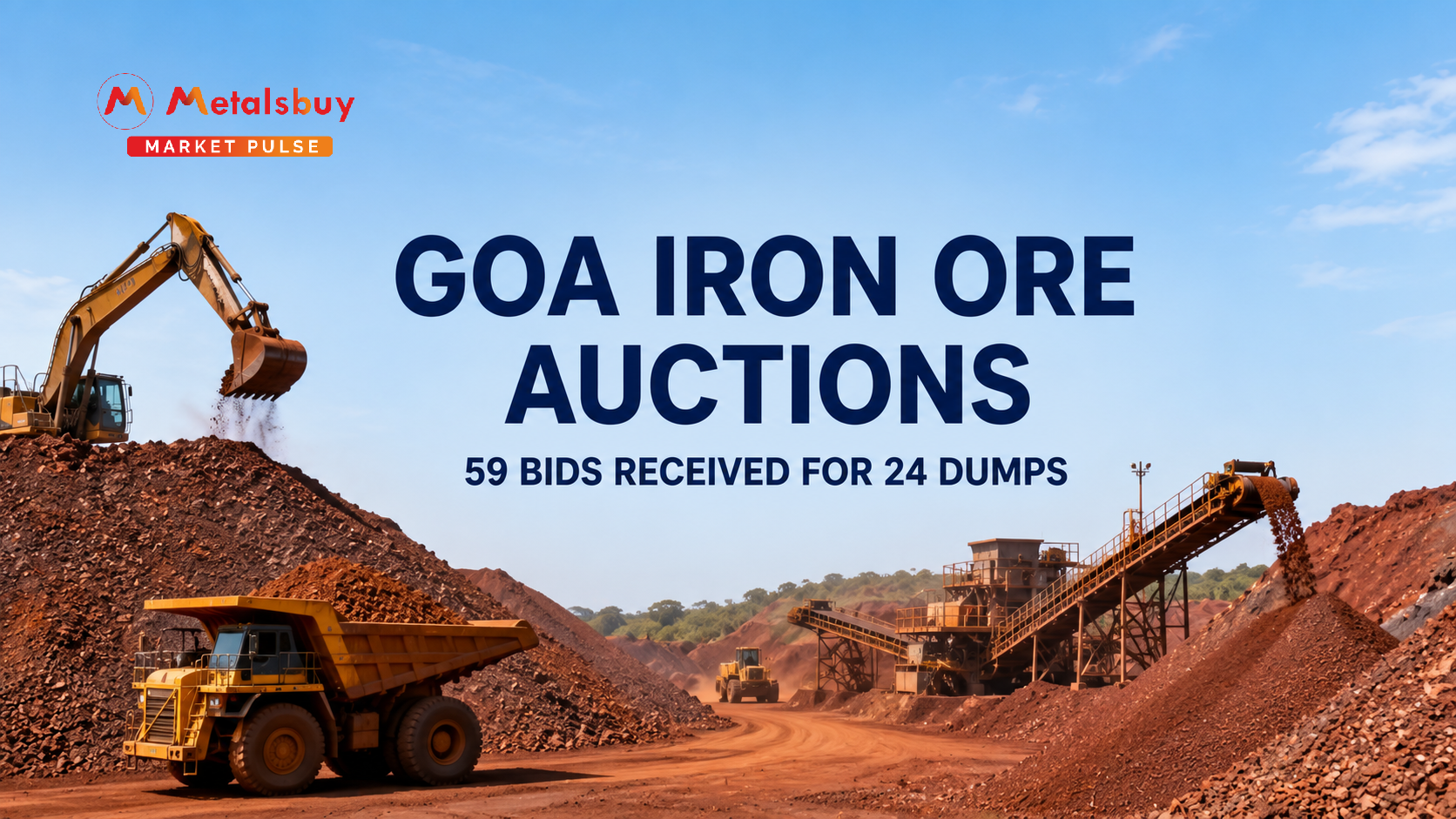
The Goa government has received 59 valid bids for 24 idle low-grade iron ore dumps in the second phase of its auction program. According to officials, a total of 110 bid documents were initially submitted, with 59 qualifying after technical evaluation. The response indicates continued industry interest despite the relatively low-grade nature of the material being offered. Market participants appear increasingly willing to evaluate opportunities beyond conventional high-grade iron ore resources. The auction outcome also reflects confidence in the long-term value of mineral resources that were previously considered commercially unattractive.
2. Low-Grade Ore is Gaining Strategic Importance
For years, low-grade iron ore dumps were viewed largely as mining waste or material with limited economic value. However, changing market dynamics, beneficiation technologies, and the growing focus on resource efficiency are gradually altering this perception. Steel producers and mining companies are increasingly exploring ways to utilize lower-grade resources to supplement future supply requirements. As higher-grade reserves become more difficult and expensive to develop, previously overlooked resources are attracting renewed attention. The Goa auctions highlight this shift and demonstrate how resource recovery is becoming an important part of the mining industry's long-term strategy.
3. More Than 40 Million Tonnes of Material Comes into Focus
The 24 dumps being auctioned contain an estimated 41 million tonnes of low-grade iron ore. This is a substantial volume that could potentially contribute to domestic raw material availability if successfully processed and commercialized. While the actual recovery rate and usable ore content will vary from dump to dump, the overall resource base remains significant. For mining companies, the opportunity lies not only in the ore itself but also in applying beneficiation and processing techniques that can improve commercial viability. The scale of material involved explains why the auction has attracted interest from multiple bidders despite the operational challenges associated with low-grade resources.
4. Resource Recovery Aligns with Industry Sustainability Goals
The increasing focus on dump handling and ore recovery also aligns with broader sustainability objectives across the mining sector. Recovering usable minerals from historical dumps reduces the need for additional land disturbance and improves overall resource utilization. Governments and mining companies are increasingly emphasizing circular resource practices that maximize value extraction from previously mined material. The Goa initiative can therefore be viewed not only as a commercial exercise but also as a step toward more efficient mineral resource management. Such approaches are becoming increasingly relevant as environmental expectations continue to evolve globally.
5. Iron Ore Demand Outlook Remains Supportive
The growing interest in low-grade resources comes at a time when India's steel sector continues to pursue aggressive expansion plans. With the country targeting significant increases in steelmaking capacity over the coming decade, demand for iron ore is expected to remain strong. Recent trends have already shown rising iron ore and pellet imports in certain periods despite India's large domestic resource base. This highlights the importance of maximizing available domestic resources wherever feasible. Projects involving dump recovery and beneficiation could therefore play a supporting role in meeting future raw material requirements.
6. Auction Success Could Encourage Similar Initiatives Elsewhere
The outcome of the Goa auction may serve as an important reference point for other mining states. If the successful bidders are able to commercially develop these resources, similar dump monetization programs could emerge across other mineral-rich regions of the country. India possesses significant quantities of historical mining dumps containing varying grades of iron ore and other minerals. Unlocking value from these resources could create additional supply channels while generating revenue for governments and supporting local economic activity. The success of this initiative will therefore be closely watched by stakeholders across the mining sector.
Industry Impact
The strong response to Goa's iron ore dump auctions demonstrates that industry participants are increasingly willing to explore alternative resource opportunities beyond conventional mining projects. The development reflects a broader shift toward resource optimization, beneficiation, and sustainable mineral utilization.
For the steel industry, successful commercialization of these resources could contribute additional domestic iron ore supply at a time when long-term raw material security remains a key priority. For mining companies, the auctions create opportunities to leverage technology and processing expertise to unlock value from previously underutilized resources.
Outlook
The next stage of the auction process will determine how many of the 59 technically qualified bids progress to final award. Market participants will closely monitor bidder interest, recovery economics, and the commercial viability of processing low-grade ore from these dumps. The eventual success of the projects will depend on beneficiation efficiency, iron ore market conditions, and logistics economics.
Looking ahead, Goa's initiative could become an important case study in resource recovery and dump monetization. As India's steel industry continues to expand and resource efficiency becomes increasingly important, low-grade ore deposits and historical dumps may play a larger role in the country's future raw material strategy.