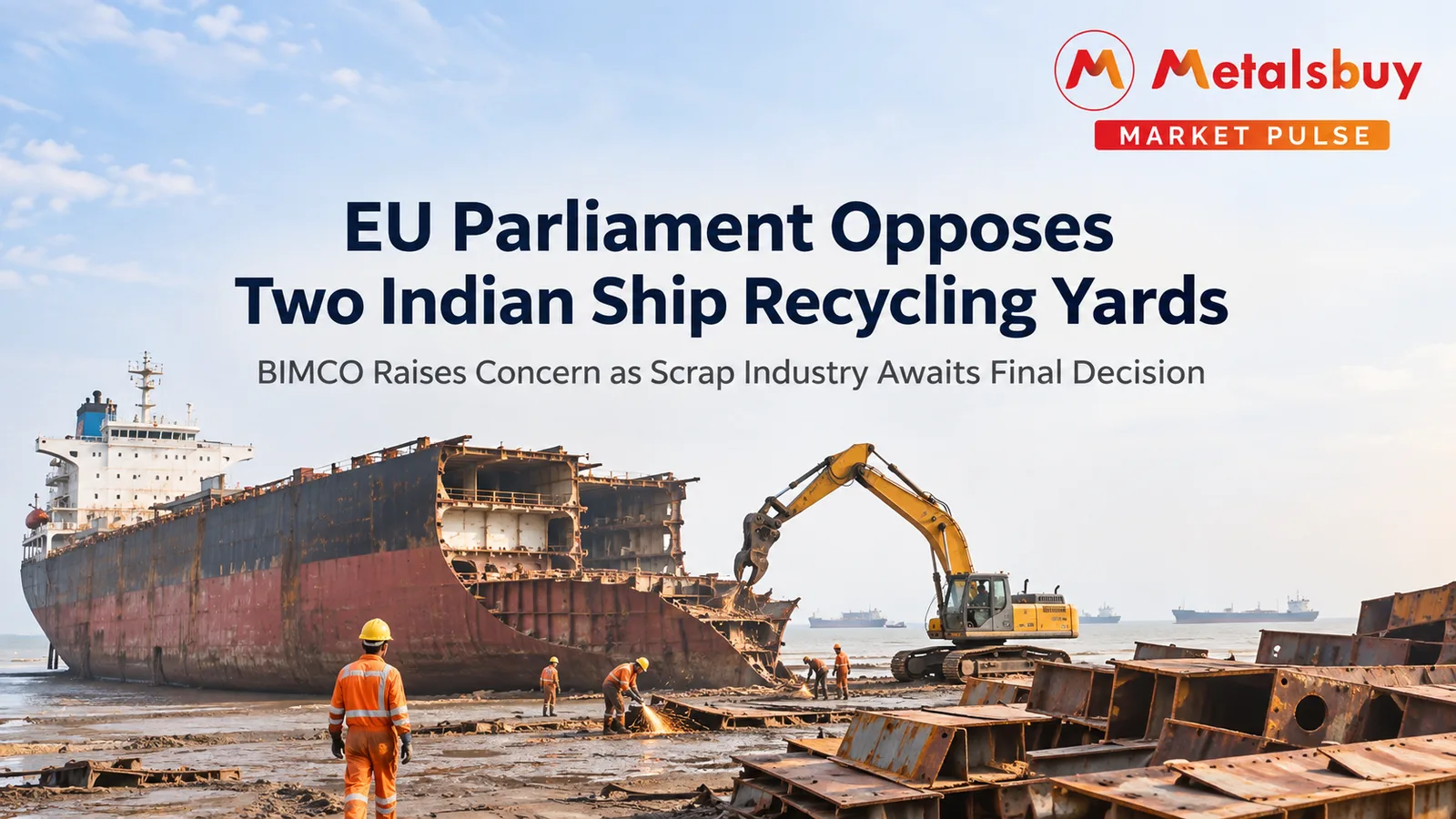
European lawmakers challenge the proposed inclusion of two Alang facilities in the EU-approved recycling list, prompting concerns from global shipping associations over certification, recycling capacity and future access to end-of-life vessels.
The parliamentary objection was approved by 377 votes to 214, with 24 abstentions, despite an earlier European Commission proposal to recognise the facilities following a detailed compliance assessment. The outcome has attracted criticism from international shipping associations, including BIMCO, which argue that the facilities should be evaluated against established environmental and worker-safety requirements. However, environmental and recycling industry representatives maintain that significant concerns remain over the methods and safeguards used in ship dismantling.
The development is particularly relevant to India's ship recycling industry because inclusion on the European List would allow approved Indian facilities to recycle eligible EU-flagged vessels under the EU Ship Recycling Regulation. Although the final regulatory decision remains pending, the parliamentary vote has raised fresh questions about international certification standards and the industry's ability to attract vessels from regulated shipping markets.
European Parliament Challenges Commission's Assessment
The European Commission had proposed including the two Alang facilities after a multi-year evaluation involving independent verification, site inspections and reviews of environmental and operational practices. According to Commission documentation, the assessment process included three on-site inspections and concluded that the facilities met the applicable requirements of the EU Ship Recycling Regulation.
The European Parliament took a different position, expressing concerns over whether the facilities adequately satisfied European standards for environmental protection and occupational health. A central issue has been the use of beaching-based ship recycling, in which vessels are brought onto coastal areas for dismantling, creating concerns about hazardous material containment, pollution risks and working conditions.
Environmental organisations and European recycling representatives have argued that EU certification should require rigorous evidence of compliance and should not create different standards for facilities operating inside and outside Europe. Recycling Europe, which supported the parliamentary objection, has also raised concerns about competition between European recycling facilities and overseas yards operating under different industrial conditions.
The disagreement therefore extends beyond the approval of two individual facilities. It raises broader questions about how international environmental requirements should be applied, how compliance should be independently verified and whether regulatory recognition should be based primarily on facility-specific inspections or wider assessments of recycling practices.
BIMCO Raises Concerns Over Certification and Investment
BIMCO, one of the world's leading international shipping associations, expressed concern following the parliamentary vote. The organisation stated that both facilities had completed extensive assessments under the European Commission's inspection process and questioned the decision to oppose their inclusion despite the Commission's findings.
In a statement dated November 25, BIMCO highlighted the investments undertaken by the facilities to improve recycling infrastructure, environmental management and worker-safety systems. The organisation argued that approval decisions should follow transparent and consistently applied technical criteria, particularly where operators have made substantial investments to meet international requirements.
The concern is shared by several international shipping organisations. Ahead of the vote, European Shipowners, BIMCO, the International Chamber of Shipping and other maritime associations jointly urged lawmakers to support the Commission's proposal, arguing that additional compliant recycling facilities would help address capacity requirements as more commercial vessels approach the end of their operational lives.
The shipping industry has also emphasised the importance of the International Maritime Organization's Hong Kong Convention, which entered into force in June 2025 and establishes global requirements for safer and more environmentally responsible ship recycling. Nevertheless, compliance with the Hong Kong Convention does not automatically establish eligibility for the EU-approved list, which operates under its own regulatory framework.
Why the Decision Matters for India's Ship Recycling Industry
Alang has long played an important role in the international ship recycling market, handling the dismantling of end-of-life vessels and recovering substantial quantities of reusable materials. Ship recycling generates ferrous scrap, reusable steel sections, machinery and non-ferrous metals, supporting a wider network of processors, traders, transporters and industrial consumers.
Recognition by European regulators would provide eligible facilities with additional opportunities to handle EU-flagged vessels under the applicable legal framework. Beyond the commercial opportunity, such recognition could encourage further investment in infrastructure, hazardous waste management, environmental monitoring and worker-safety systems.
India's Directorate General of Maritime Administration reported in November that 35 Indian ship recycling plots had applied for inclusion in the European List. Of these, two facilities comprising three plots had been included in the draft list, while other applicants awaited further assessment. The parliamentary objection therefore carries implications beyond the two yards immediately involved, potentially influencing the expectations of other facilities pursuing European recognition.
However, the decision should not be interpreted as a prohibition on all ship recycling activity in India. Indian facilities may continue operating under applicable domestic and international requirements, while the specific restriction concerns access to the EU-approved framework for recycling EU-flagged vessels.
The final position will depend on the European Commission's subsequent decision-making process and the participation of EU member states.
Potential Implications for India's Ferrous Scrap Market
Ship recycling represents one of several sources of ferrous scrap available to India's steel industry. Steel recovered from dismantled vessels may enter domestic recycling and processing channels, depending on material characteristics, quality requirements and commercial conditions.
For secondary steel manufacturers, particularly induction furnace operators and rolling mills, scrap availability is an important factor influencing metallic raw material procurement. However, the implications of the European Parliament's objection should be assessed carefully because the decision does not establish an immediate reduction in India's total ship recycling activity or ferrous scrap supply.
The potential impact would depend on whether the pending approval process restricts access to additional vessels, whether shipowners choose alternative recycling destinations and how recycling volumes develop over time. Ship recycling activity is also influenced by international freight markets, vessel age, demolition economics and the availability of ships offered for dismantling.
Consequently, any future effect on India's ferrous scrap market would be indirect and dependent on actual changes in dismantling volumes. It would be premature to conclude that the parliamentary decision will immediately increase scrap prices or create shortages for Indian steel manufacturers.
For scrap processors and secondary steel producers, the development nevertheless reinforces the importance of monitoring international recycling regulations alongside domestic scrap availability and imported scrap market conditions.
Metalsbuy Market Pulse Analysis
The European Parliament's decision highlights an important challenge facing India's ship recycling industry: expanding access to international markets while demonstrating compliance with increasingly demanding environmental and worker-safety requirements.
The disagreement between European lawmakers, recycling representatives, the European Commission and global shipping associations illustrates the complexity of establishing internationally accepted standards. While commercial shipping organisations emphasise verified compliance and investment in safer facilities, environmental stakeholders continue to question whether existing recycling practices meet the protections required under European legislation.
For India, the immediate issue is regulatory recognition rather than a confirmed loss of recycling volumes. However, prolonged uncertainty could affect future investment decisions and the willingness of shipowners to consider Indian facilities for vessels subject to EU recycling requirements.
The issue also has implications for India's broader steel recycling ecosystem. As domestic steel production expands and manufacturers evaluate opportunities to increase scrap utilisation, reliable and environmentally responsible recycling channels will remain important to the industry's raw material supply structure.
The next stage of the European approval process will therefore be closely watched by ship recyclers, maritime operators and businesses participating in the ferrous scrap value chain.
India's ship recycling industry faces a significant opportunity to strengthen its international competitiveness, but sustainable growth will depend on credible environmental compliance, transparent regulatory recognition and continued investment in modern recycling infrastructure.
— Metalsbuy Market Pulse | Industry Intelligence & Market Analysis