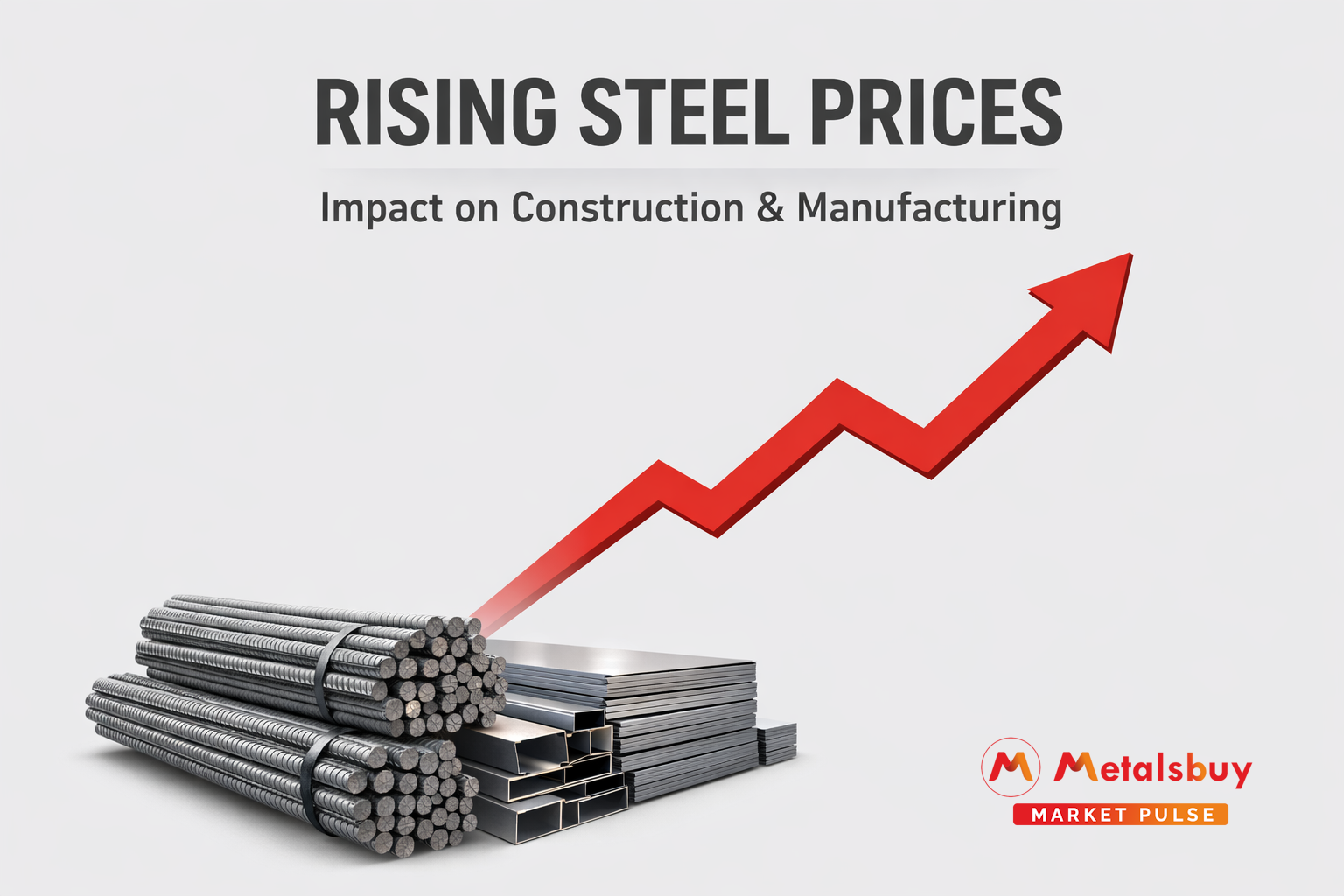
Domestic steel prices in India are expected to edge higher in the January–March quarter, supported by policy protection and a seasonally stronger demand environment. The extension of safeguard duties on select steel imports has improved pricing visibility for domestic producers and reduced the risk of aggressive low-priced inflows during the final quarter of the fiscal year.
The safeguard framework, which gradually tapers over the next two years, applies to key flat and long products including hot-rolled, cold-rolled and plate segments. With import pressure easing, domestic mills have gained better pricing discipline, leading to marginal month-on-month price recovery across several product categories ahead of Q4.
However, the upside is expected to remain measured. Fresh capacity additions within India, along with subdued global steel prices and weak export demand, are likely to cap any sharp price escalation. In addition, international trade barriers and carbon-linked regulations in overseas markets continue to limit export arbitrage opportunities for Indian mills.
On the cost side, input prices present a mixed picture. Iron ore prices have seen mild upward movement, while coking coal costs have risen more visibly on a quarterly basis. This could tighten margins for non-integrated producers, even as players with captive raw material access remain relatively insulated.
Impact on Construction and Manufacturing Sectors
For the construction sector, any rise in steel prices during Q4 is likely to translate into modest cost pressure rather than a disruption. Infrastructure and real estate projects already under execution may face slight increases in procurement costs, particularly for long products such as rebar and structural steel. However, ongoing public infrastructure spending and budgeted allocations reduce the likelihood of demand contraction.
In manufacturing, especially auto, capital goods, engineering and consumer durables, higher flat steel prices could result in incremental cost pass-throughs. Original equipment manufacturers with long-term supply contracts may experience limited near-term impact, while spot buyers could face some margin compression if price increases sustain into the next fiscal year.
Overall, while steel price firmness may raise input costs for downstream sectors, the expected increase appears manageable and aligned with normal cyclical movements rather than signaling a sharp inflationary phase.
Outlook
The domestic steel market is entering Q4 with improved policy support and stable demand fundamentals, but structural oversupply risks and global price weakness suggest a gradual, not aggressive, price recovery. Downstream industries are expected to absorb the impact without significant disruption, keeping broader industrial activity on a steady footing.