The global steel industry is closely observing a significant structural shift within China's massive manufacturing base. Recent data covering the first eight months of 2026 highlights a deliberate recalibration of the nation's steel output, moving away from traditional construction grades and leaning heavily into high-value, technology-oriented materials. This transition proves that China's steel sector is not merely reacting to a domestic real estate slowdown, but proactively adapting its supply chain to fuel the demands of a modernized, high-tech economy. For global markets, this signifies a highly resilient and strategically agile manufacturing ecosystem.
Divergent Production Trends Reflect Economic Shifts
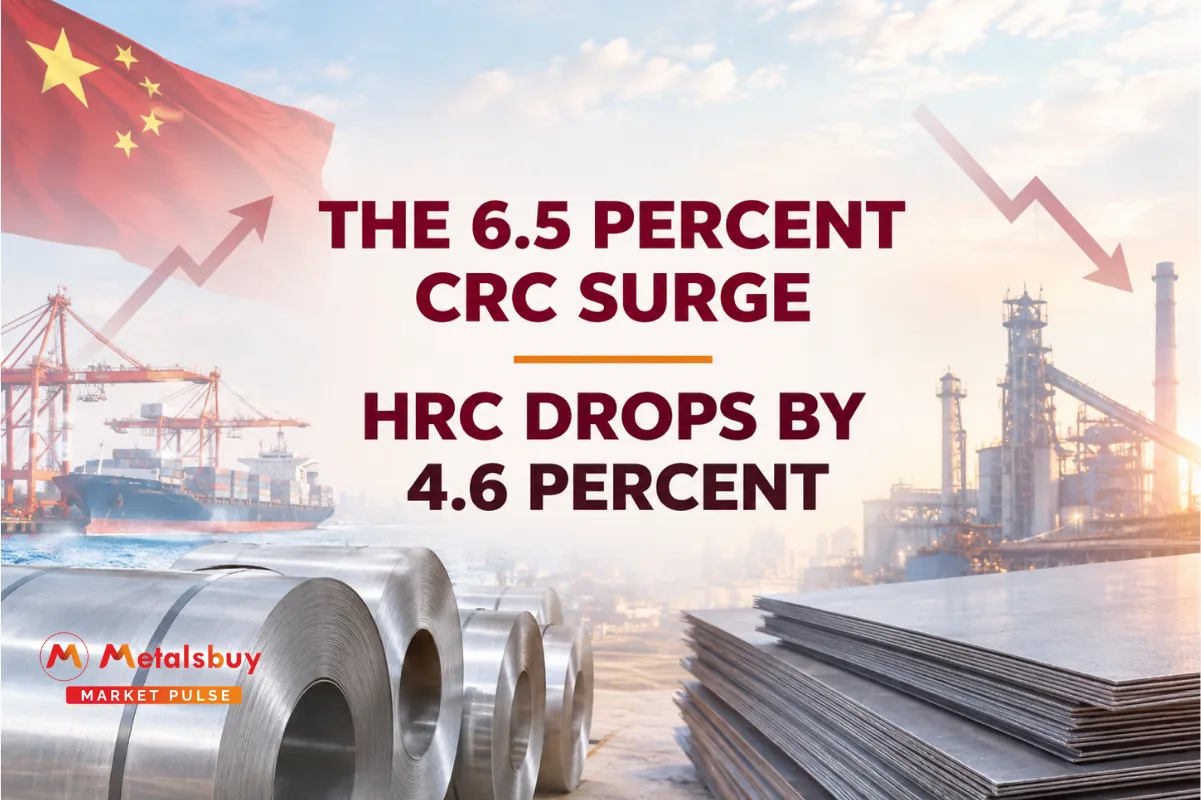
The latest production figures released by China’s National Bureau of Statistics (NBS) reveal a fascinating divergence in the output of specific flat steel products. During the January-August period of 2026, China's production of Hot Rolled Coil (HRC) stood at 144.405 million metric tons. This represents a 4.6 percent year-on-year decrease, a contraction that aligns with the broader slowdown in traditional property development and heavy infrastructure.
However, the standout metric from the NBS data is the impressive counter-trend seen in Cold Rolled Coil (CRC) production. During the exact same eight-month window, CRC output surged to 33.831 million metric tons, recording a solid 6.5 percent year-on-year increase. This is a critical indicator of economic health. While HRC is the bedrock of general construction, CRC is a highly refined, value-added product essential for advanced manufacturing. The simultaneous decline in HRC and the steady growth in CRC perfectly mirror a historic crossover in China’s demand profile, where advanced manufacturing has officially overtaken traditional construction as the primary driver of domestic steel consumption.
August Data Highlights Continued Momentum
A closer examination of the monthly data confirms that this strategic pivot is maintaining its momentum as the industry heads toward the fourth quarter. In August 2026 alone, China produced 17.511 million metric tons of HRC. While this figure is down 5.6 percent year-on-year, it is important to note that it actually represents a month-on-month increase of 1.4 percent compared to July. This slight sequential uptick suggests that mills are carefully balancing their output, ensuring that supply aligns closely with recovering post-summer demand without flooding the market.
Conversely, the performance of the CRC segment in August was exceptionally strong. The monthly production volume for CRC reached 4.417 million metric tons. This not only marks a robust 5.0 percent year-on-year growth but also represents a 5.6 percent jump from the previous month. The sustained month-on-month and year-on-year growth in this specific category proves that Chinese steelmakers are successfully capturing high-margin demand from thriving downstream sectors.
New Economy Demands Drive Value Added Steel
The aggressive expansion in CRC production is entirely supported by the rapid growth of China's "new economy" sectors. Unlike traditional construction, which relies on heavy, basic steel, modern manufacturing requires the precise, high-quality finishes and tight tolerances that only Cold Rolled Coil can provide.
The automotive sector, particularly the booming New Energy Vehicle (NEV) market, is a massive consumer of these high-grade sheets. As China continues to scale its production of NEVs for both domestic absorption and international export, the demand for specialized, lightweight, and durable CRC naturally skyrockets. Furthermore, the robust performance of the high-tech manufacturing sector, equipment manufacturing, and the production of consumer appliances are all actively absorbing this increased CRC output. By shifting their production lines to cater to these advanced industries, Chinese steel mills are successfully insulating their profit margins from the volatility of the traditional property market.
Market Stability And Future Outlook
This sophisticated recalibration of output is also having a stabilizing effect on domestic pricing dynamics. While HRC prices in the Chinese market experienced fluctuations throughout August—initially trending downward before rebounding late in the month—the overall pricing environment has remained relatively orderly. The average HRC price during August saw only marginal shifts, indicating that mills are managing their inventories effectively and avoiding speculative overproduction.