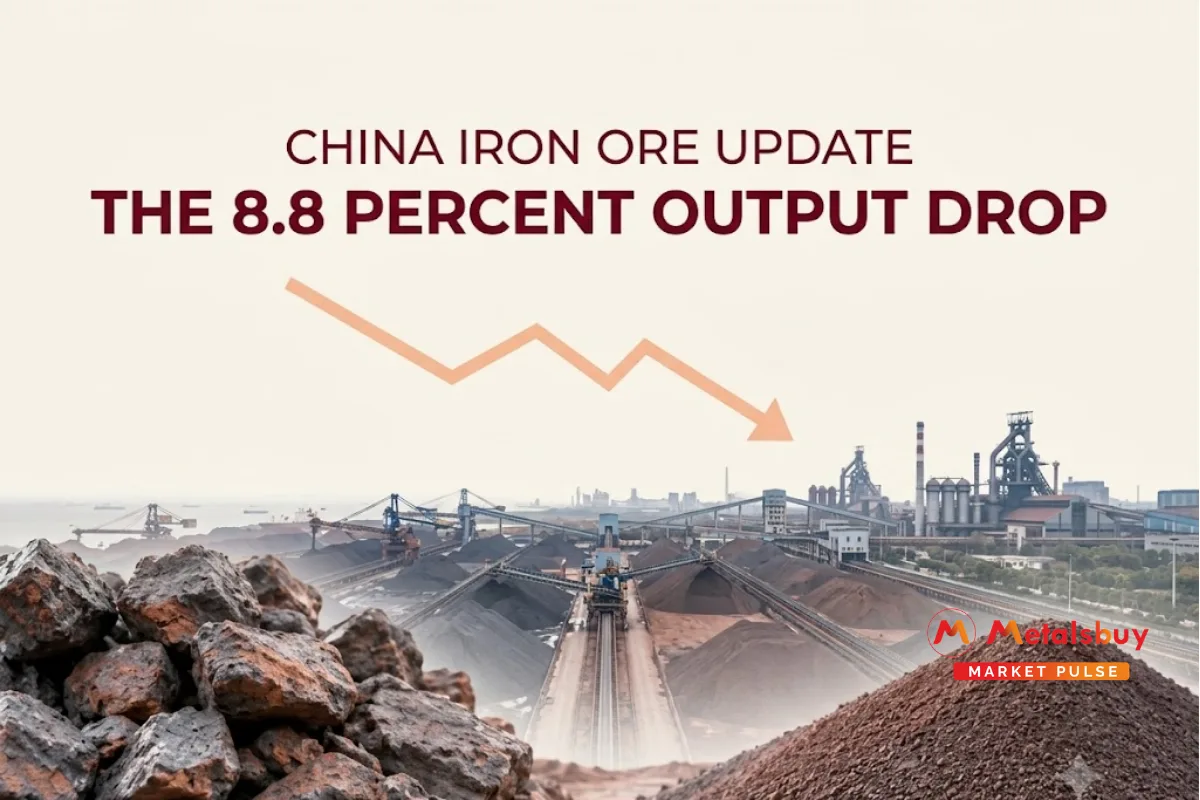
China’s domestic mining sector is undergoing a strategic recalibration to align with evolving downstream demand and environmental targets. Recent production data from the January to August 2026 period highlights a noticeable 8.8 percent contraction in local iron ore extraction compared to the previous year. Rather than signaling industrial weakness, this shift reflects a highly calculated move by the world’s largest steel producer to prioritize high-grade imported raw materials, manage massive port inventories, and structurally lower carbon emissions across its heavy manufacturing base.
Shifting dynamics in domestic extraction
According to the latest figures from the National Bureau of Statistics, domestic iron ore production has seen a sustained downward adjustment throughout the first three quarters of the year. The 8.8 percent year-on-year drop over the eight-month window indicates that local miners are pulling back on capacity utilization in response to shifting procurement strategies at major steel plants.
This reduction is closely tied to the inherent geological characteristics of Chinese iron ore. Domestic reserves typically feature a lower ferrous content, often hovering between 30 and 40 percent. Processing these lower-grade ores requires extensive beneficiation and sintering before they can be fed into a blast furnace. With current domestic steel demand stabilizing rather than aggressively expanding, integrated mills are actively choosing to reduce their reliance on these energy-intensive local ores. By scaling back on the extraction and processing of low-grade materials, domestic producers are actively protecting their operational margins and improving overall furnace efficiency.
Import preferences and port inventories drive the trend
The decline in domestic mining output is being seamlessly offset by a robust and highly liquid seaborne import market. Chinese steelmakers continue to favor high-grade iron ore fines and lumps sourced primarily from reliable international partners like Australia and Brazil. These imported materials, which generally boast a ferrous content above 62 percent, require significantly less metallurgical coke during the smelting process. By shifting the raw material mix toward these premium imports, Chinese mills are achieving better production yields while simultaneously lowering their carbon footprint per tonne of crude steel.
Furthermore, the domestic market is currently supported by exceptionally high inventory levels at major coastal hubs. Industry data indicates that iron ore stockpiles at Chinese ports have consistently hovered near the 150 million tonne mark over the past few months. This massive accumulation serves as a powerful supply buffer. With such abundant volumes of imported material readily available at the ports, domestic miners face little immediate pressure to ramp up local extraction. This dynamic allows the raw materials market to naturally balance itself without triggering any sudden price volatility for downstream buyers.
Strategic outlook for the autumn peak season
From a macroeconomic perspective, this 8.8 percent reduction in domestic ore output places the Chinese steel industry in a highly stable position heading into the traditional autumn construction season. Historically, September and October represent peak consumption months for long steel products, driven by a seasonal acceleration in infrastructure and real estate projects.