Key Numbers
-
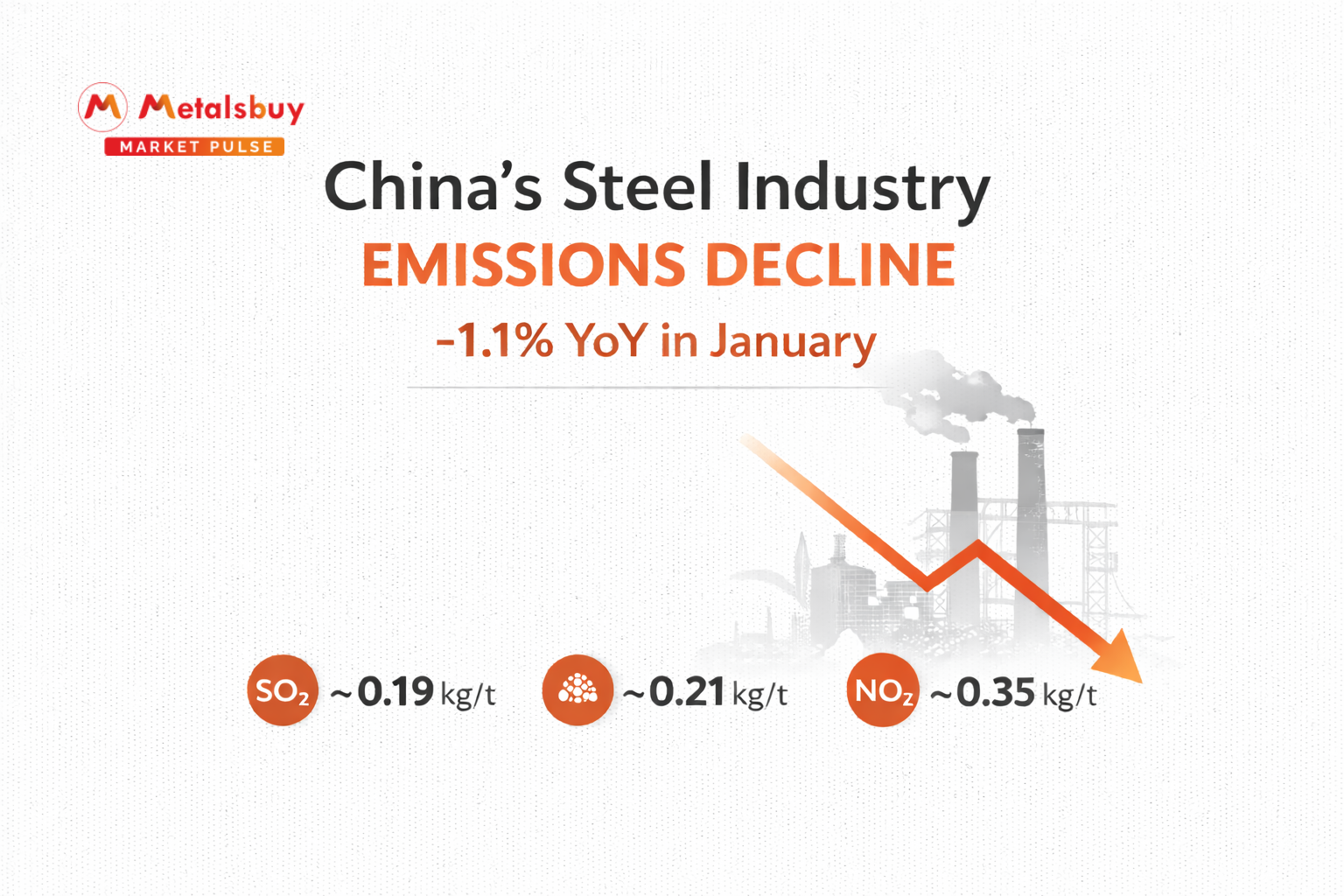
Total emissions in China’s steel industry: ↓ 1.1% year-on-year in January
-
Sulfur dioxide emissions intensity: ~0.19 kg per tonne of steel
-
Particulate matter emissions intensity: ~0.21 kg per tonne of steel
-
Nitrogen oxide emissions intensity: ~0.35 kg per tonne of steel
Market Analysis
China’s steel sector recorded a 1.1% year-on-year decline in emissions during January, indicating continued progress in the country’s efforts to improve environmental performance in one of the world’s most carbon-intensive industries.
Despite the modest decline in overall emissions, key pollutant intensity indicators also remained relatively controlled. Emissions of sulfur dioxide, particulate matter, and nitrogen oxides per tonne of steel production remained at approximately 0.19 kg/t, 0.21 kg/t, and 0.35 kg/t respectively, reflecting ongoing improvements in emission management and pollution control technologies across Chinese steel plants.
The reduction in emissions comes as Chinese steelmakers continue to implement measures such as ultra-low emission retrofits, energy efficiency improvements, and enhanced waste-gas treatment systems. These upgrades are part of China’s broader strategy to modernize its steel industry while meeting stricter environmental standards.
China remains the largest steel producer globally, accounting for more than half of global steel output. Given the scale of the industry, even small percentage changes in emissions or energy consumption can have significant implications for global carbon trends and industrial environmental policies.
Environmental performance improvements are also being supported by increased adoption of energy recovery systems, higher utilization of metallurgical gases, and improvements in waste recycling within steel plants.
Industry Impact
The gradual decline in emissions highlights the ongoing transition of China’s steel industry toward cleaner production practices.
For the global steel market, the development has several implications:
-
Continued investment in environmental compliance and emission control technologies
-
Potential operational restructuring and consolidation among steel producers
-
Stronger policy alignment with China’s long-term carbon neutrality goals
Environmental regulations in China often influence production patterns, which can indirectly affect global steel supply, raw material demand, and export dynamics.
As China continues tightening environmental oversight in heavy industries, emission control measures may increasingly shape steel production strategies, capacity utilization, and investment in greener steelmaking technologies.