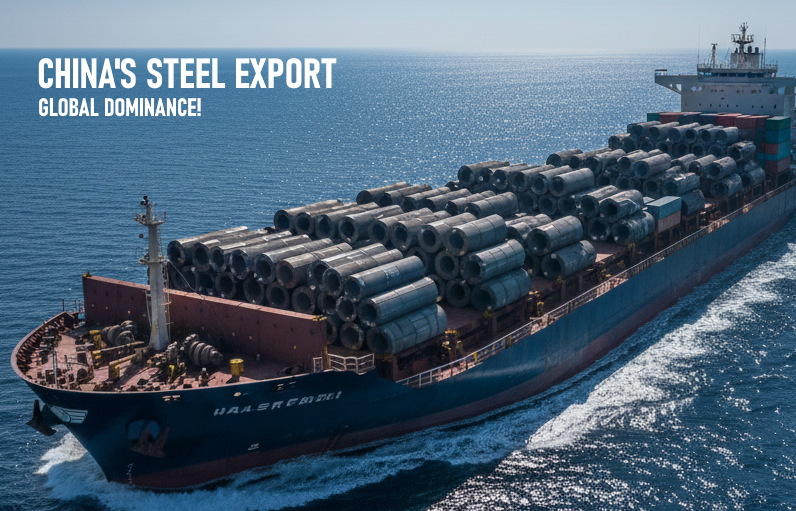
The global steel industry is entering a period of renewed turbulence and at the centre of it is China. As 2025 draws to a close, one trend stands out above all others China’s steel exports have surged sharply and are reshaping pricing, trade flows, and competitive dynamics across the world.
With domestic demand slowing and production levels staying high, Chinese steel mills are offloading excess output into global markets at an accelerating pace. This shift carries significant consequences for producers, buyers, and policymakers worldwide particularly in India which continues to grow as one of the world’s most resilient steel consuming economies.
China’s Steel Exports Hit Multi Year High
Throughout 2025 China’s domestic economy remained under pressure especially due to its sluggish property and construction sectors. Steel consumption weakened but production did not decline at the same pace. As a result, mills turned aggressively to international markets.
Recent trade data shows
- China’s steel exports have surged by nearly 7 percent year on year
- Shipments crossed 107 million tonnes in the first 11 months of 2025
- If the trend continues China could end 2025 with record exports nearing 117 million tonnes
This level of outbound steel supply has not been seen in years. For many global producers this surge has been nothing short of disruptive.
Why Exports Are Rising Supply Pressure Meets Weak Local Demand?
Several structural factors explain the export boom
- Oversupply from Chinese mills: Capacity additions in earlier years combined with limited shutdowns mean China continues to produce more steel than it consumes.
- Weak construction activity: With the property slowdown deepening domestic steel demand has contracted creating a supply overhang.
- Competitive pricing advantage: Chinese mills supported by scale and lower costs are able to offer steel at prices that undercut global competitors especially in flat products.
- Currency depreciation: A weaker yuan makes Chinese exports even more competitive internationally.
Together these forces have pushed China to re establish itself as the dominant and disruptive supplier in global steel trade.
Impact on Global Steel Markets Prices Under Pressure
The immediate global impact is clear - Prices have softened across most regions from Southeast Asia to Europe.
Many producers outside China particularly mid sized mills face margin compression as they struggle to compete with cheaper Chinese cargoes. Export dependent economies like Japan South Korea and parts of CIS countries have seen their market share come under pressure in key Asian markets.
What This Means for India?
India remains one of the few bright spots globally with steel demand expected to grow at 8 to 9 percent in 2025. But China’s export surge has created mixed outcomes for the Indian market.
Positive for buyers
-
Lower global prices have kept domestic steel relatively affordable
-
Import pressure has helped prevent sharp price spikes despite strong demand
Challenging for producers
-
Domestic prices have hovered near multi year lows
-
Many smaller Indian mills face serious financial stress squeezed between rising costs and depressed selling prices
-
Government intervention including safeguard duties earlier in the year has offered some relief but price stability remains fragile
Strategic concern
A prolonged flood of Chinese steel could discourage new investments and slow domestic capacity expansion just when Indias infrastructure and manufacturing push needs more steel.
Outlook - Will the Trend Continue in 2026?
Much will depend on the trajectory of China’s economy
- If property and construction remain weak exports will stay elevated
- Unless China curbs capacity or implements stronger supply discipline oversupply will continue globally
- India’s strong demand offers support to local producers but they must remain vigilant against import surges and price volatility
The steel world may be entering another cycle where Chinese exports define global pricing and everyone else must adapt.
Conclusion
China’s export surge is more than a short term spike it is a structural shift driven by internal economic pressures. For global steel markets this means sustained price pressure intense competition and supply side challenges. For India the opportunity of strong demand coexists with the risk of prolonged pricing volatility.
In this environment strategic procurement timely market intelligence and flexible sourcing will be key. At Metalsbuy we continue to track these developments to help stakeholders navigate a fast changing steel landscape.