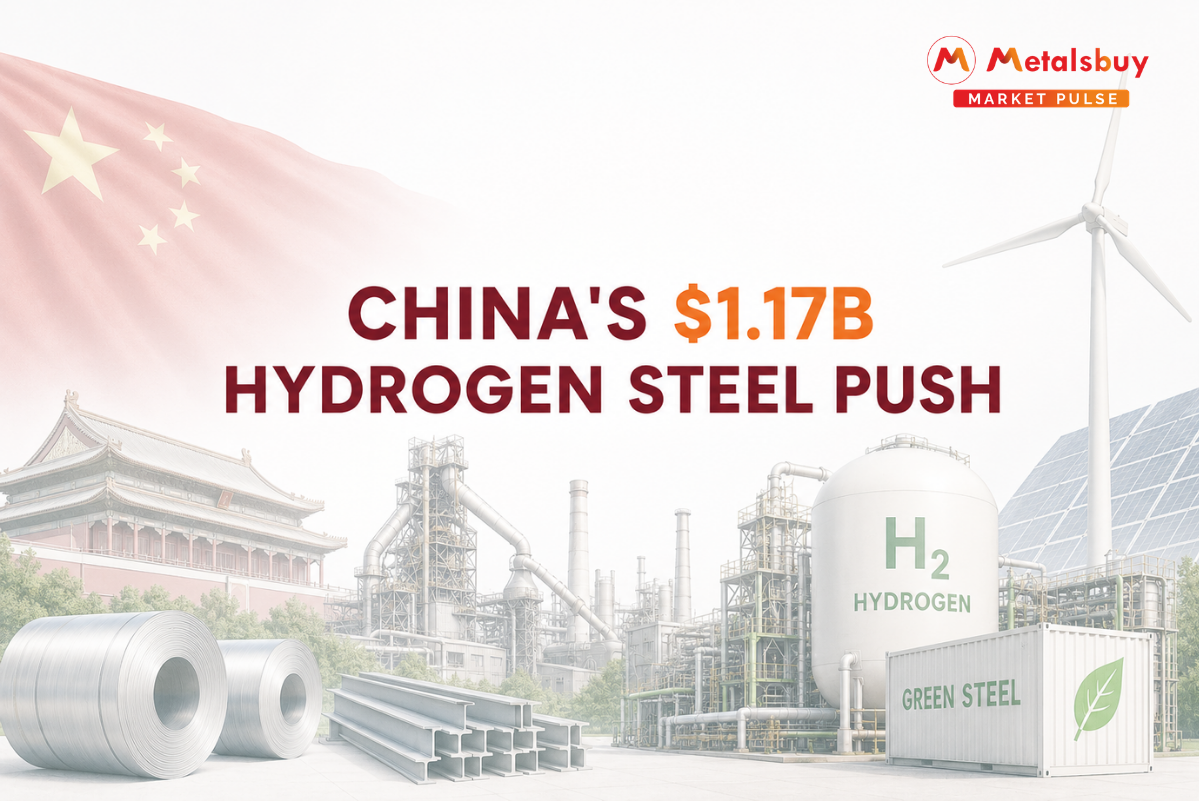
KEY NUMBERS
- Policy Funding: $1.17 billion (8 billion yuan)
- Baowu Capacity: 1 million tonnes annually
- Hydrogen Target Price: 25 yuan per kg by 2030
- Sector Emissions: 15% of national total
- Current Coal Reliance: 90% of steel production
MARKET ANALYSIS
The global drive toward industrial carbon neutrality has reached a critical frontier as China aggressively expands its hydrogen energy initiatives beyond transportation and directly into heavy manufacturing. Historically, Beijing's green subsidies were heavily skewed toward the electric vehicle sector, which enjoyed massive financial support exceeding 32 billion yuan between 2016 and 2020. Now, a strategic policy shift is underway. Three key government ministries have jointly rolled out an upgraded pilot program designed to reward designated city clusters that successfully integrate low-carbon hydrogen into hard-to-abate sectors, particularly metallurgy, maritime shipping, and the production of green ammonia and methanol.
This initiative represents a pivotal evolution in industrial strategy and highlights a unique selling proposition for the global market: a state-backed blueprint for transitioning the world's most emission-heavy sector. The domestic steel industry, which accounts for more than half of total global steel output, has long been the backbone of Chinese infrastructure but also a massive environmental liability. Traditional coal-fed blast furnaces dominate the landscape, keeping the industry locked in a high-emission cycle. By directly incentivizing the transition to hydrogen metallurgy, policymakers are attempting to break this reliance. The core financial strategy involves offering substantial rewards to pilot cities that meet strict decarbonization milestones. While the total funding pool of $1.17 billion is more modest compared to previous electric vehicle subsidies, industry experts view this capital injection as a crucial catalyst designed to spark early-stage commercial viability rather than fully fund the massive transition outright.
The fundamental hurdle in this market transformation is the unit economics of clean fuel. Currently, hydrogen prices hover between 35 and 50 yuan per kilogram, a prohibitive cost for large-scale industrial application. The state's ambitious roadmap aims to slash this price point to 25 yuan by the end of the decade, with an even more aggressive target of 15 yuan in regions blessed with abundant renewable energy resources. However, metallurgical analysts point out that for hydrogen-based steelmaking to achieve true commercial cost parity with traditional coal methods, the hydrogen supply needs to stabilize firmly within the 10 to 15 yuan per kilogram threshold. This economic reality highlights that while the government's direction is highly progressive, substantial technological and supply chain efficiency gains are still required to make green steel universally profitable.
INDUSTRY IMPACT
The immediate operational impact of this policy shift is already materializing through the proactive actions of state-owned steel giants. Market leader Baowu Steel has taken a decisive first-mover advantage, having recently operationalized a massive hydrogen-electric arc line boasting an annual production capacity of one million tonnes. To secure its long-term supply chain, the company is also spearheading the development of the Yangjiang hydrogen hub, a comprehensive 11.9 billion yuan infrastructure project featuring a dedicated pipeline network. Similarly, HBIS Group in Hebei province has established a major hydrogen-powered steelmaking facility, signaling that top-tier manufacturers are treating the green transition as an inevitable operational requirement rather than an experimental side project.
This top-down push forces a ripple effect across the entire metallurgical ecosystem. Equipment manufacturers, industrial gas suppliers, and renewable energy developers are now actively aligning their business models to cater to the impending demand for industrial-grade green hydrogen. Furthermore, as Europe implements its Carbon Border Adjustment Mechanism (CBAM), Chinese steelmakers are acutely aware that decarbonizing their production lines is a critical prerequisite for maintaining their competitive edge in international export markets. The transition away from coal-heavy blast furnaces will systematically alter global raw material procurement patterns, gradually reducing reliance on metallurgical coal while simultaneously spiking the demand for high-grade iron ore and renewable electricity infrastructure.
WHAT TO WATCH NEXT
Investors and market analysts will closely monitor the execution phase across the five designated pilot city clusters to gauge the practical success of these government incentives over the next four years. A major focal point will be the pace of infrastructure development, specifically the localized construction of green hydrogen production facilities and efficient transportation pipelines. The ability of these industrial clusters to rapidly scale renewable energy capacity—primarily solar and wind—to produce hydrogen at the targeted 15 yuan per kilogram benchmark will be a defining metric of success.
Additionally, domestic market acceptance of premium-priced low-carbon steel will be heavily scrutinized. While the government is actively subsidizing the supply side of the equation, the creation of strong, sustained domestic demand for green steel remains equally vital. Analysts anticipate potential secondary policy measures, such as mandatory green procurement quotas for state-backed infrastructure and commercial construction projects, which would artificially stimulate demand and help industrial producers absorb the initial cost premiums associated with advanced hydrogen metallurgy.
MARKET OUTLOOK
The long-term outlook for China's hydrogen-powered steel sector remains highly optimistic, characterized by a steady, state-guided transition rather than an overnight market disruption. The current funding program functions as a highly strategic testing ground, allowing the industry to solve complex logistical, safety, and technological bottlenecks on a manageable scale before attempting a nationwide commercial rollout. As renewable energy costs continue their downward trajectory and modern electrolyzer technologies become increasingly efficient, the financial gap between traditional carbon-heavy production and green steel will inevitably narrow.
Ultimately, this targeted hydrogen initiative positions China to remain the dominant force in the global steel supply chain while proactively addressing its most severe climate commitments. While conventional coal-based production will likely maintain its majority share in the immediate near term, the foundation for a fully decarbonized, hydrogen-driven metallurgical ecosystem is being firmly established today. Heavy industry players that successfully navigate this early adoption phase and secure cost-effective clean energy supply chains are exceptionally well-positioned to capture significant future market share and lead the next generation of sustainable global manufacturing.