KEY HIGHLIGHTS
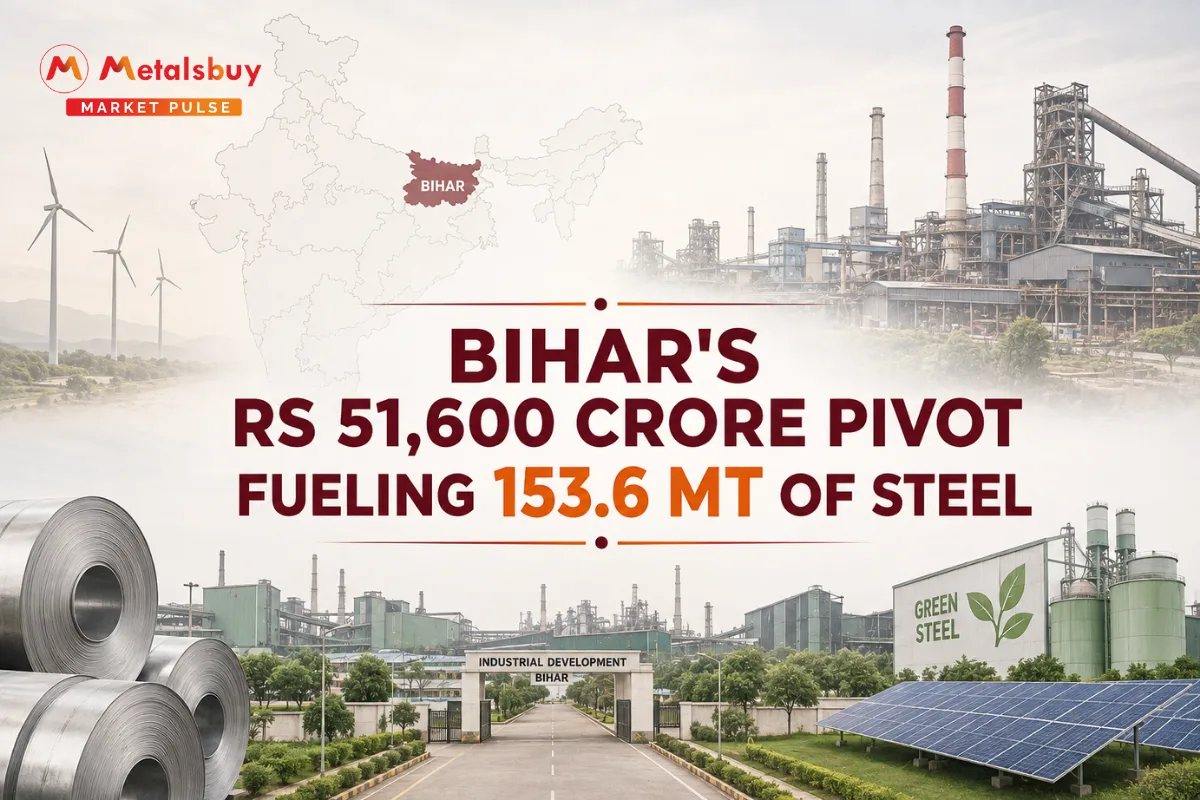
- Rs 51,600 Crore Total Investment: Massive capital inflow spanning steel, nuclear energy, textiles, food processing, and pharmaceuticals.
- Rs 22,500 Crore Nuclear Project: GRACE Pvt Ltd spearheads the biggest single investment for advanced clean energy infrastructure.
- 6 Major Steel Pacts Signed: Strategic MoUs aimed at transforming the state into an industrial hub.
- Rs 6,836 Crore from Nakshatra Iron: Leading the steel expansion, followed by Ankur Steel (Rs 6,000 Crore) and Shri Langta Baba Metals (Rs 5,500 Crore).
- Bihar Business Connect 2026: Preparations ramped up under the "Build and Believe in Bihar" initiative to attract further global capital.
MARKET ANALYSIS
The Bihar government has officially inked Memorandums of Understanding (MoUs) worth a landmark Rs 51,600 crore with several prominent industrial groups. Signed in Patna under the leadership of Chief Minister Samrat Choudhary, these agreements mark a critical turning point for a region aggressively pursuing long-term economic transformation. Historically viewed primarily as an agrarian economy, Bihar is now successfully laying the groundwork to become a formidable player in heavy manufacturing, clean infrastructure, and next-generation power generation.
The sheer scale of these financial commitments signals a robust vote of confidence from private stakeholders in the state's evolving policy ecosystem. The focal point of this industrial overhaul is a monumental Rs 22,500 crore proposal from Global Renewable Advanced Clean Energy (GRACE) Pvt Ltd. This substantial capital will be channeled entirely into the nuclear energy sector. Such a forward-looking move aligns closely with India's broader macroeconomic mandate to diversify its renewable energy portfolio and achieve 500 GW of non-fossil fuel capacity by the end of the decade. Establishing a reliable clean energy grid within the state will essentially guarantee uninterrupted, low-carbon power for the incoming wave of heavy industries, creating a deeply integrated and sustainable manufacturing hub.
Concurrently, the administration is heavily targeting labor-intensive verticals to balance its growth portfolio. While heavy industries bring massive capital, sectors such as textiles, apparel, food processing, and pharmaceuticals offer immense potential for immediate mass employment. By bringing modernized food processing units closer to its vast agricultural base, the government aims to reduce post-harvest losses and provide better market access and price realization for local farmers. This dual approach of securing heavy industry capital while fostering labor-intensive growth showcases a highly pragmatic model for regional economic revitalization.
WHAT IT MEANS FOR THE STEEL INDUSTRY
The massive injection of private capital into Bihar's steel manufacturing ecosystem stands out as a critical structural shift. While neighboring states like Jharkhand and Odisha have long dominated India’s steel production landscape with aggregate capacities exceeding 14 million and 21 million tonnes respectively, Bihar has historically operated with a highly modest footprint of fewer than one million tonnes across a handful of smaller units. The signing of six dedicated steel MoUs promises to permanently disrupt this regional imbalance and decentralize eastern India’s metal production.
Leading this ambitious charge is Nakshatra Iron & Steel Pvt Ltd, which has locked in an aggressive Rs 6,836 crore investment plan. Close behind are Ankur Steel Pvt Ltd, committing Rs 6,000 crore, and Shri Langta Baba Metals & Power Ltd, injecting another Rs 5,500 crore into the local economy. Cumulatively, these top three agreements alone bring over Rs 18,336 crore into localized long and flat steel capacity expansions.
For the broader domestic steel market—which recently saw national crude steel production hit an impressive 153.6 million tonnes in FY26—this geographical diversification is a highly strategic development. With India's overall steel demand projected to reach nearly 177 million tonnes by the end of 2026, growing at a steady compound annual growth rate, new localized capacity is essential. Establishing modern manufacturing units directly within Bihar will drastically reduce freight costs, supply chain friction, and logistical bottlenecks for distributing construction-grade steel across the fast-growing northern and eastern consumer corridors. As infrastructure pipelines like rural connectivity plans and affordable housing schemes surge across the state, these new plants will enjoy immediate, captive regional demand, insulating them from the volatile swings of international export markets.
MARKET OUTLOOK
Looking ahead, the long-term economic trajectory of the region appears exceptionally bullish. The immediate prioritization of these MoUs by state authorities—ensuring they transition rapidly from paper agreements to active, ground-level operational projects—is heavily expected to create tens of thousands of direct and indirect jobs over the next three to five years. The natural synergy between the Rs 22,500 crore nuclear energy infrastructure and the intense baseload power requirements of the newly proposed steel plants establishes a self-sustaining industrial ecosystem that minimizes operational risks for future investors.
These foundational deals act as a vital precursor to the highly anticipated Bihar Business Connect 2026 summit. Operating under the positive theme of "Build and Believe in Bihar," the state is effectively broadcasting to domestic and international institutional investors that it is open for large-scale business. Recent showcases of the state’s clean energy vision at national platforms have further reinforced this positive narrative among industry leaders.
As global supply chains continue to seek out cost-effective, policy-friendly geographies with an abundance of skilled labor, Bihar is positioning itself perfectly to capture this incoming wave of domestic direct investment. If the government maintains its current momentum by successfully streamlining land acquisition protocols and ensuring a friction-free regulatory environment, this Rs 51,600 crore capital infusion will undoubtedly be remembered as the catalyst that triggered a multi-decade industrial renaissance in the state.