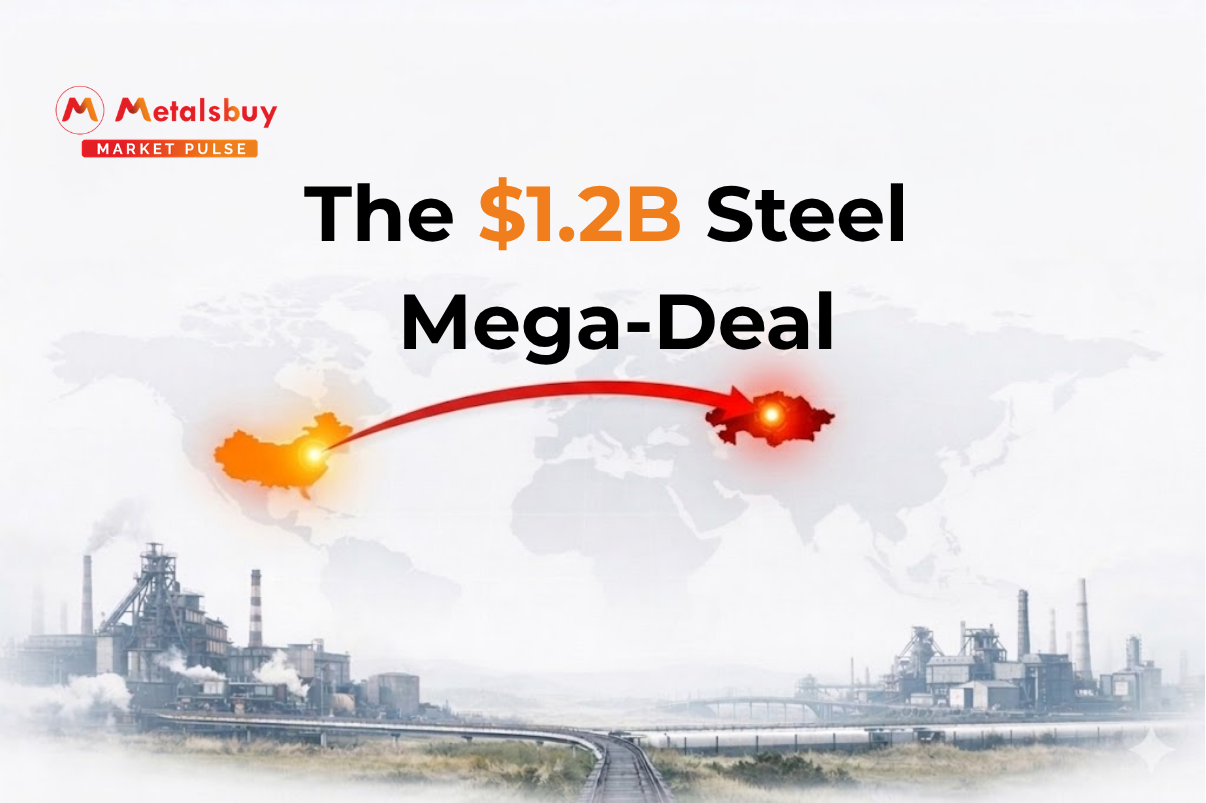
The global industrial landscape is undergoing a massive realignment, and Central Asia is rapidly solidifying its position as a focal point for high-value manufacturing. Moving away from its traditional identity as solely a supplier of unrefined raw materials, Kazakhstan has finalized a monumental $1.2 billion agreement with China’s Fujian Hengwang Investment to construct a state-of-the-art steel mill in the Zhambyl region. This landmark initiative is far more than a standard bilateral investment. It is a calculated strategic pivot designed to elevate domestic industrial capabilities, capture lucrative new export markets, and completely redefine the heavy industry corridors connecting the Eurasian heartland to the Asia-Pacific region.
At the center of this transformation lies a powerful economic proposition. By leveraging advanced foreign capital alongside its own vast natural wealth, Kazakhstan is building the physical infrastructure necessary to produce finished, value-added commodities on its own soil, directly targeting the booming construction sectors of Southeast Asia.
The Blueprint of the Megaproject
Following critical strategic dialogues led by Kazakhstan’s Minister of Trade and Integration, Arman Shakkaliyev, a comprehensive development framework was established with Chinese investors. The absolute crown jewel of this cross-border collaboration is a massive metallurgical complex engineered to reach a peak annual production capacity of three million tons of steel.
To ensure sustainable scaling, the financial and operational execution is meticulously structured into two distinct phases. The foundational phase is aggressively slated for completion by 2027. Backed by an initial capital injection of $336.8 million, this stage will instantly bring one million tons of capacity online. The subsequent phase, targeting full completion by 2029, will require an additional $657.8 million in investments to reach the ultimate three-million-ton threshold.
Crucially, the facility is designed to be highly self-sufficient. The investment blueprint includes the construction of a dedicated 350-megawatt gas turbine power plant to guarantee uninterrupted operations. On a socioeconomic level, this industrial undertaking is expected to act as a major catalyst for the local labor market, creating an estimated 2,500 new, high-skilled jobs and fostering a new generation of advanced engineering expertise within the nation.
The Core Drivers and Green Metallurgy
The strategic logic driving this massive capital deployment is deeply rooted in resource optimization and an undeniable geological advantage. Recent geological disclosures confirm that Kazakhstan sits on a staggering 26.7 billion tonnes of estimated iron ore reserves and 3.8 trillion cubic meters of natural gas. In fact, the nation already ranks as the ninth-largest iron ore producer globally, having extracted 66 million tons in recent annual tracking.
Historically, exporting these immense commodities in their raw form has inherently capped the nation's economic potential. The newly proposed steel mill will actively utilize domestic iron ore extracted directly from the Karaganda, Kostanay, and Ulytau regions, alongside local lime and natural gas. Keeping the entire value-creation process within national borders eliminates exorbitant external transportation costs and mitigates international supply chain vulnerabilities.
Technologically, the plant represents a leap forward. It will adopt the Direct Reduced Iron (DRI) alongside an electric arc furnace steelmaking process. This specific integration is expected to slash carbon emissions by 40% to 60% compared to traditional blast furnace methods, aligning the facility perfectly with the global trend toward green metallurgy.
This mega-deal is part of a larger, ongoing trend of industrial localization. It follows the momentum of other recent investments, such as the Asia United Steel project in the Kazybek Bek industrial zone, which recently initiated another 1.2 million tons of capacity and 600 local jobs. Together, these moves signal robust, long-term confidence from international investors.
Unlocking ASEAN Markets Through Strategic Trade
The most compelling aspect of this venture is its highly targeted export strategy. While the domestic Kazakhstani market will readily absorb a portion of the steel—primarily wire rod, deformed steel bar, and specialized strip steel—to fuel its own infrastructure development, the primary target demographic is international.
During the bilateral negotiations, trade officials highlighted a crucial logistical advantage. By partnering specifically with corporate entities in Fujian—one of China’s most formidable industrial and maritime hubs—Kazakhstan gains unprecedented access to established global shipping networks. Through Fujian’s deep-water ports, Kazakhstani steel products can seamlessly bypass traditional landlocked bottlenecks and enter the highly profitable markets of southern China and the broader Association of Southeast Asian Nations.
This localized approach to international trade is demonstrating tangible financial success. In 2025 alone, the bilateral trade turnover specifically between Kazakhstan and Fujian province reached approximately $522 million. With China’s overall annual exports to Kazakhstan now frequently exceeding $27 billion, the output of the new Zhambyl steel mill is perfectly positioned to capture and multiply these regional trade flows over the coming decade.
A Broader Industrial Renaissance
While steel remains the heavy anchor of this economic pact, the ripple effects are designed to be far-reaching. The mill serves as a gateway for a broader localization of manufacturing across multiple, diverse sectors.
Discussions between the two nations have already expanded into heavy machinery and advanced textiles. Strategic partnerships are currently being mapped out with Weihua Heavy Machinery to establish local production hubs for lifting equipment. Simultaneously, active talks with Shenda Electric are exploring the domestic manufacturing of transformers, while collaborations with Jinlun Hi-tech Fiber aim to launch advanced synthetic fiber production facilities. This clustering of complementary industries around the primary steel investment creates a robust, self-sustaining economic ecosystem.
Future Outlook
Looking ahead, the successful execution of this highly capitalized steel mill will firmly cement Kazakhstan’s position as a premier industrial powerhouse in Central Asia. By successfully transitioning from a raw material supplier to a primary manufacturer of finished industrial goods, the country is actively insulating its economy against global commodity price shocks while capturing significantly higher profit margins.
While executing a megaproject of this scale requires rigorous operational oversight and strict adherence to modern environmental standards, the fundamental economic drivers remain overwhelmingly positive. As global supply chains continue to seek diversification, facilities that offer end-to-end green production capabilities will hold a distinct competitive edge. Ultimately, this strategic alliance lays down a durable blueprint for sustainable industrial growth and long-term economic prosperity.