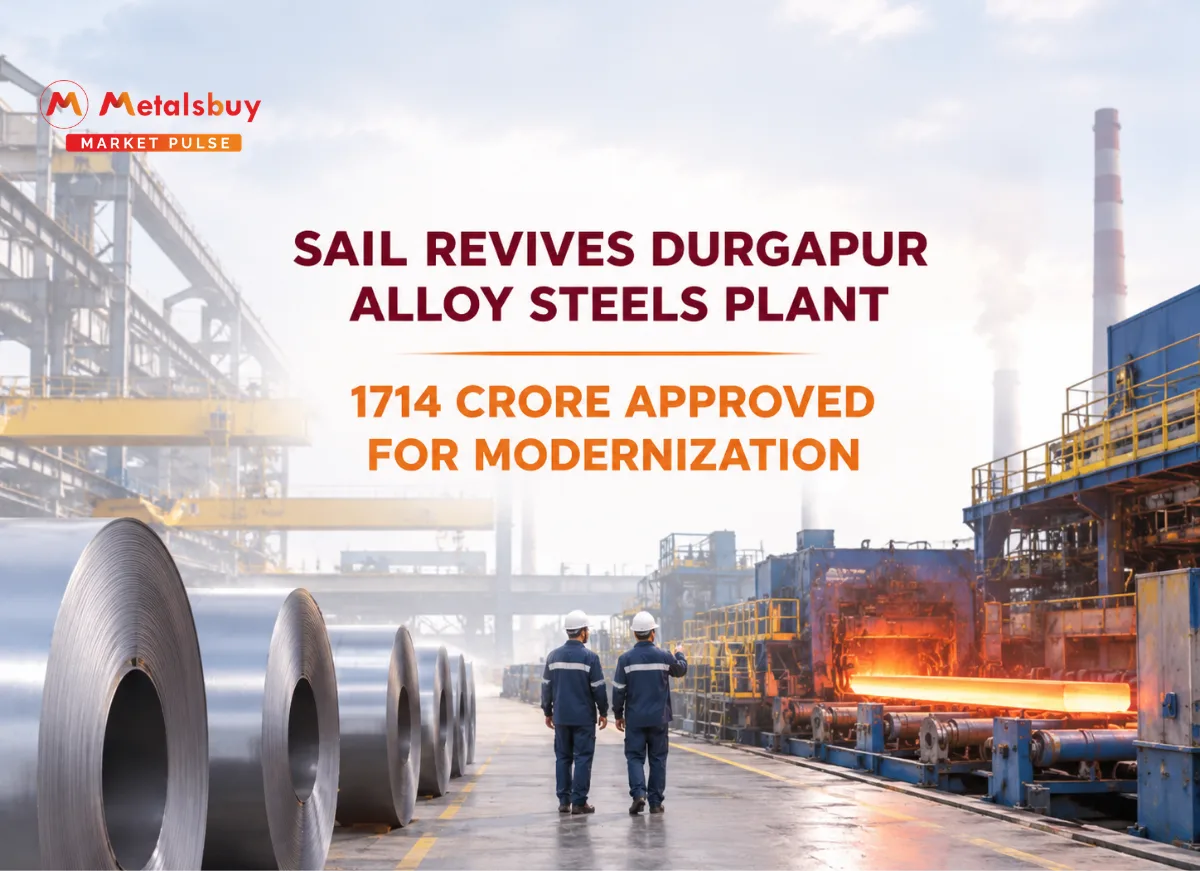
The Indian public sector metallurgical landscape has delivered a massive vote of confidence for its legacy assets. The Steel Authority of India Limited has officially approved a sweeping modernization and capacity expansion project for its Alloy Steels Plant situated in Durgapur, West Bengal. This heavy capital deployment firmly shuts the door on years of persistent rumors regarding the potential privatization or closure of the facility. By deciding to revitalize this historic industrial hub rather than divesting it, the state-owned steel giant is actively aligning its corporate strategy with the surging national demand for high-value, specialized steel products. For the broader metals market, this strategic pivot ensures a highly secure, localized supply chain for premium alloys that are critical for India's advancing defense and automotive sectors.
Injecting fresh capital to revitalize a historic eastern manufacturing hub
The multi billion rupee investment acts as a massive lifeline for the facility securing regional employment and industrial output. The absolute core of this positive industrial development is the formal financial commitment made by the corporate leadership. During its 537th board meeting, the top management of the Steel Authority of India Limited officially greenlit a comprehensive modernization package for the Durgapur-based facility, allocating exactly ₹1,714 crore to the project.
For the past several years, the Alloy Steels Plant operated under a cloud of uncertainty. As the facility grappled with aging infrastructure and margin compressions, it was frequently listed among public sector units slated for strategic disinvestment. The formal allocation of this ₹1,714 crore completely reverses that narrative. The massive capital injection will be utilized to dismantle operational bottlenecks, replace legacy melting equipment with highly energy-efficient furnaces, and introduce advanced automation across the factory floor. According to the internal project blueprints, the entire infrastructural overhaul is mandated to be completed within a strict execution window of 30 to 36 months, ensuring that the plant rapidly regains its competitive edge in the domestic market.
Shifting production focus toward specialized and premium alloy grades
By upgrading legacy infrastructure the plant will aggressively pivot towards manufacturing high margin materials for advanced sectors. The primary commercial objective of this heavy investment is to fundamentally alter the product mix rolling out of the Durgapur facility. While the Indian steel sector is highly successful in churning out millions of tonnes of basic construction rebars and commercial-grade flat steel, there remains a noticeable domestic supply gap for premium, specialized alloys.
The modernized Alloy Steels Plant is specifically engineered to plug this highly lucrative gap. The upgraded rolling mills and processing units will drastically scale up the production of high-tensile alloy steels, customized stainless steel variants, and heavy industrial forgings. These specific materials command a massive price premium in the wholesale market because they possess the exact metallurgical properties required by India's most demanding downstream sectors. The domestic defense manufacturing base, the rapidly expanding aerospace industry, and the commercial automotive sector require these high-grade alloys for critical component fabrication. By producing these materials domestically in high volumes, the plant will directly substitute expensive specialty steel imports, thereby keeping vital supply chains secure and heavily boosting the company's overall revenue realization per tonne.
Driving regional economic stability and long term job security
The comprehensive overhaul will generate massive local contracting opportunities while cementing the future of thousands of workers. Beyond the immediate corporate balance sheets, injecting ₹1,714 crore into a single manufacturing site serves as a powerful economic catalyst for the surrounding geography. Durgapur has historically operated as the industrial heartland of West Bengal, and the revival of this flagship plant provides immense socioeconomic stability to the region.
The impending 30 to 36-month construction phase will immediately open up hundreds of lucrative contracting opportunities for regional civil engineering firms, heavy logistics providers, and secondary equipment vendors. More importantly, the modernization secures the livelihoods of the existing permanent workforce and contract laborers who have spent years advocating against the plant's privatization. Local labor unions have highly praised the board's decision, noting that an active, modernized plant will foster a vibrant ecosystem of downstream micro, small, and medium enterprises across the Asansol-Durgapur industrial belt, driving sustained commercial activity and elevating the regional standard of living.
Supporting the national mandate for heavy industrial self reliance
Revamping brownfield assets proves to be a highly efficient strategy for meeting india's ambitious future crude steel targets. From a broader macroeconomic perspective, the decision to revive a distressed asset perfectly complements the Indian government’s long-term manufacturing aspirations. The central government is aggressively pushing the domestic industry to achieve a staggering 300 million tonnes of annual crude steel capacity by the year 2030 under the National Steel Policy.
Simultaneously, initiatives like the ₹6,322 crore Production-Linked Incentive scheme are specifically designed to incentivize the localized manufacturing of specialty steel. Upgrading the Durgapur Alloy Steels Plant flawlessly hits both of these national targets. Executing a brownfield expansion on existing industrial land is significantly faster and more cost-effective than navigating the complex land acquisition and environmental clearances required for a brand new greenfield project. By rapidly unlocking the dormant potential of this historic site, the Steel Authority of India proves its operational agility, ensuring that the nation's ongoing infrastructure and defense boom is built using materials that are technologically advanced, cost-competitive, and proudly manufactured on Indian soil.