KEY HIGHLIGHTS
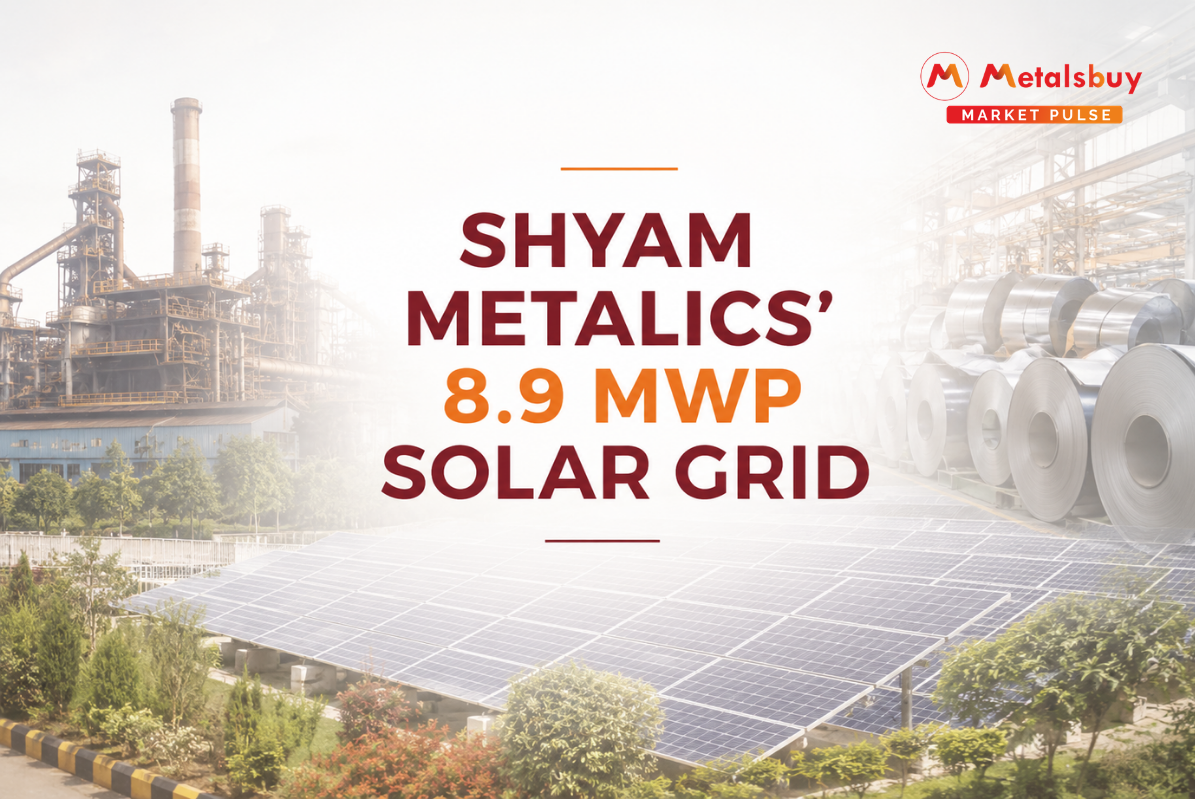
- Green Power Addition: Shyam Metalics successfully commissions an 8.90 MWp solar facility in West Bengal.
- Captive Consumption: The entire renewable energy output is integrated directly into in-house manufacturing operations.
- Strategic Subsidiary: The project was executed efficiently by the wholly-owned subsidiary, Shyam Sel and Power Limited.
- Cost Optimization: Strategically designed to slash operational power expenses while boosting ESG compliance.
- Diverse Operations: The solar yield will directly support the production of iron ore pellets, structural steel, and ferroalloys.
MARKET ANALYSIS
Shyam Metalics and Energy Limited (SMEL) has taken a decisive step toward sustainable manufacturing by commissioning an 8.90-megawatt peak (MWp) solar power plant at its massive Jamuria steel mill in West Bengal. Initiated through its wholly-owned subsidiary, Shyam Sel and Power Limited, this new installation is designed exclusively for captive consumption. The primary objective is to directly integrate renewable energy into the group's heavy manufacturing operations, simultaneously optimizing operational power costs and championing the transition toward greener energy sources.
This strategic move arrives at a crucial juncture for the Indian metallurgical landscape. The domestic steel sector currently accounts for over 240 million tonnes of carbon dioxide emissions annually, representing roughly 12% of the country's total carbon footprint. Alarmingly, the average emissions intensity of crude steel production in India stands at 2.55 tonnes of CO2 per tonne of crude steel, which sits noticeably higher than the global industry average of 1.85 tonnes. Against this backdrop, metal producers are facing mounting regulatory and economic pressure to decarbonize their supply chains.
By adopting captive solar infrastructure, SMEL is aggressively addressing its environmental footprint while securing its bottom line. The Jamuria plant forms the operational backbone of the company's aggressive growth strategy, which aims to scale aggregate installed metal capacity to an impressive 11.60 million tonnes per annum (MTPA) across its various facilities. As of recent estimates, SMEL operates over 376 MW of captive power capacity to support its integrated steel and aluminum facilities. Adding an 8.90 MWp solar installation represents a highly strategic, low-risk pilot for scalable solar-wind hybrid models in the near future. Manufacturing energy-intensive commodities like iron ore pellets, structural steel, ferroalloys, and aluminum foils demands immense, uninterrupted power. This new solar unit complements the company's massive thermal portfolio, pushing the firm beyond conventional coal-reliant power and establishing a forward-looking hybrid energy framework.
WHAT IT MEANS FOR THE STEEL INDUSTRY
The operationalization of a dedicated solar plant within a legacy steel hub like Jamuria provides a practical blueprint for the broader industry. India has formally committed to a net-zero emission target by 2070, supported by the recent introduction of the Green Steel Taxonomy, which aims to reduce the sector's emission intensity below 2.2 tonnes of CO2 equivalent by 2030. SMEL’s green initiative perfectly mirrors this macroeconomic directive.
For heavy industries, power procurement is a massive financial burden, accounting for anywhere between 20% to 40% of total operating costs depending on the specific manufacturing route. Incorporating an 8.90 MWp renewable source directly into the plant's micro-grid acts as an immediate financial hedge against fluctuating thermal coal prices and unpredictable state grid tariffs. Over the long term, this drastically lowers the per-tonne production cost of finished steel and ferroalloys, granting companies like Shyam Metalics a distinct pricing advantage in highly competitive domestic and international commodity markets.
Furthermore, integrating clean energy dramatically reduces Scope 2 emissions, which stem from purchased electricity. As global markets begin to penalize high-carbon imports—most notably the European Union with its impending Carbon Border Adjustment Mechanism (CBAM)—Indian steelmakers must clean up their energy mix to remain export-competitive. Captive solar plants are no longer viewed merely as corporate social responsibility exercises; they are absolute commercial necessities required to preserve export margins and secure international contracts.
MARKET OUTLOOK
The trajectory for the Indian steel industry points heavily toward aggressive capital expenditure in energy transition alongside traditional capacity expansion. The central government's ambitious target of achieving 500 GW of non-fossil fuel capacity by 2030 provides the perfect runway for industrial giants to shift their energy procurement strategies. We can expect a sharp rise in similar captive renewable projects across the mineral-rich belts of Odisha, Jharkhand, and West Bengal as mid-cap and large-cap steel players scramble to secure affordable, green power.
Investors and market watchers are increasingly factoring in ESG (Environmental, Social, and Governance) metrics when valuing metal equities. Shyam Metalics' proactive investment in the Jamuria solar facility signals strong management foresight to institutional investors. By structurally lowering localized energy costs, the company frees up capital for future high-margin downstream ventures. A prime example is their ongoing Phase 2 expansion of a massive cold rolling mill at the same Jamuria site, which is set to output high-value galvanized and pre-painted steel coils.
Moving forward, the combination of robust government incentives—such as the recent ₹20,000 crore national outlay for carbon management—and a supportive regulatory environment for renewable energy adoption will likely accelerate the steel sector's green transition. Shyam Metalics is actively positioning itself ahead of the regulatory curve, proving to stakeholders that industrial profitability and environmental stewardship can operate side by side on the factory floor.