Key Numbers
-
Company: South Eastern Coalfields Limited (SECL)
-
Coal Dispatch: ~169 million tonnes (MT)
-
Coal Production: ~165 MT
-
Current Stock: ~23 MT
-
Additional Ready Capacity: ~12 MT
-
Key Mines: Gevra, Dipka, Kusmunda
-
Timeline: FY26 (till mid-March 2026)
Market Analysis
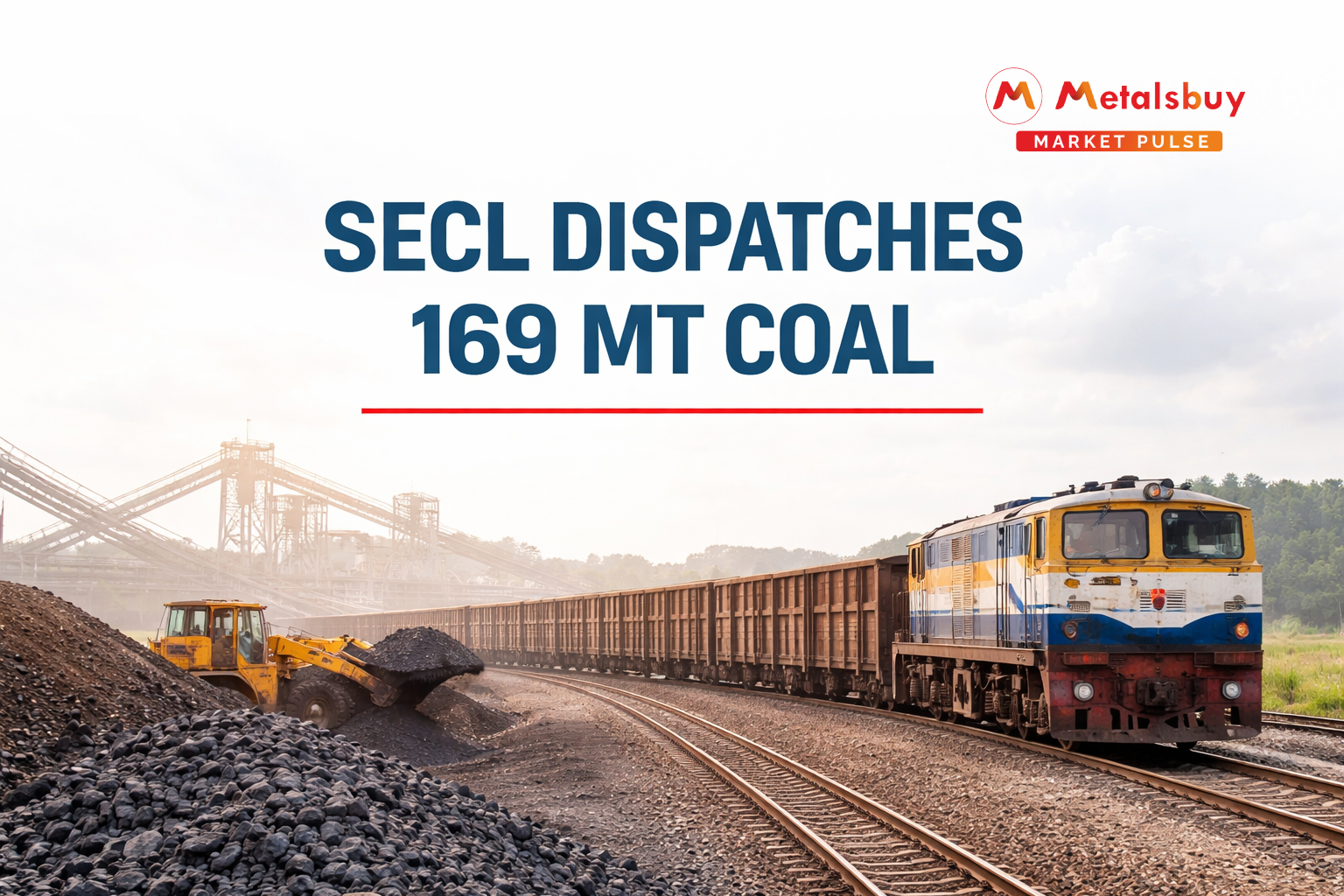
South Eastern Coalfields Limited (SECL), one of the largest subsidiaries of Coal India Limited, has reported coal dispatches of around 169 million tonnes (MT) in the current financial year, reinforcing India’s domestic supply strength at a critical time for the energy sector.
The company’s production of approximately 165 MT, coupled with a healthy dispatch figure, indicates a strong alignment between output and evacuation — a key challenge historically faced by the coal sector.
This development comes ahead of the summer season, when electricity demand in India typically rises sharply due to increased cooling requirements. Ensuring uninterrupted coal supply to thermal power plants is therefore critical to maintaining grid stability.
SECL plays a vital role in supplying coal to major power generators, including central utilities and multiple state electricity boards. The company’s ability to maintain around 23 MT of coal stock, along with an additional 12 MT of ready-to-produce capacity, provides a comfortable buffer to meet any sudden surge in demand.
A key driver behind SECL’s strong performance has been the contribution from its mega mines, particularly:
-
Gevra – among the largest coal mines globally
-
Dipka
-
Kusmunda
These mines continue to anchor India’s coal production growth and are central to Coal India’s output strategy.
Another notable aspect is the growing focus on logistics efficiency. The near-parity between production and dispatch highlights improvements in:
-
Rail rake availability
-
Loading infrastructure
-
Coordination with Indian Railways
Efficient evacuation of coal from pitheads to end-users has long been a bottleneck in India’s coal supply chain. Recent improvements indicate a shift toward integrated mining-logistics planning, ensuring that production gains translate into actual supply on the ground.
In the broader context, global energy markets remain volatile due to geopolitical uncertainties, particularly in fuel-exporting regions. This has further reinforced the importance of domestic coal availability in ensuring energy security.
India continues to rely heavily on coal for power generation, and stable domestic supply helps reduce exposure to fluctuating international coal prices.
Industry Impact
SECL’s strong dispatch performance carries several implications for India’s energy and industrial ecosystem.
1. Strengthening Power Sector Stability
Consistent coal supply ensures uninterrupted fuel availability for thermal power plants, particularly during peak demand periods.
2. Reduced Dependence on Imports
Higher domestic production and dispatch reduce the need for imported coal, helping manage costs and improve energy security.
3. Improved Mining Logistics Efficiency
The alignment between production and dispatch reflects significant progress in coal evacuation infrastructure, a critical factor for the sector.
4. Support for Industrial Growth
Reliable coal supply benefits not only the power sector but also energy-intensive industries such as steel, cement, and aluminium.
Bottom Line
SECL’s dispatch of 169 MT coal highlights a broader shift in India’s coal sector — from merely increasing production to ensuring efficient and reliable delivery.
As energy demand continues to rise and global markets remain uncertain, strong domestic supply backed by efficient logistics will be key to sustaining India’s industrial and economic growth.