Key Numbers
-
Freight rate increase (estimated): ~20–30% on some Middle East routes
-
War-risk insurance premiums: Rising for vessels operating near the Strait of Hormuz
-
Key export markets affected: GCC countries and parts of the Middle East
-
India’s steel exports (FY25 reference): ~7–8 million tonnes annually across various steel products
Market Analysis
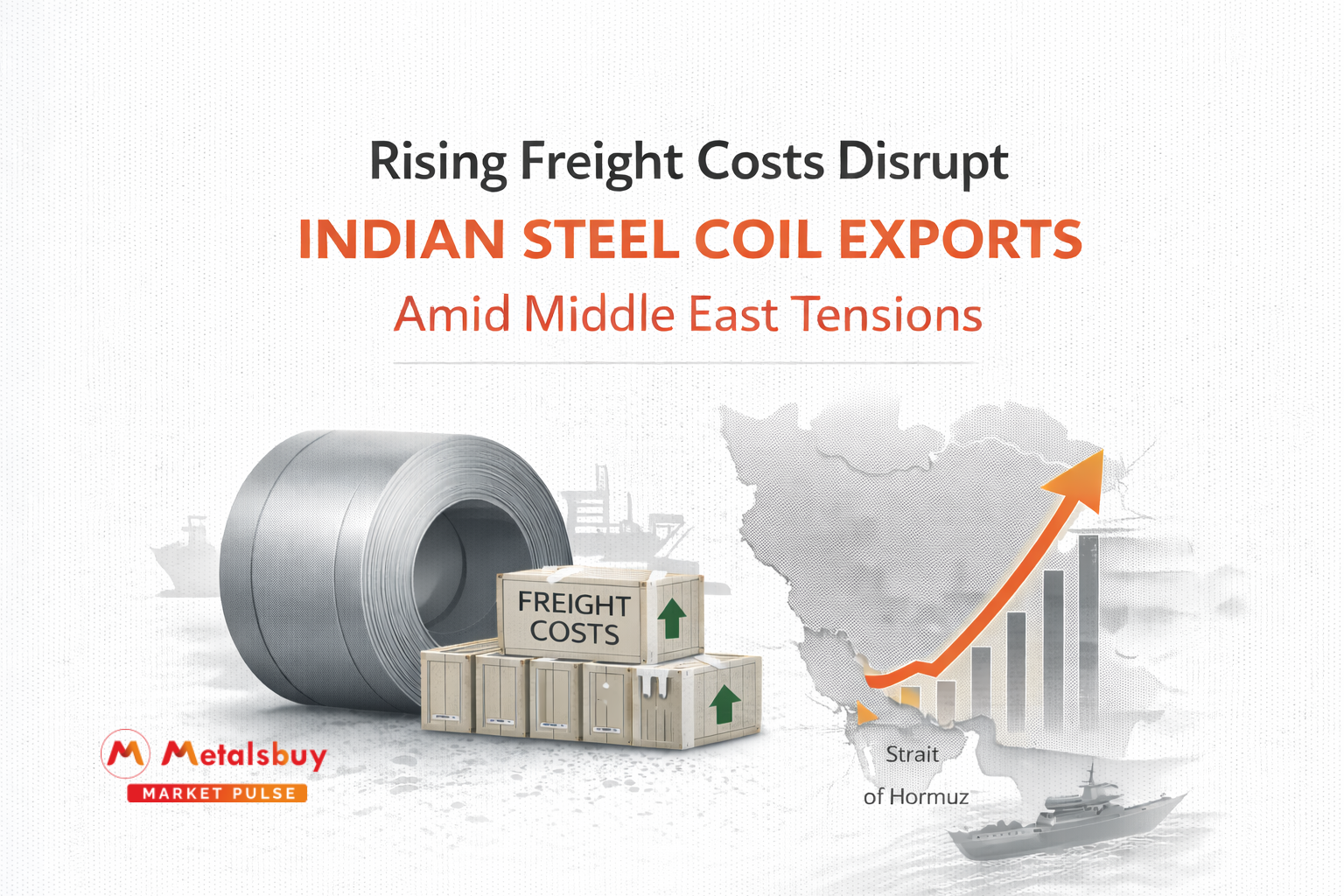
Escalating geopolitical tensions in the Middle East are beginning to affect global shipping routes, leading to rising freight rates and increased insurance costs for cargo vessels. These developments are gradually impacting India’s export logistics, particularly for bulk commodities and steel shipments.
The Strait of Hormuz, one of the world’s most important maritime trade corridors, has become a focal point of concern following heightened regional tensions. As a result, shipping companies and insurers have started applying higher war-risk premiums, increasing the cost of transporting goods through the region.
Freight costs on certain routes connecting India to the Gulf Cooperation Council (GCC) region have already shown noticeable increases, with some market participants indicating that logistics costs could rise by 20–30% depending on vessel availability, insurance requirements, and route adjustments.
The Middle East remains an important destination for Indian steel exports, particularly for products such as hot-rolled coils, plates, and structural steel. Exporters rely heavily on efficient shipping routes to maintain competitiveness in these markets.
However, with freight costs rising and shipping routes potentially facing delays, exporters are now being forced to reassess shipment schedules, contract pricing, and risk exposure.
Longer transit times and higher logistics costs can directly impact the landed price of steel in destination markets, making exports less competitive compared with suppliers located closer to the region.
Industry Impact
The evolving situation could create several challenges for India’s steel exporters.
Higher freight costs and insurance premiums may lead to:
-
Increased export costs for steel coils and flat products
-
Delays in shipment schedules due to route adjustments
-
Reduced competitiveness in Middle Eastern markets
-
Greater pricing volatility in export contracts
For steel producers, logistics costs play a critical role in determining export viability. If freight rates remain elevated for an extended period, exporters may need to adjust pricing strategies or explore alternative markets.
At the same time, rising logistics costs could indirectly support domestic steel prices, as producers may redirect some export volumes toward the domestic market if international shipments become less economical.
Market Pulse Insight
Global commodity markets are increasingly being influenced by geopolitical developments affecting maritime trade routes.
For the steel industry, disruptions in key shipping corridors can quickly translate into higher freight costs, supply chain delays, and shifts in trade flows.
If tensions in the Middle East persist and freight markets remain volatile, Indian steel exporters could face a more challenging operating environment in the coming months, particularly in markets that rely heavily on maritime trade through the Gulf region.