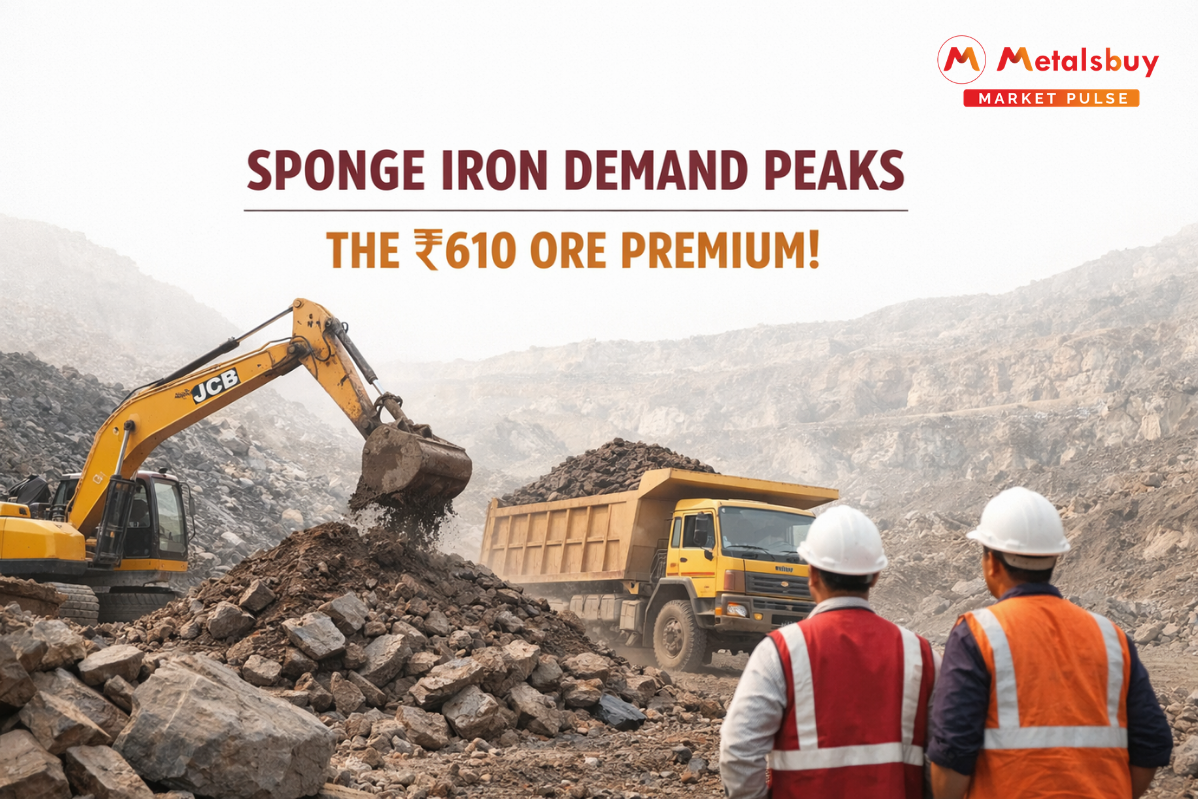
The latest regional e-auction reveals resilient buying interest for high-grade materials, signaling a positive trajectory for India's steel and pellet manufacturing sectors despite global seaborne market fluctuations.
KEY HIGHLIGHTS IN NUMBERS
• Total Volume Sold: 73,100 metric tonnes of iron ore successfully auctioned across key mining complexes
• DR CLO Volume Booked: 21,500 metric tonnes of Fe 67 percent grade material secured from the Bacheli mines
• Premium Realized: INR 610 per metric tonne over the base price of INR 5,900 for high-grade lump ore
• Kirandul Fines Auctioned: 51,600 metric tonnes of Fe 64 percent fines cleared at a steady base price of INR 4,740
• Pellet Price Surge: INR 300 per metric tonne increase implemented by Raipur manufacturers
• Cumulative July Pellet Hike: INR 600 to 700 per metric tonne upward revision driven by robust sponge iron demand
MARKET ANALYSIS
India's premier state-owned miner successfully auctioned 73,100 metric tonnes of iron ore during its recent bidding session in Chhattisgarh on July 16, reflecting a highly strategic recalibration of domestic raw material procurement. This healthy clearance of inventory comes on the heels of a tactical price reduction initiated by the mining major on July 10, where list prices were trimmed by INR 150 to INR 500 across various grades to align with softening global seaborne trends. Far from indicating a domestic slowdown, this proactive pricing adjustment successfully catalyzed active local buying interest, unlocking significant premium valuations for high-grade materials.
The bidding dynamics at the Bacheli complex serve as a primary indicator of this robust domestic appetite. Buyers aggressively pursued the 10-40 mm Direct Reduced Calibrated Lump Ore featuring a rich 67 percent iron content. The entire tranche of 21,500 metric tonnes was booked at a clearing price of INR 6,510 per metric tonne on a Free on Rail basis. This final booking price eclipsed the initial base price of INR 5,900 by a substantial INR 610 per metric tonne, representing an impressive premium of over 10 percent. Such aggressive bidding highlights a pressing requirement for premium lumps among domestic sponge iron manufacturers who prioritize operational efficiency and higher yield ratios.
Simultaneously, the Kirandul complex witnessed steady volumetric movement, with 51,600 metric tonnes of 64 percent iron ore fines successfully auctioned at the base price of INR 4,740 per metric tonne. While a segment of fines offered at INR 3,790 remained unsold during this specific session, market watchers attribute this to temporary inventory balancing rather than a systemic demand failure. Buyers, particularly Odisha-based plants, continue to show sustained interest in fines, leveraging the newly adjusted pricing structures to optimize their supply chains for the upcoming quarter. The overarching market sentiment remains highly optimistic, bolstered by recent production data showing the miner's June output surging by an impressive 44 percent year-on-year to 5.15 million tonnes, ensuring ample liquidity in the domestic raw material pipeline.
WHAT IT MEANS FOR THE STEEL INDUSTRY
The localized success of this auction carries profound implications for the broader Indian steel manufacturing ecosystem, particularly for secondary steel producers heavily reliant on the sponge iron and billet route. The willingness of buyers to pay a double-digit premium for high-grade lump ore confirms that capacity utilization rates among Central Indian steelmakers remain highly elevated. These manufacturers are clearly prioritizing uninterrupted production runs and are willing to absorb premium raw material costs to meet downstream construction and infrastructure demand.
Furthermore, the raw material procurement trends are triggering a cascading effect on intermediate steel products, most notably in the pellet manufacturing hub of Raipur. Benefiting from the steady flow of iron ore and responding to intense demand from sponge iron producers, pellet manufacturers in Chhattisgarh have aggressively revised their offers upwards. Prices for Fe 62.5 to 63 percent grade pellets witnessed a sharp increase of INR 300, pushing the ex-works valuation to a robust bracket of INR 9,600 to INR 9,700 per metric tonne.
This recent escalation represents the third consecutive price hike in July alone, bringing the cumulative monthly increase to a striking INR 600 to INR 700 per metric tonne. This pricing power exercised by Raipur pellet makers underscores a localized supply tightness, exacerbated by temporary production disruptions at multiple regional plants. For the steel industry at large, this dynamic indicates a highly self-reliant and insulated domestic market. While Chinese demand fluctuations frequently dictate international iron ore indices, the Indian secondary steel sector is currently driven by its own internal consumption engines, allowing regional raw material prices to decouple partially from global bearishness and chart an independent, growth-oriented course.
MARKET OUTLOOK
Looking ahead, the trajectory for domestic iron ore and allied steelmaking materials appears exceptionally balanced and poised for sustained growth. The strategic foresight of the mining major to moderate base prices has effectively established a supportive floor for the market, encouraging continuous offtake while still allowing high-demand grades to discover their true market premiums through competitive bidding.
As the monsoon season progresses—a period that traditionally introduces logistical bottlenecks and temporary supply constraints—the early accumulation of high-grade raw materials positions domestic steelmakers advantageously. The aggressive capacity expansion targets outlined in the National Steel Policy, aiming for 300 million tonnes by the end of the decade, will continue to provide structural support to iron ore consumption. Furthermore, the persistent buying interest from Odisha and Chhattisgarh-based plants suggests that regional trade volumes will remain elevated in the near term. Ultimately, the successful auction and the corresponding rally in pellet prices project a confident outlook for the Indian steel value chain, characterized by healthy manufacturing margins, resilient domestic consumption, and a proactive approach to raw material security.