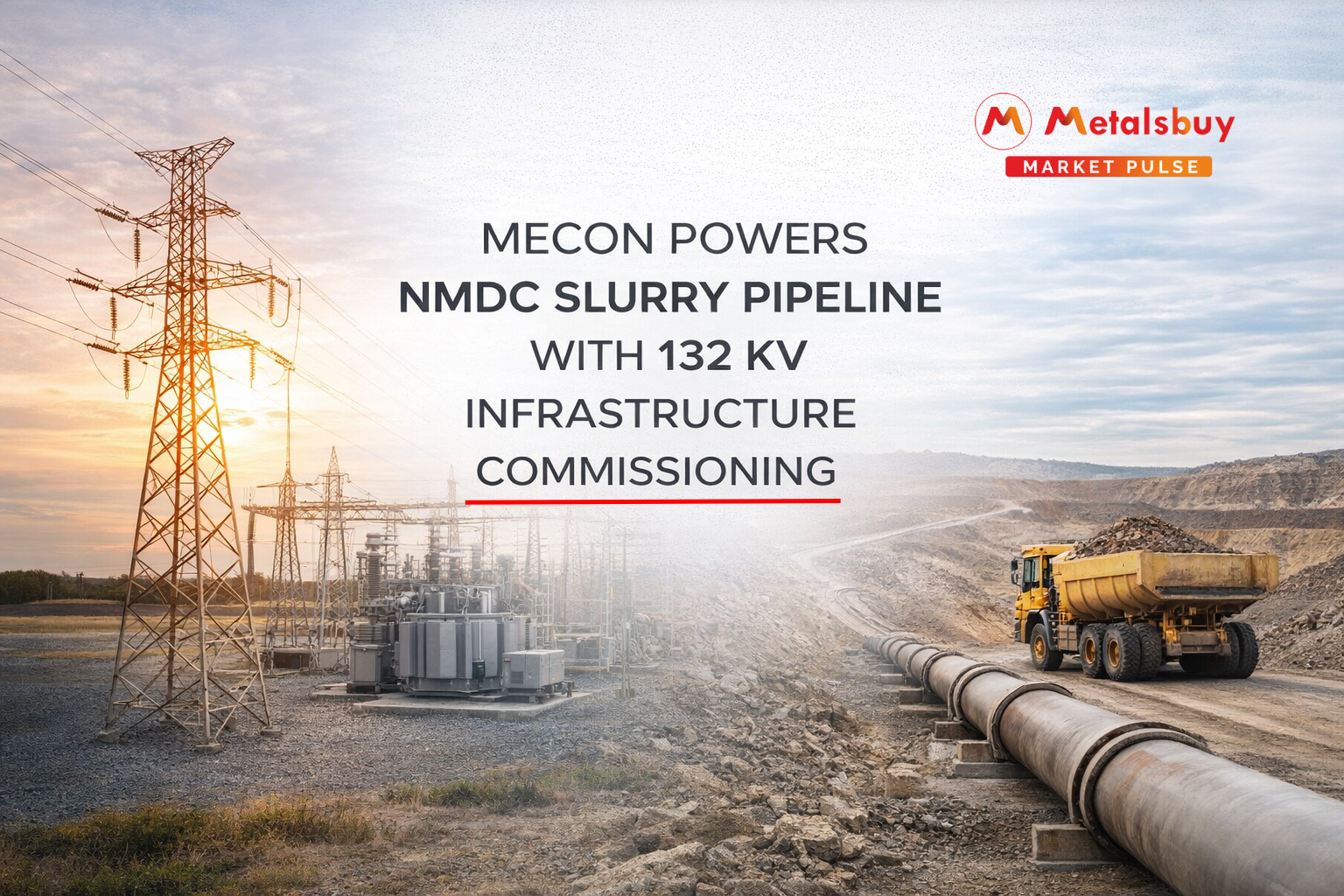
Key Numbers Box
-
Voltage Level: 132 kV power supply commissioned
-
Transformer: 132/6.6 kV, 31.5 MVA
-
Project: NMDC Slurry Pipeline
-
Stage: Equipment testing and trial runs
-
Objective: Improve operational efficiency and reliability
Strengthening Core Infrastructure for Mineral Logistics
MECON’s commissioning of a 132 kV power supply at NMDC’s slurry pipeline project marks a critical advancement in strengthening the infrastructure backbone of mineral transportation. Slurry pipelines, which are increasingly being adopted for bulk mineral movement, depend heavily on uninterrupted and stable power supply to ensure consistent flow and operational efficiency.
The integration of high-capacity electrical infrastructure at this stage indicates a transition from construction to operational readiness. Reliable power systems are essential not only for running pumping systems but also for maintaining continuity in operations, which is a key requirement in large-scale mineral logistics.
Transition Toward Operational Readiness
The installation of a 132/6.6 kV, 31.5 MVA transformer reflects the scale and preparedness of the project as it enters the testing and trial phase. This stage is critical for validating system performance, identifying operational inefficiencies, and ensuring seamless coordination between different components before full-scale commissioning.
Such progress suggests that the project is approaching completion, with focus shifting toward stabilising operations. For NMDC, this development strengthens its logistics capabilities, enabling more efficient transportation of iron ore from mining locations to processing or dispatch points.
Increasing Adoption of Cost-Efficient Transport Solutions
Slurry pipelines are gaining importance as an alternative to traditional transportation methods such as rail and road. These systems offer advantages including lower transportation costs, reduced environmental impact, and the ability to handle large volumes of material over long distances.
The commissioning of supporting power infrastructure ensures that the pipeline can operate at optimal efficiency. For mining companies, this translates into improved supply chain performance, reduced bottlenecks, and better cost management in a competitive operating environment.
Role of Engineering and EPC Players
MECON’s role in this project highlights the increasing importance of engineering and consultancy firms in executing complex infrastructure developments within the mining and metals sector. Beyond design and construction, such organisations are critical in integrating electrical, mechanical, and operational systems to ensure long-term reliability.
This also reflects a growing demand for specialised expertise as projects become more technology-intensive and require higher levels of precision and coordination.
Industry Impact
For Mining Companies
The commissioning of high-capacity power infrastructure enhances operational efficiency by ensuring uninterrupted material movement. It reduces reliance on conventional transport systems and supports higher throughput, contributing to improved cost competitiveness.
For Logistics and Infrastructure Ecosystem
This development reinforces the need for integrated infrastructure in mineral transportation. As slurry pipelines become more widely adopted, demand for associated systems such as power supply, automation, and maintenance services is expected to increase.
For Market Dynamics
Improved logistics efficiency can influence supply flows by enabling faster and more reliable movement of raw materials. This may have downstream implications for steel production planning, inventory management, and supply stability in key markets.
MetalsBuy Insight
The commissioning of power infrastructure at NMDC’s slurry pipeline project reflects a broader shift within the mining sector, where operational efficiency is increasingly driven by logistics optimisation.
As companies focus on improving end-to-end performance, investments in infrastructure such as slurry pipelines and supporting power systems will play a defining role in shaping competitiveness.
Bottom Line:
The evolution of the mining sector is no longer limited to extraction capacity. Efficiency in transportation and logistics is becoming equally critical in determining long-term operational success.