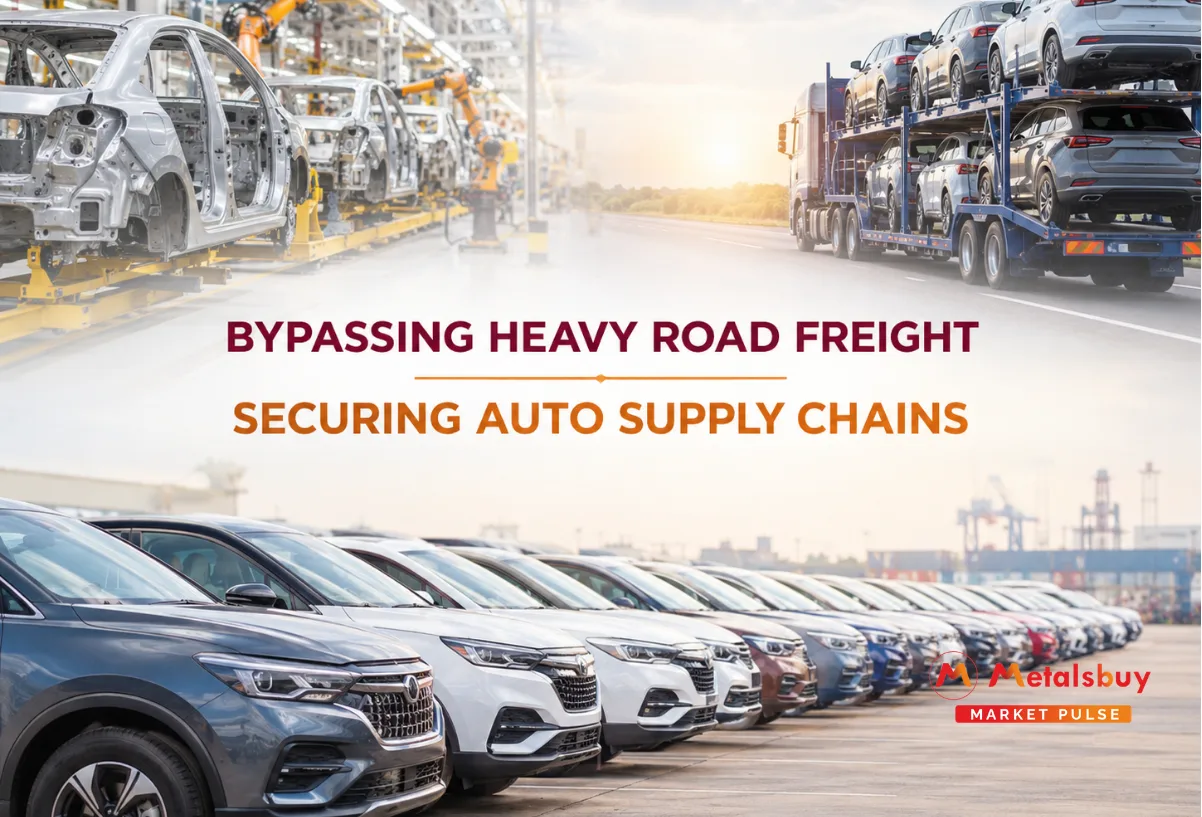
Maruti Suzuki India Limited has achieved a major logistical milestone by dispatching one million vehicles through its dedicated in-plant railway sidings. The shift from road to rail highlights a broader industry trend toward sustainable outbound logistics and multi-modal transportation. By utilizing rail terminals built directly inside its manufacturing facilities in Gujarat and Haryana, the country's largest passenger vehicle manufacturer is successfully reducing its carbon footprint while significantly improving supply chain efficiency. For the broader automotive sector, this achievement proves that heavy investments in alternative freight infrastructure can yield massive operational dividends.
Scaling up green logistics and rail infrastructure
The one million dispatch milestone was achieved in a remarkably short span of just over three years. Operations at the Hansalpur railway siding in Gujarat commenced in March 2023, while the Manesar facility in Haryana became operational more recently in June 2025.The Gujarat terminal handled the bulk of this volume, successfully dispatching approximately 7.9 lakh vehicles since its inception. The Manesar siding contributed the remaining 2.1 lakh units. An in-plant railway siding functions as a dedicated loading terminal situated entirely within the factory premises.
This layout allows finished vehicles to be driven directly into customized freight trains right after rolling off the assembly line. By eliminating the need for heavy trailer trucks to transport cars from the factory gates to the nearest public railway station, the automaker successfully bypasses a highly inefficient, costly, and carbon-intensive leg of the traditional supply chain. Currently, Maruti Suzuki stands as the only passenger vehicle original equipment manufacturer in India to operate such dedicated internal railway infrastructure.
Aligning with national multi modal master plans
The development of these internal railway sidings is closely aligned with the PM GatiShakti National Master Plan, a government initiative designed to bring integrated multi-modal connectivity to India's major industrial hubs.
For the automotive sector, which has historically been heavily reliant on diesel-powered trailer trucks for long-haul deliveries, shifting freight to the railways offers immense environmental and economic benefits. This strategic transition from road to rail transportation actively helps the manufacturer avoid thousands of metric tonnes of greenhouse gas emissions annually. By moving freight off the highways, the company is saving tens of millions of liters of fossil fuels and significantly easing congestion on national road networks. Company executives have noted that integrating these rail networks is a core component of their green logistics journey. This approach directly supports India’s broader net-zero carbon ambitions by prioritizing sustainable, high-volume freight movement over traditional trucking.
Strategic targets for the upcoming decade
The aggressive utilization of these new sidings is rapidly increasing the overall share of rail within the company's total logistics mix. In the current financial year up to August 31, rail-based vehicle dispatches have already crossed the 3 lakh unit mark.
Notably, the in-plant sidings at Gujarat and Manesar accounted for a massive 70 percent of these total rail dispatches during this five-month period. The long-term data reflects a deliberate operational pivot. A decade ago, during the 2014-15 financial year, rail transport accounted for a mere 5 percent of the company's outbound vehicle logistics. By the end of the 2025-26 fiscal year, that share had surged to 26.5 percent. The management has now set a firm mid-term target to push rail-based dispatches to 35 percent by the 2030-31 financial year. To achieve this, the automaker is already channeling fresh investments into expanding its rail infrastructure. This includes the planned construction of a new in-plant siding at its upcoming mega-manufacturing facility in Kharkhoda, ensuring that green logistics are built into the plant's design from day one.
Broader impact on the automotive supply chain
Securing reliable and high-volume outbound logistics is absolutely critical for automakers aiming to maintain lean factory inventories and ensure timely deliveries to a massive nationwide dealership network.
Maruti Suzuki recognized this early on, becoming the first automobile company in India to obtain an Automobile Freight Train Operator license in 2013. Since the 2014-15 fiscal year, the company has cumulatively dispatched over 3.3 million vehicles using the Indian Railways network. Moving such vast quantities of finished goods via specialized freight trains—utilizing high-capacity flexi-deck rakes capable of carrying around 260 vehicles per trip—provides a highly stable supply chain rhythm.