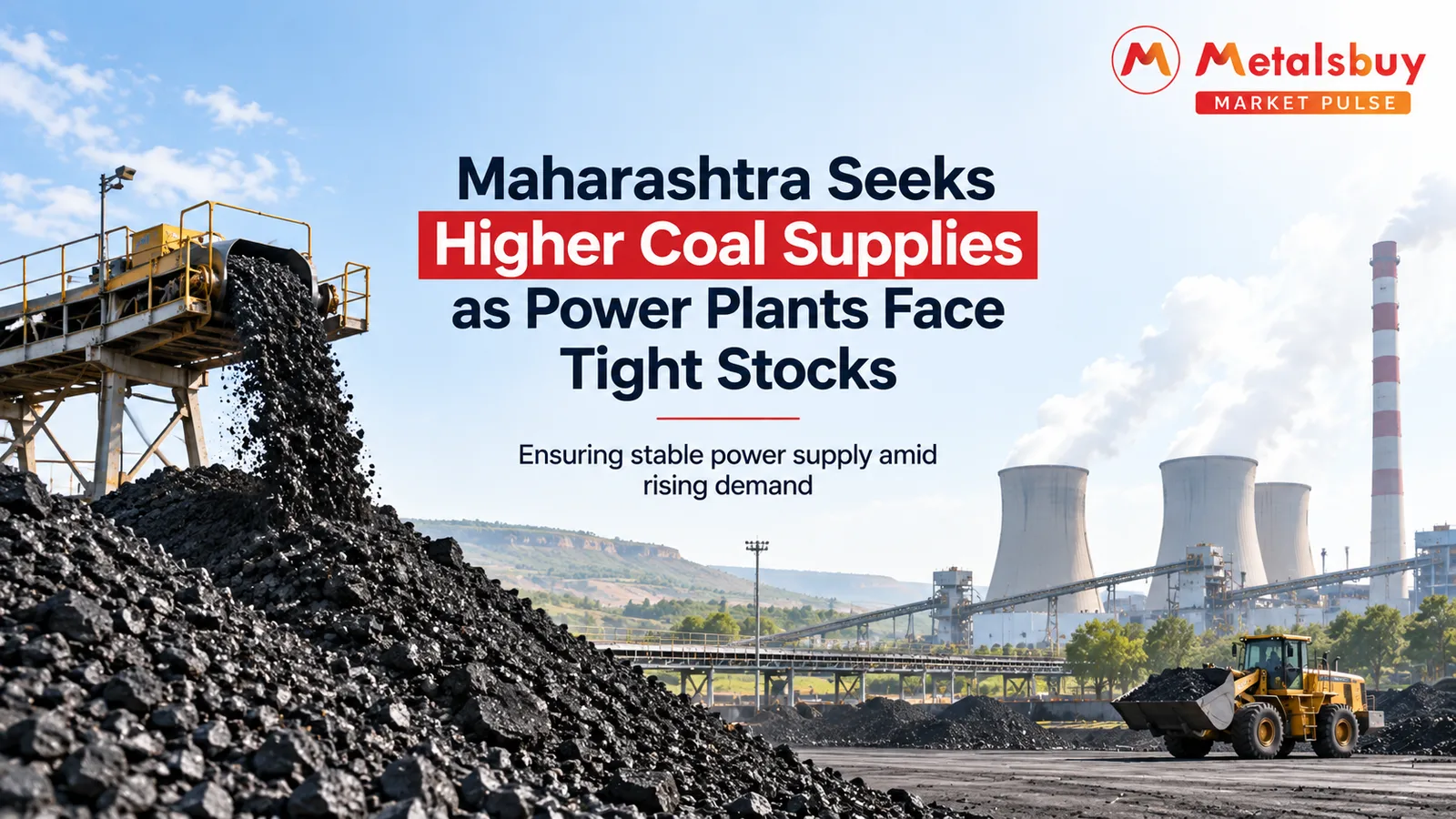
Maharashtra is seeking higher coal supplies for its power plants as rising electricity demand puts pressure on available fuel stocks. Chief Minister Devendra Fadnavis has asked Western Coalfields Ltd (WCL) to increase coal supplies to the state's power stations, saying the plants are currently facing a critical coal situation. The issue comes at a time when power demand has remained high and coal-fired generation continues to play a major role in meeting the state's electricity requirement.
WCL says supplies have already increased
Fadnavis raised the issue during the 36th National Convention of Mining Engineers and National Seminar in Nagpur, where he said he had discussed the situation with WCL chairman and managing director Hemand Pande. He asked the company to ensure adequate coal availability so that Maharashtra's power plants can operate more efficiently. The chief minister did not provide specific stock figures for individual plants, but described the overall coal position at the state's power stations as critical.
WCL, meanwhile, said it has already increased supplies to Maharashtra substantially. A senior company official said coal supplies to the state have been raised to three times the level of last year and that the company would continue efforts to support energy security in Maharashtra as well as the wider country.
Higher power demand adds to pressure
The requirement for additional coal comes as India's electricity demand remains elevated. Recent government data showed that 59 coal-fired power plants had critically low coal stocks as of September 9, compared with 45 plants at the end of August. The plants classified as critical either had less than 25% of the required inventory or enough coal for fewer than three days of generation.
Peak electricity demand has also remained close to record levels, reaching around 267 GW in recent days, compared with the record peak of 270.70 GW recorded in May. Coal remains important for meeting this demand, particularly when other sources face seasonal limitations. The combination of high demand and lower coal inventories has therefore increased pressure on the supply and transportation network.
Coal gasification gets greater attention
Fadnavis also highlighted the changing role of coal mining, saying the industry needs to move beyond conventional mining towards coal gasification. He said carbon capture and utilisation should ultimately become an important part of this process, with the potential to change how coal resources are used. The comments come as the government is pushing new coal gasification projects as part of its broader effort to develop alternative uses for domestic coal.
According to the chief minister, four of the first eight coal gasification projects under the new mission are being awarded in Vidarbha. He described the region as having the potential to become a major centre for coal gasification. This could add another dimension to the region's existing role in coal mining and power generation.
Gadchiroli also emerging as a steel hub
The discussion also extended beyond coal and power. Fadnavis said around 50 MTPA of steel capacity, involving investments of about ₹5 lakh crore, has been signed for projects in Gadchiroli. He also pointed to the district's iron ore resources and said the planned investments could significantly change the industrial profile of Vidarbha and Maharashtra.
For the metals industry, the developments in coal, iron ore and steel are closely connected. Greater steel capacity in the region would increase the requirement for raw materials, power and logistics, while the availability of domestic coal will remain an important factor for energy-intensive industries. However, the projects will depend on actual implementation and the development of the required infrastructure over time.
Coal supply remains a key issue for industry
The immediate focus remains on ensuring that Maharashtra's power plants receive enough coal to maintain generation during a period of high demand. WCL's statement that supplies to Maharashtra have already increased threefold from last year indicates that additional volumes are being directed towards the state, although the latest request from the chief minister shows that demand remains strong.
For the broader metals and mining sector, the situation also highlights the importance of a stable domestic coal supply chain. With power demand high and new steel and coal-gasification projects being planned in Vidarbha, coal production, rail movement and availability at consuming plants will remain important factors to watch in the coming months.