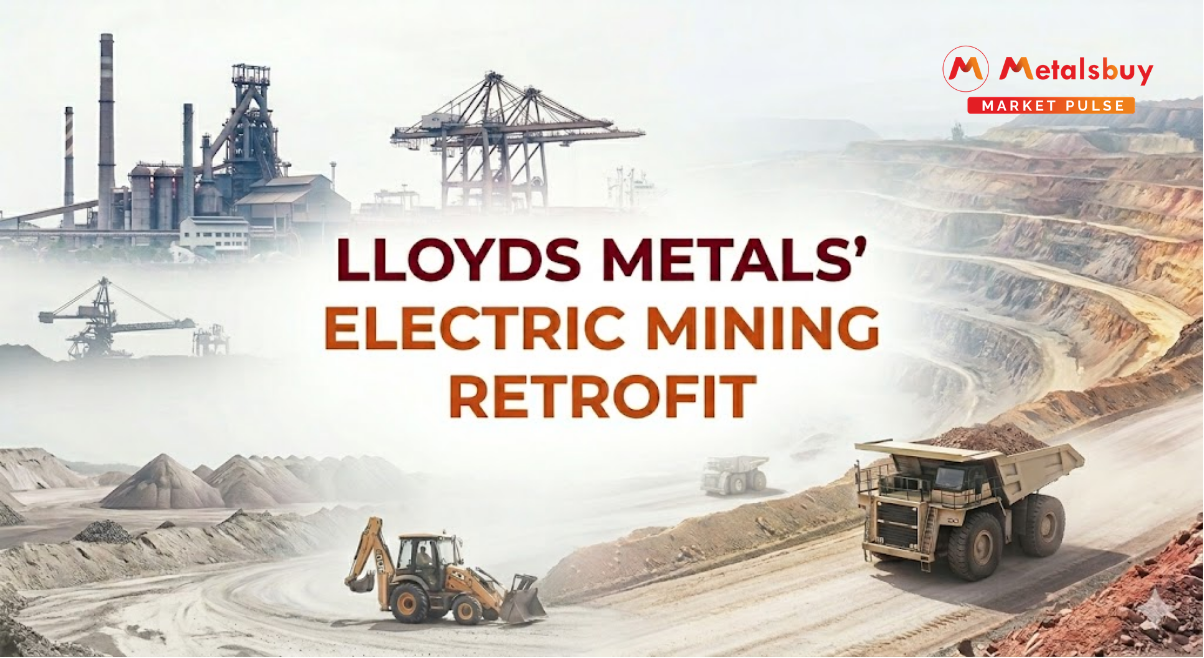
The global resource extraction industry is undergoing a severe operational shift as companies face mounting pressure to reconcile massive production targets with stringent net-zero mandates. Heavy machinery has historically been the primary carbon emitter in this sector, reliant on thousands of liters of diesel daily. Breaking away from this legacy, India’s Lloyds Metals and Energy Limited (LMEL) has achieved a global first by successfully completing a fully electric retrofit of a Liebherr R996 mining excavator.
This is not a mere conceptual prototype but a fully functional, heavy-duty deployment. By completely stripping out the diesel dependency of a machine in the 650-metric-tonne weight class, the company has established a new benchmark for sustainable engineering and operational economics in the heavy machinery sector.
Engineering a 3000 Horsepower Transformation
The scale of this retrofitting project is staggering. The Liebherr R996 is a colossal piece of equipment, typically featuring an operating weight between 650 and 672 metric tons. In its standard diesel configuration, it relies on massive dual engines capable of generating up to 3,000 horsepower (2,240 kW) to power through solid rock with a bucket capacity of up to 34 cubic meters.
Rather than purchasing cost-prohibitive, factory-new electric models from international vendors, LMEL utilized its in-house engineering and technology teams to overhaul the legacy asset. The internal crew replaced the diesel framework with an advanced electric drive architecture, integrating high-voltage safety controls and digital monitoring systems. By sourcing the vast majority of these core components domestically, the project heavily reinforced the 'Make in India' mandate while keeping capital expenditure strictly controlled. The resulting electric powerhouse matches the massive breakout and crowd forces of its diesel predecessor but operates with zero on-site emissions.
Quantifying the Carbon and Operational Savings
The unique selling proposition of this in-house retrofit lies in its immediate, quantifiable impact on both environmental and financial balance sheets. Data indicates that replacing the diesel drive on a single massive excavator of this class eliminates approximately 2.7 million kilograms (2,700 tonnes) of carbon dioxide emissions annually.
However, LMEL is treating this initial conversion as a scalable blueprint rather than a one-off experiment. The company has prepared an entire fleet of 22 legacy heavy earth-moving machines targeted for the exact same electrical conversion. Once this fleet is fully operational, the initiative is projected to eradicate over 72,500 tonnes of CO2 every single year. Furthermore, the shift to an electric drivetrain inherently features fewer moving mechanical parts than a combustion engine. This translates to heavily reduced maintenance downtime, zero refueling delays, and significantly higher machine availability, radically improving the mine's overall output efficiency.
Revolutionizing Logistics Through High Capacity Slurry Pipelines
The electrification of extraction machinery is only one pillar of a much larger, highly integrated green strategy at the company's Surjagarh iron ore mine in Maharashtra. Recognizing that transportation represents a massive hidden carbon cost, the company has completely re-engineered its logistics network by commissioning an 85-kilometer iron ore slurry pipeline.
This pipeline operates with a massive transport capacity of 10 million tonnes per annum (MTPA). Instead of relying on traditional, heavily polluting road transport, the mined ore is pulverized, mixed with water, and pumped directly from the Surjagarh mine to the processing plant in Konsari. This infrastructure moves approximately 30,000 tonnes of iron ore daily, effectively taking hundreds of heavy trucks off the local road network. Economically, this pipeline slashes freight expenses by an estimated ₹500 to ₹600 per tonne. Environmentally, it cuts transport-related carbon emissions by an impressive 80 percent, translating to an annual reduction of roughly 61,000 tonnes of CO2 under conventional power usage.
Scaling the Green Mine Vision
The combination of electrified heavy machinery and innovative logistics is fundamentally reshaping the Surjagarh operation, which sits on massive reserves totaling over 857 million tonnes. As the company aggressively ramps up its dispatchable capacity from 10 MTPA toward a target of 55 MTPA, integrating clean technology at the ground level is vital.
Beyond the massive excavators and pipelines, LMEL has achieved 100 percent electric drilling operations using electric compressor excavator-mounted drills. The company is also rapidly scaling its electric vehicle fleet for secondary site logistics, projecting a deployment of over 100 EVs by the end of the 2026 financial year.
By aggressively retrofitting existing mult-million-dollar legacy assets and building smart, low-emission infrastructure, Lloyds Metals is proving that heavy industry does not need to choose between aggressive growth and environmental stewardship. They are demonstrating that with rigorous in-house engineering and data-driven sustainability, the mining sector can effectively decarbonize while simultaneously improving its bottom line.