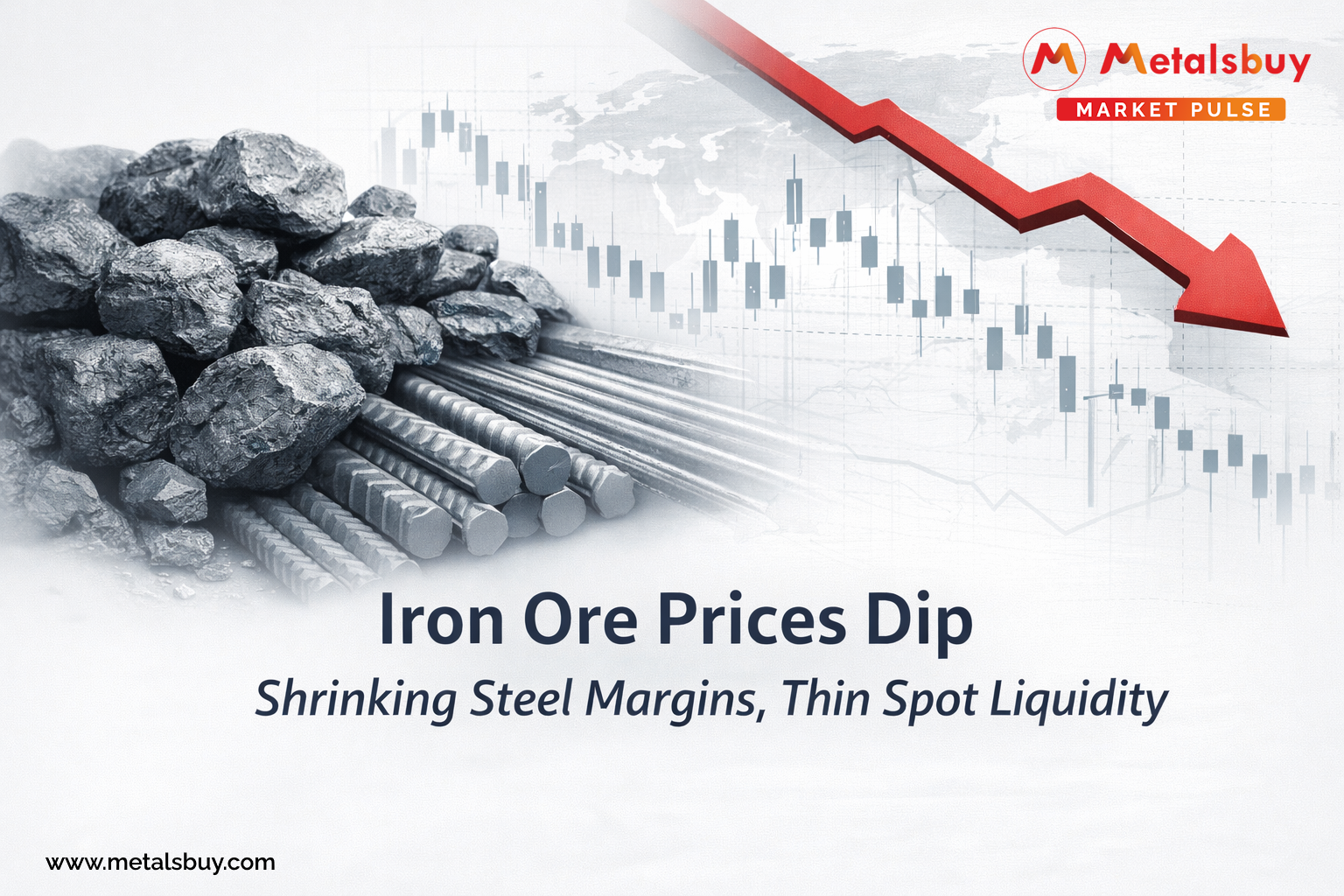
Iron ore prices edged lower in recent trading as weakening profitability across the steel sector and subdued spot market activity weighed on buying sentiment. The decline reflects growing caution among mills amid narrowing spreads between raw material costs and finished steel prices.
Market participants noted that steelmakers are increasingly focused on preserving margins rather than aggressively restocking raw materials, leading to softer demand for iron ore in both spot and futures markets.
Steel Margin Pressure Curtails Raw Material Buying
Shrinking steel margins have emerged as a key factor dampening iron ore demand. Finished steel prices have struggled to maintain upward momentum, while input costs remain relatively elevated. This imbalance has reduced mills’ appetite for fresh iron ore purchases, particularly for spot cargoes.
As margins tighten, several producers are opting to rely on existing inventories or limit production, reducing near-term raw material procurement. The cautious approach has translated into lower transaction volumes in the physical iron ore market.
Thin Spot Liquidity Amplifies Price Volatility
Spot market liquidity has remained notably thin, with fewer deals being concluded compared to earlier periods. Limited participation in the physical market has amplified price movements, as even modest shifts in sentiment are having an outsized impact on prices.
Traders indicated that the absence of strong buying interest has weakened price support, especially in the absence of fresh policy signals or demand-side catalysts.
China Market Sentiment Remains Muted
In China, the world’s largest iron ore consumer, market sentiment remains cautious. Steelmakers continue to operate under margin pressure, prompting restrained raw material procurement strategies.
While infrastructure and manufacturing demand offer some underlying support, the pace of steel production growth has moderated, limiting upside potential for iron ore prices in the near term.
Outlook: Range-Bound Bias with Downside Risks
Looking ahead, iron ore prices are expected to remain range-bound in the short term, with downside risks persisting if steel margins fail to recover. Any sustained improvement in finished steel prices or stronger downstream demand could restore buying interest, but market participants remain wary for now.
Until clearer signals emerge on steel profitability and demand recovery, iron ore is likely to trade under pressure, driven more by margin dynamics and liquidity conditions than by supply disruptions.