Key Numbers
• India's Steel Capacity Target: 300 MTPA by 2030
• FY26 Crude Steel Production: 168.4 Million Tonnes
• April 2026 Finished Steel Consumption Growth: 8.1% YoY
• Structural Steel Market Growth Forecast: 5.8% CAGR through 2034
• Structural Steel Fabrication Market Size (2026): USD 11.82 Billion
• Infrastructure Transport Segment Growth Forecast: 9.1% CAGR
• Construction Sector Share in Structural Steel Fabrication Demand: 40%+
Market Analysis
1. Steel Industry Seeks Greater Use of Structural Steel in Construction
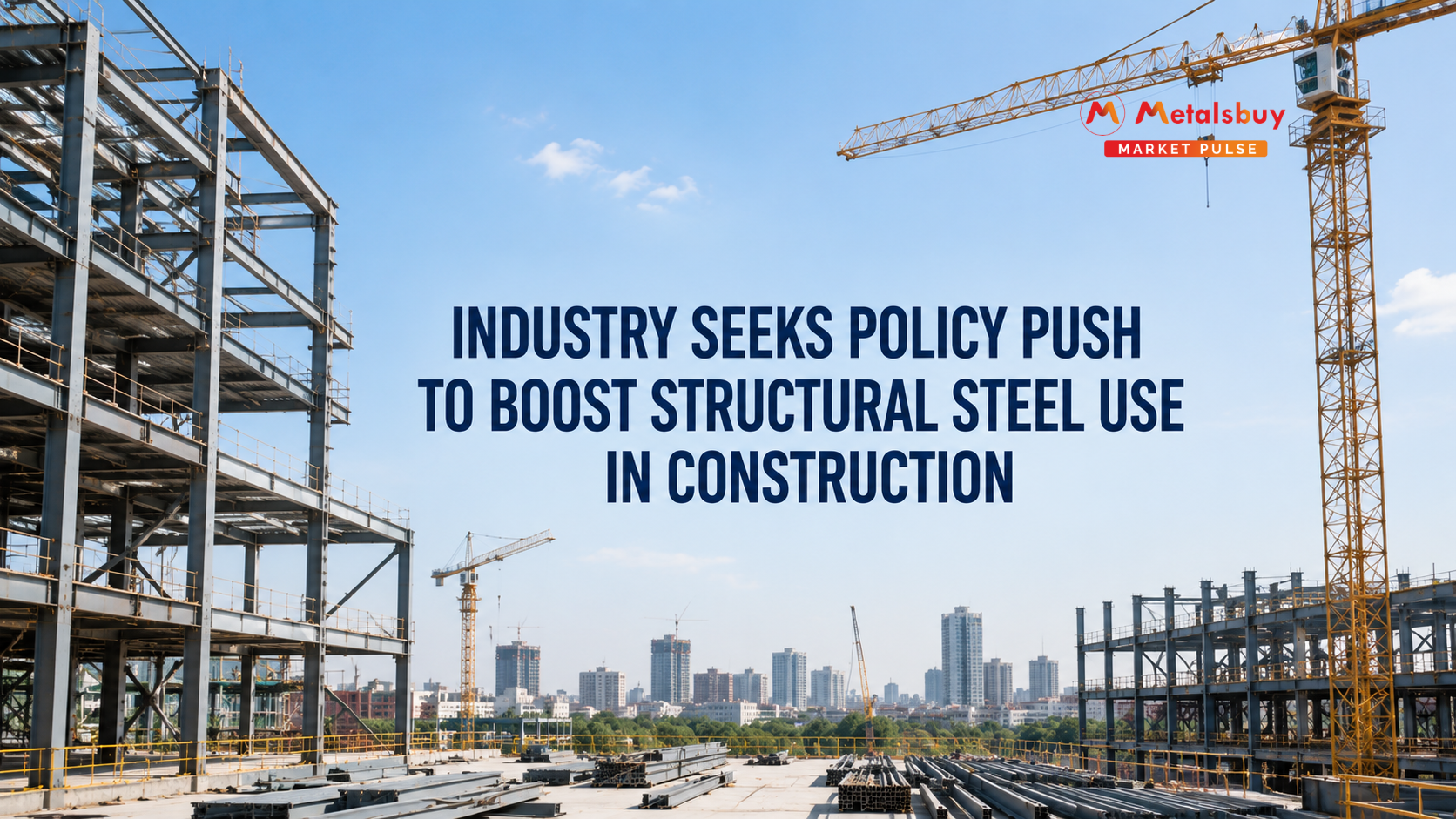
India's steel industry is urging policymakers to encourage wider adoption of structural steel in commercial buildings, industrial facilities, infrastructure projects, airports, logistics parks, warehouses, metro systems and high-rise construction. Industry stakeholders believe that increasing the use of structural steel can help improve construction speed, reduce project timelines and support the country's long-term steel consumption growth objectives. The demand comes at a time when India is rapidly expanding infrastructure investments and targeting 300 million tonnes of steelmaking capacity by 2030.
2. Why Structural Steel Matters
Structural steel is widely used in developed economies because of its strength-to-weight ratio, design flexibility, faster installation and recyclability. Unlike conventional reinforced concrete structures, steel-intensive buildings can often be erected significantly faster while reducing foundation requirements due to lower dead weight. This makes structural steel particularly attractive for industrial buildings, airports, railway stations, manufacturing facilities and large infrastructure projects. Industry experts argue that wider adoption could improve construction productivity while supporting domestic steel demand.
3. Infrastructure Boom Creates a Major Opportunity
India's infrastructure pipeline continues to be one of the strongest demand drivers for steel consumption. Investments in highways, railways, metro networks, airports, logistics hubs and industrial corridors are creating substantial opportunities for structural steel applications. Market studies indicate that infrastructure transport projects are expected to remain one of the fastest-growing segments for fabricated structural steel demand over the coming years. As project developers increasingly focus on faster execution and lifecycle efficiency, structural steel could gain a larger share within the construction ecosystem.
4. Steel Consumption Growth Needs New Demand Drivers
India remains one of the fastest-growing steel markets globally. Crude steel production increased by more than 10% during FY26, while finished steel consumption continued to show healthy growth driven by construction and infrastructure activity. However, with significant new steelmaking capacity planned over the next decade, the industry will require additional demand channels to absorb future production. Greater structural steel penetration is increasingly being viewed as one such opportunity. Wider usage could create sustained demand for beams, sections, plates and fabricated steel structures across multiple sectors.
5. Pre-Engineered Buildings Driving Adoption
One of the strongest growth areas for structural steel is the pre-engineered building (PEB) segment. Warehouses, factories, logistics parks, data centers and commercial facilities are increasingly being constructed using steel-intensive designs because of shorter project completion timelines and lower lifecycle costs. Industry estimates suggest that the growing adoption of PEBs is becoming a major catalyst for structural steel demand in India. As e-commerce, manufacturing and logistics investments expand, this trend is expected to strengthen further.
6. Policy Support Could Accelerate the Transition
Industry stakeholders are advocating measures such as updated building codes, government procurement preferences, awareness initiatives and incentives for steel-intensive construction. Similar policy interventions have helped increase structural steel penetration in several developed markets. Supportive regulations could encourage developers, architects and engineers to consider steel as a primary construction material rather than a niche option. Such a shift would not only support steel demand but could also improve construction efficiency across the economy.
Industry Impact
For steel producers, greater adoption of structural steel would create an additional avenue for long-term demand growth beyond traditional segments such as automotive, consumer durables and conventional construction. Increased usage would also support value-added steel products, fabricated structures and downstream processing industries.
The development is particularly relevant as India continues expanding steelmaking capacity and seeks to balance future supply growth with sustainable domestic consumption.
Outlook
The discussion around structural steel adoption comes at an important time for the Indian steel industry. With infrastructure spending, urbanization and industrial development expected to remain strong, the opportunity for steel-intensive construction has never been larger.
Going forward, the pace of adoption will depend on policy support, industry awareness and the ability of developers to recognize the long-term benefits of steel-based construction. If these barriers are addressed, structural steel could emerge as one of the most important growth drivers for India's steel demand over the next decade, helping the industry move closer to its 300 MTPA vision.